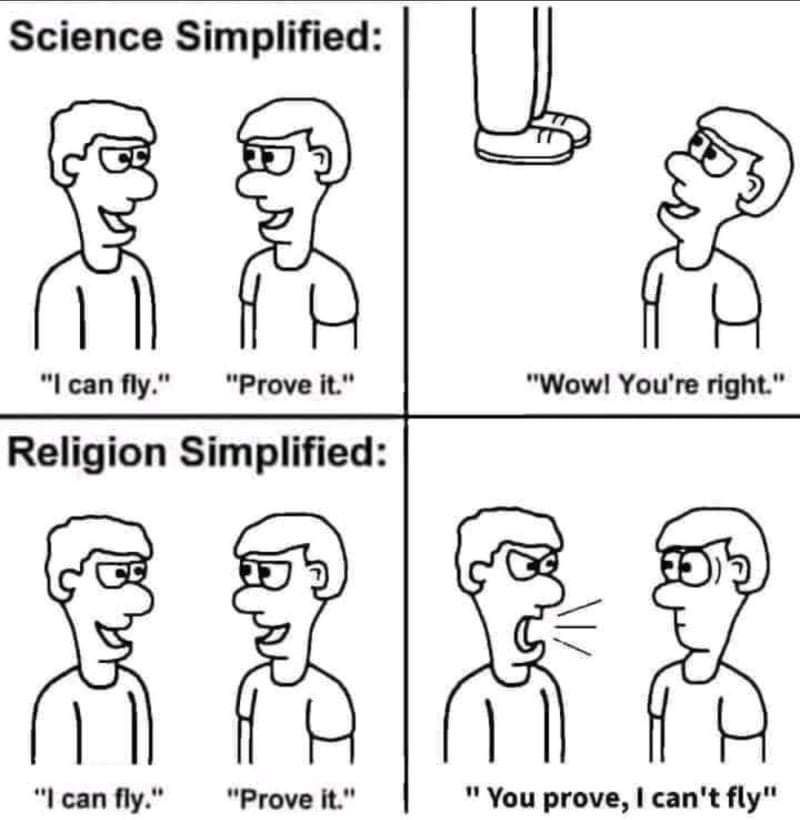
https://www.facebook.com/share/p/KVp3ED1zoMdEBZxq/?mibextid=xfxF2i
Celebrating humanity's flourishing through the spread of capitalism and the rule of law
12 Aug 2024 Leave a comment
in economics of education, economics of regulation Tags: Age of Enlightenment, conjecture and refutation, Freedom of religion, philosophy of science
10 Aug 2024 Leave a comment
in applied price theory, econometerics, economic history, economics of regulation, income redistribution, industrial organisation, labour economics, labour supply, law and economics, occupational choice, politics - USA, property rights, Public Choice, public economics, regulation, rentseeking, survivor principle, theory of the firm Tags: barriers to entry, creative destruction, taxi regulation

The idea behind Uber first arose, the story goes, on a snowy evening in Paris back around 2008, when Travis Kalanick and Garrett Camp found themselves stuck in Paris on a snowy evening, unable to find a taxi. They wondered “What if you could request a ride simply by tapping your phone?” They co-founded Uber based…
The Creation of Ride-sharing and the Creativity of Markets
07 Aug 2024 Leave a comment
in comparative institutional analysis, constitutional political economy, economics of bureaucracy, economics of regulation, income redistribution, law and economics, politics - USA, property rights, Public Choice, rentseeking, urban economics Tags: housing affordability, land supply
I met Yale Law’s David Schleicher when he was still a law professor at GMU. Back then, we argued about the best model of non-rigged one-party democracy, often seen in major cities… and Singapore. Since then, David’s become a powerful academic voice for YIMBY. Last month, David joined me for another Fast Take on Build,…
Fast Takes on *Build, Baby, Build*: David Schleicher
06 Aug 2024 1 Comment
in economics of bureaucracy, economics of regulation, environmentalism, politics - New Zealand, Public Choice, public economics, urban economics
New Zealand citizen, Peter Thiel, who is one of the world’s richest men, and business associate of Elon Musk, has had his house application in Wanaka rejected on appeal by the Environment Court. Theil was the first investor in Shane Legg’s company, Deep Mind, which started the Artificial Intelligence revolution. Legg is a former student…
Did a Christchurch Environment Judge called Prudence just end NZ’s Dreams of higher tech-based productivity growth that would’ve fixed our health system & ended poverty?
05 Aug 2024 Leave a comment
in applied price theory, discrimination, economic growth, economics of bureaucracy, economics of crime, economics of regulation, gender, income redistribution, labour economics, law and economics, macroeconomics, Public Choice, public economics, rentseeking, urban economics Tags: British politics

She’s been one of the rising stars of the British Conservative Party for some time now, and I’ve covered stories about her before (Would be nice if a US Democrat said this about Critical Race Theory and A Tory warning for the National Party of 2032), but I’ve finally decided to add Kemi Badenoch as a tag […]
How Politicians Should Debate: Kemi Badenoch
03 Aug 2024 Leave a comment
in applied price theory, comparative institutional analysis, economic history, economics of bureaucracy, economics of regulation, income redistribution, law and economics, politics - USA, property rights, Public Choice, public economics, rentseeking, urban economics Tags: housing affordability, land supply
Here’s a lively AIER podcast on Build, Baby, Build with the one and only Veronique de Rugy. Best French libertarian since Bastiat? Décider vous-même!P.S. Capla-Con 2024 starts two weeks from tomorrow in Fairfax, Virginia. You’re all invited! Feel free to coordinate ride-sharing in the comments.
Talking BBB with Veronique de Rugy
02 Aug 2024 Leave a comment
in economics of regulation, health economics, politics - Australia, politics - New Zealand Tags: nanny state
Farmers Weekly reports: The Minister of Food Safety is set to take on his counterparts from all Australian states and the Federal Government on Thursday to try to save New Zealand infant formula exports to Australia and potentially to China. Andrew Hoggard’s aim will be to amend proposed rules that would limit New Zealand producers’ […]
Plain packaging for infant formula is nuts
31 Jul 2024 Leave a comment
in applied price theory, comparative institutional analysis, econometerics, economic history, economics of regulation, income redistribution, labour economics, labour supply, law and economics, minimum wage, politics - USA, property rights, Public Choice, regulation, rentseeking, unemployment, urban economics Tags: housing affordability, regressive left, rent control

In an interesting new paper Federal Reserve economists Marianna Kudlyak, Murat Tasci and Didem Tüzemen look at what happens to job vacancy postings when the minimum wage increases. The vacancy data in our analysis come from the job openings data from the Conference Board as a part of its Help Wanted OnLine (HWOL) data series. […]
The Minimum Wage, Rent Control, and Vacancies or Who Searches?
29 Jul 2024 Leave a comment
in economics of bureaucracy, economics of regulation, law and economics, politics - New Zealand, property rights, Public Choice, rentseeking, urban economics
Last month I wrote about the Government’s failure to repeal David Parker’s mad ‘te Mana o te Wai’ (literally meaning the mana of the water) requirements. A few days ago, the research team at the Taxpayers’ Union were sent the details on how the rules are playing it out in my local area: Otago. While…
PETER WILLLIAMS: The costs of Te Mana o te Wai are worse than we thought
27 Jul 2024 Leave a comment
in applied price theory, economics of bureaucracy, economics of regulation, income redistribution, politics - New Zealand, politics - USA, Public Choice, regulation, rentseeking, urban economics Tags: housing affordability, land supply

Ed Glaeser is the chairman of Harvard’s Department of Economics. He’s also widely credited with reviving the entire field of Urban Economics. His 2018 “The Economics of Housing Supply” (with Joe Gyourko) in the Journal of Economic Perspectives was a major inspiration for my Build, Baby, Build. So in the latest “Fast Takes” interview, I…
Fast Takes on *Build, Baby, Build*: Ed Glaeser
26 Jul 2024 Leave a comment
in applied price theory, applied welfare economics, economics of regulation, energy economics, environmental economics, global warming, politics - Australia, politics - New Zealand, politics - USA, Public Choice, public economics, rentseeking Tags: cap and trade, carbon tax, climate alarmism
That is the topic of my latest Bloomberg column, here is one excerpt: A recent study finds that, of all domestic subsidies, the most effective involve replacing the dirty production of electricity with the cleaner production of electricity. In practice, that means subsidies or tax credits for solar and wind power. Those are more than twice as effective as […]
Which are the most effective subsidies for green energy?
22 Jul 2024 Leave a comment
in applied price theory, economics of regulation, law and economics, macroeconomics, monetary economics, politics - New Zealand, property rights, urban economics Tags: housing affordability, land supply, monetary policy
The Minister of Housing’s ambition is to reduce markedly the ratio of house prices to household incomes. If his strategy works it would transform the housing market, dramatically changing the prospects of housing as an investment. Brian Easton writes – Leaving aside the Minister’s metaphor of ‘flooding the market’ I do not see how the […]
Flooding Housing Policy
21 Jul 2024 Leave a comment
in applied price theory, economics of information, economics of regulation, industrial organisation, law and economics, politics - New Zealand, property rights Tags: consumer protection
The Green Party has a Member’s Bill up arguing for a consumer right of repair; Auckland University’s Alex Sims has written a few columns in support of such a thing. I’d had an email asking about that legislation; figured I’d share my response here – tidied up a bit.If it’s more expensive to produce a product…
Right to Repair
20 Jul 2024 Leave a comment
in economics of regulation, energy economics, environmental economics, global warming, law and economics, politics - USA, property rights Tags: climate activists, climate alarmism

The decisive ruling against climate lawfare is reported at Washington Free Beacon Dem-Appointed Judge Tosses Major Climate Case Against Oil and Gas Producers in Blow to Environmental Activists. Excerpts in italics with my bolds and added images. Baltimore judge deals blow to left-wing effort to punish oil companies for global warming A Baltimore judge tossed […]
Another Fake Climate Case Bites the Dust
Celebrating humanity's flourishing through the spread of capitalism and the rule of law
Scholarly commentary on law, economics, and more
Beatrice Cherrier's blog
Celebrating humanity's flourishing through the spread of capitalism and the rule of law
Celebrating humanity's flourishing through the spread of capitalism and the rule of law
Celebrating humanity's flourishing through the spread of capitalism and the rule of law
Why Evolution is True is a blog written by Jerry Coyne, centered on evolution and biology but also dealing with diverse topics like politics, culture, and cats.
Celebrating humanity's flourishing through the spread of capitalism and the rule of law
Celebrating humanity's flourishing through the spread of capitalism and the rule of law
A rural perspective with a blue tint by Ele Ludemann
DPF's Kiwiblog - Fomenting Happy Mischief since 2003
Celebrating humanity's flourishing through the spread of capitalism and the rule of law
The world's most viewed site on global warming and climate change
Tim Harding's writings on rationality, informal logic and skepticism
A window into Doc Freiberger's library
Let's examine hard decisions!
Commentary on monetary policy in the spirit of R. G. Hawtrey
Thoughts on public policy and the media
Celebrating humanity's flourishing through the spread of capitalism and the rule of law
Politics and the economy
A blog (primarily) on Canadian and Commonwealth political history and institutions
Reading between the lines, and underneath the hype.
Economics, and such stuff as dreams are made on
"The British constitution has always been puzzling, and always will be." --Queen Elizabeth II
Celebrating humanity's flourishing through the spread of capitalism and the rule of law
Celebrating humanity's flourishing through the spread of capitalism and the rule of law
WORLD WAR II, MUSIC, HISTORY, HOLOCAUST
Undisciplined scholar, recovering academic
Celebrating humanity's flourishing through the spread of capitalism and the rule of law
Res ipsa loquitur - The thing itself speaks
Celebrating humanity's flourishing through the spread of capitalism and the rule of law
Researching the House of Commons, 1832-1868
Articles and research from the History of Parliament Trust
Reflections on books and art
Posts on the History of Law, Crime, and Justice
Celebrating humanity's flourishing through the spread of capitalism and the rule of law
Exploring the Monarchs of Europe
Cutting edge science you can dice with
Small Steps Toward A Much Better World
“We do not believe any group of men adequate enough or wise enough to operate without scrutiny or without criticism. We know that the only way to avoid error is to detect it, that the only way to detect it is to be free to inquire. We know that in secrecy error undetected will flourish and subvert”. - J Robert Oppenheimer.
The truth about the great wind power fraud - we're not here to debate the wind industry, we're here to destroy it.
Celebrating humanity's flourishing through the spread of capitalism and the rule of law
Celebrating humanity's flourishing through the spread of capitalism and the rule of law
Economics, public policy, monetary policy, financial regulation, with a New Zealand perspective
Celebrating humanity's flourishing through the spread of capitalism and the rule of law
Restraining Government in America and Around the World
 Utopia, you are standing in it!
Recent Comments