
What Do Prices “Know That You Don’t?”
08 Jan 2018 Leave a comment
in applied price theory, economics of information, entrepreneurship Tags: market process, The meaning of competition
Barbarians! Turning a Wine Bottle into a Tap
30 Dec 2017 Leave a comment
in entrepreneurship Tags: wine
Re:scam.This Hilarious Chatbot Messes with Scammers for You
26 Dec 2017 Leave a comment
in economics of crime, entrepreneurship Tags: entrepreneurial alertness, spam
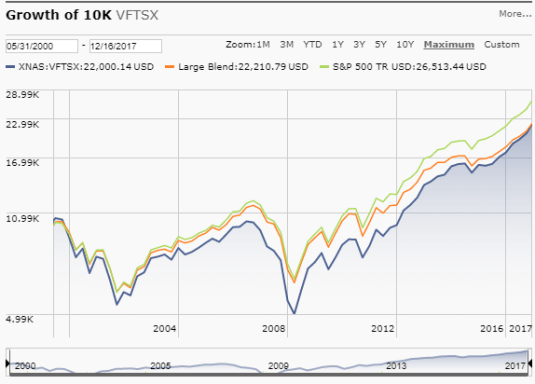
Net neutrality must be anti-competitive! @GarethMP favours net neutrality
15 Dec 2017 Leave a comment
in applied price theory, entrepreneurship, industrial organisation, rentseeking, survivor principle
Netscape shipped its first browser for the friendly price of $49. Nasty anti-competitive Microsoft started giving Internet Explorer away. After the first browser war, the usage share of Netscape had fallen from over 90 percent in the mid-1990s to less than one percent by the end of 2006.
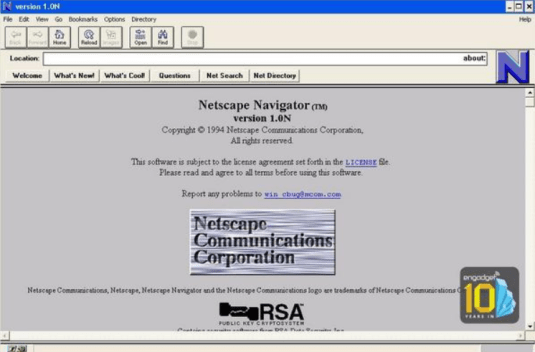
During the 1990s, Microsoft competitors — Netscape, IBM, Sun Microsystems, WordPerfect, Oracle, and others —pressed the Justice Department to sue Microsoft for tying Internet Explorer to Windows even though only one of them, Netscape, had a browser.
1995: top 15 Internet companies worth $17 billion.
2015: top 15 Internet companies worth $2.4 trillion. —@kpcb https://t.co/EMtx7Fldef—
Vala Afshar (@ValaAfshar) December 31, 2015
The demise of Netscape was a central premise of Microsoft’s antitrust trial, where the Court ruled that Microsoft’s bundling of Internet Explorer with the Windows operating system was a monopolistic and illegal business practice. We are still waiting for the day when Microsoft finishes giving away its browser, excludes competition from the market for browsers, jacks up its price to make up for a good 20 years of giving away its browser and is not immediately threatened by new entry.
The tech takeover of global advertising revenue. @VisualCap chart visualcapitalist.com/the-tech-takeo… https://t.co/98uNyrhNjN—
Paul Kirby (@paul1kirby) September 22, 2017
As William Shughart and Richard McKenzie observed:
Microsoft’s critics have advanced a number of economic theories to explain why the firm’s behaviour has violated the antitrust laws. None of those critics has articulated why or how consumers have been harmed in the process. Instead, the furious attacks on Microsoft have focused on the injuries supposedly suffered by rivals (on account of Microsoft’s pricing and product-development strategies) and by computer manufacturers and Internet service providers (on account of Microsoft’s “exclusionary contracts”).
A simple rule for a complex world: the moment that evidence is tended to a court about what happened to the competitors in a lawsuit under competition law, that court must dismiss the suit out of hand. Too many lawsuits under competition law are designed to protect the consumer from the scourge of lower prices!
The best proof that a merger or other business practice is pro-consumer is the rival firms in that market are against it. Why would a firm be against a merger or other business practice that raises the prices of their business rivals?
The fear with net neutrality is price discrimination. That someone else is getting a discount you are not. The scourge of lower prices once again is the great bugbear of competition law.
Industries with high fixed costs and low marginal costs often have a menu of prices. Remember that the next time you get on a plane.
The predecessor of net neutrality was the battles over the pricing of the local exchanges in the telephone industry but as Richard Epstein observed:
In the long run, the rapid movement of technology has already left us with a new and vibrant landscape that is light years removed from a generation ago when the major premise of the Telecommunications Act of 1996 was that landlines would continue to hold a monopoly position for years to come—about two years, in fact. That false premise led to extensive regulatory battles over all the interchange relations between local exchange carriers and long line carriers. But the rise of cell phones and VoIP technology changed all that, so that the regulation did much to hamper innovation, but virtually nothing to protect consumers.
The lessons apply here. It is always a desperate mistake to allow hypothetical horror stories to set the intellectual stage for evaluating regulatory proposals. Quite simply, Slate will be able to access all major networks because no broadband carrier wants to face the consumer wrath and defections that would surely accompany high-handed and intrusive interventions. The correct approach therefore is to do nothing. The FCC need not implement any regulations. For now, it should sit back and relax. If some crisis occurs that merits new forms of internet regulations, we can address that situation when it comes. But for the moment, innovation on the internet is doing great. Let’s keep it that way.
Serial competition is common in rapidly innovating industries with one dominant firm making hay for a while then quickly swept away. Google had the advantage of being the 17th browser to hit the market.
Internet monopolies. Is the “obsession” of economists with competition “a relic of history”? econ.st/11Jz9gD http://t.co/Mqef9fYJ9M—
The Economist (@EconBizFin) December 03, 2014
The distribution of firm sizes reflects the rise and fall of firms in a competitive struggle to survive with competition between firms of different sizes sifting out the more efficient firm sizes (Stigler 1958, 1987; Demsetz 1973, 1976; Peltzman 1977; Jovanovic 1982; Jovanovic and MacDonald 1994b). Business vitality and capacity for growth and innovation are only weakly related to cost conditions and often depends on many factors that are subtle and difficult to observe (Stigler 1958, 1987).
The efficient firm sizes are the sizes that survived in competition against other sizes. To survive, a firm must rise above all of problems it faces such as employee relations, skills development, innovation, changing regulations, unstable markets, access to finance and new entry. This is the decisive (and Darwinian) meaning of efficiency from the standpoint of the individual firm (Stigler 1958). One method of organisation supplants another when it can supply at a lower price (Marshall 1920, Stigler 1958).
Regulating innovation through competition law is never a good idea. The more efficient sized firms are the firm sizes that are expanding their market shares in the face of competition; the less efficient sized firms are those that are losing market share (Stigler 1958, 1987; Alchian 1950; Demsetz 1973, 1976). If the firm size distribution in an industry is relatively stable for a time, the firms are their current sizes because there are no more gains from further changes in size in light their underlying demand and cost conditions (Stigler 1983; Alchian 1950; Demsetz 1973, 1976).
Temporary monopoly and rapidly changing market shares with the occasional dominant firm are all characteristics of the early stages of any new or innovating industry. The deadweight social losses from the enforcement of competition law are at their greatest in industries undergoing rapid innovation because of the possibility of error is at its height. Optimum firm sizes continually change over time because of shifts in input and output prices and technological progress (Stigler 1958, 1983).
If large firm size is better at serving consumers, the large firms start to grow and smaller firms will die or be absorbed until the untapped gains from growth in firm size are exhausted. Firms increase in size and decrease in number when this adaptation becomes necessary to survive. If a smaller firm size is now better, smaller firms will multiply and the larger firms will decline in size because they are under-cut on price and quality.
The life cycle of many industries starts with a burst of new entrants with similar products. These new or upgraded products often use ideas that cross-fertilise. In time, there is an industry shakeout where a few leapfrog the rest with cost savings and design breakthroughs to yield the mature product (Jovanovic and MacDonald 1994a; Boldrin and Levine 2008, 2013). Fast-seconds and practical minded latecomers often imitate and successfully commercialise ideas seeded by the market pioneers using prior ideas as knowledge spillovers. Their large market shares are their prizes for winning the latest product races, not the basis of their initial victories.
New entrants regard a large firm size as a premature risk rather than an advantage of incumbency they should mimic as soon as they can. New firms set-up on a scale that is well below the minimum efficient production scale for their industry (Bartelsman, Haltiwanger, and Scarpetta 2009). New entrants choose to start so small to test the waters regarding their true productivity and the market’s acceptance of their products and to minimise losses in the event of failure (Jovanovic 1982; Ericson and Pakes 1995; Dhawan 2001; Audretsch, Prince and Thurik 1998; Audretsch and Mahmood 1994).
Competition law can subvert competition by stymieing the introduction of new goods and the temporary monopoly often necessary to recoup their invention costs and induce innovation. The puzzlingly large productivity differences across firms even in narrowly defined industries producing standard products lead to doubts about the efficiency of some firms, often the smaller firms in an industry. Some firms produce half as much output from the same measured inputs as their market rivals and still survive in competition (Syverson 2011). This diversity reflects inter-firm differences in managerial ability, organisational practices, choice of technology, the age of the business and its capital, location, workforce skills, intangible assets and changes in demand and productivity that are idiosyncratic to each individual firm (Stigler 1958, 1976, 1987; De Alessi 1983).
Harold Demsetz argued that competition does not take place upon a single margin, such as price competition. Competition instead has several dimensions often inversely correlated with each other. Because of this, a competition law disparaging one form of competition will result in more of another. There are trade-offs between innovation and current price competition. Manne and Wright noted in the paper, Innovation and the Limits of Antitrust that:
Both product and business innovations involve novel practices, and such practices generally result in monopoly explanations from the economics profession followed by hostility from the courts (though sometimes in reverse order) and then a subsequent, more nuanced economic understanding of the business practice usually recognizing its pro-competitive virtues.
A competition law enforcement authority should never pretend to know which trade-off between innovation and price competition and between competition and temporary monopoly are optimal. Every competition authority should simplify the regulatory environment by simply saying lower prices are per always lawful.
It goes back to that extremely famous 1984 essay by Frank Easterbrook on the limits of anti-trust law. The essay was about errors in competition policy and law enforcement:
- When a competition law enforcer makes a mistake and closes off an efficiency enhancing practice or stops a pro-consumer merger, there are few mechanisms to correct this mistake; and
- If a competition law enforcer inadvertently does not stop a anti-competitive merger or lets a collusive or inefficient practice get through, at least there is market processes that will slowly chip away at his mistake.
Easterbrook argued that courts and enforcers should craft liability and procedural rules to minimise the sum of competition law’s error and decision costs:
The legal system should be designed to minimize the total costs of (1) anticompetitive practices that escape condemnation; (2) competitive practices that are condemned or deterred; and (3) the system itself
Competition law enforcers and policymakers made plenty of errors in the past. Chastened by their follies aplenty in the past, competition law policymakers should not approach any issue with overconfidence. They have had a dismal track record in aligning competition law with applied price theory and the basics of the economics of industrial organisation. In the high-tech industries, competition law runs a high risk of chilling innovation. As Joshua Wright said:
Innovation is critical to economic growth. Incentives to innovate are at the heart of the antitrust enterprise in dynamically competitive industries, and, thus, getting antitrust policy right in high-tech markets is an increasingly important component of regulatory policy in the modern economy. While antitrust enforcement activity in high-tech markets in the United States and the rest of the world is ever-increasing, there remain significant disputes as to how to assess intervention in dynamically competitive markets.
Truth in advertising
08 Dec 2017 Leave a comment
in economics of information, entrepreneurship, health economics Tags: food snobs

The Green Book and Racism on Route 66
08 Dec 2017 Leave a comment
in applied price theory, discrimination, economic history, economics of regulation, entrepreneurship Tags: Jim Crow era, racial discrimination

“Re:scam” This Hilarious Chatbot Messes with Scammers for You
11 Nov 2017 Leave a comment
in economics of crime, economics of media and culture, entrepreneurship Tags: spam
Bureaucrats address problems, entrepreneurs seize untapped profit opportunities
26 Oct 2017 Leave a comment
in economics of bureaucracy, entrepreneurship, managerial economics
This distinction between the perspective of an entrepreneur and bureaucracy is essential to problem solving. Bureaucracies look for problems to solve through policy interventions. Alert entrepreneurs grasp for untapped opportunities for profit before others jump ahead of them to seize the day.
Luke Froeb discovered this crisp difference in organisational perspective between entrepreneurs and bureaucrats when his MBA students kept falling asleep when he lectured on market failures and the standard public policy responses. His teaching evaluations were so bad that the Dean of his Business School threatened to fire him if his student evaluations did not improve. This focused his mind.
Froeb repackaged market failures as a business opportunity. His students sat up and paid close attention. Froeb saved his job and later wrote an excellent MBA textbook (Froeb and McCann 2008).
Froeb and McCann (2008) started the problem diagnosing with market failure is an untapped wealth-creating opportunity. Froeb told his students that the first to fill these gaps in the market or be the market maker for the missing market stands to profit. Alert entrepreneurs make money by identifying unconsummated wealth-creating transactions and devise ways to profitably consummate them.
The art of public policy is looking beyond the immediate effect of a policy to trace its consequences not merely for one group but for all. Looking past what is under your nose is not good business. Much of entrepreneurial alertness is seeing what others do not see under their very noses (Kirzner 1997).
The art of business is identifying assets in low-valued uses and devising ways to profitably move them into higher values uses (Froeb and McCann 2008). Wealth is created when entrepreneurs move assets to higher-valued uses. Cost control such as in a mega-project is a standard entrepreneurial challenge.
Froeb and McCann (2008) argued that mistakes – opportunities are missed – for one of two reasons:
- A lack of information; or
- Bad incentives.
Rational, self-interested actors err because either they do not have enough information to make better decisions, or they lack incentives to make the best use of information they already have.
Froeb and McCann (2008) argued that three questions arise about all business problems:
- Who is making the bad decision?
- Does the decision maker have enough information to make a good decision?
- Does the decision maker have the incentives to make a good decision?
For Froeb and McCann (2008), the answers to these questions immediately suggest ways to fix them:
- Let someone else make the decision;
- Give more information to the decision maker; or
- Change the decision makers’ incentives.
The robots are coming but innovation is getting harder too! What gives?
14 Oct 2017 Leave a comment
in economic history, entrepreneurship, industrial organisation, labour economics
What is novel in the latest bout of technology anxiety is the public intellectuals are arguing not only that the robots are coming, but we have also at the end of growth.
This pessimism bias normally cycles from the robots are coming to stagnation is ahead but with a merciful interval in between that allows us sceptics to get back to our lives. It is unusual for so conflicting doomsday predictions to be in the headlines at the same time but they are.
The seeds of my renewed technology optimism is in of all places The End of Growth by American economist Robert Gordon. Reminiscent of Joseph Schumpeter, Gordon argues that technology comes in waves. Each wave is one big invention with ripples of secondary innovations to make each great invention into practical products. Economic growth slows between these waves of great innovation.
My digression is labour markets coped with the disruption from past waves of great innovation: steam and railroads, the telegraph, electricity, internal combustion engine, indoor plumbing, air conditioning, telephones, mass communications, aircraft, petrochemicals, antibiotics, computers, and now PCs, the web and smart-phones.
The labour market finessed the many past industrial revolutions despite most of the affected workers not finishing high school. Labour markets coped with growth miracles in Japan, Singapore, Hong Kong, Taiwan and now in China with ease with even less educated work-forces. Japan moved workers off the farm into factories and then offices and shops in one working life. China cruised through these same gales of creative destruction in half that time.
Workers displaced by robots are business opportunities. Innovation is not manna from heaven; it is a profit-seeking quest for untapped markets. The first industrial revolution was about profiting from moving ill-educated workers off the land into factories. An under-utilised worker is a profit opportunity to the entrepreneurs who discover how to employ them better.
The idea that innovation is getting harder has more legs than the robots are finally coming. American economist Ben Jones found that the age when Nobel prize winners made their great discoveries increased by 6 years in the 20th century. He also showed that scientists are spending longer at university and work in larger and larger teams because so much more must be learnt before getting started. The best years of our creative lives start later but finish just as early.
Jones called this rising educational burden of progress the death of the Renaissance Man. This narrowing of expertise and longer periods of initial study can slow the pace of innovation. There is a fishing-out effect too. All the easy inventions were discovered first. The next invention is more complex than the last and require more skill, effort and greater detail to master. Rising technological complexity retards technology diffusion because human capital, R&D efforts and on-the-job learning are spread thinner over a growing proliferation of new products.
Then there is the trend rate of GDP growth in the 20th century not increasing despite many more graduates and R&D workers joining the workforce. It is still about 2% per year in the US despite spending on intellectual property products rising from 1% of GDP in 1950 to 5% now. Robert Gordon and Tyler Cowen (in his Average is Over) both say that we will eventually tap out on increasing the number of graduates as a way to maintaining GDP growth at 2%.
But peak innovation is not upon us. As in the past, we are in a race with the machines, not against them. Electrification and mechanisation were far greater technology disruptions than anything ahead of us. The next great inventions will come as much as a surprise as always. The big difference is we have a more educated workforce able to speed their diffusion. As for low-skilled workers, there are plenty of jobs for them as long as they are friendly and reliable. That is what employers look for.
Open markets, a lower company tax rate and less labour market regulation are the biggest contributions governments can make to maintaining the capacity to grow. Higher after-tax returns and the ability to easily hire and let workers go without legal fuss emboldens entrepreneurs to chance their arm on new-fangled technologies and untried market and catch-up with the disruptive technologies pioneered by entrepreneurs faster footed than them.
 Utopia, you are standing in it!
Recent Comments