..
The seen and the unseen: electric cars – where does the electricity come from?
02 Aug 2014 Leave a comment
The great cost of energy efficient building codes
02 Aug 2014 Leave a comment
in environmental economics, environmentalism, urban economics Tags: energy efficient building codes, green rent seeking

Koirala, Bohara and Berrens (2014) found that requiring energy efficiency building codes raises housing prices but they then attempted to find out if this price rise is offset by reductions in household energy expenditures down the road.

Using sample data from the American Community Survey 2007, they found that energy efficiency regulations in building codes, once capitalized, increases housing rents by 23.35 per cent. The offset in reduced monthly energy expenditures only amounts to 6.47 per cent. The codes cost $163.19 per month and only save us $7.71.
HT: Richard Tol
Government recycling interferes with private recycling
02 Aug 2014 Leave a comment
in environmental economics, environmentalism Tags: expressive voting, recycling

It is a crime in New York to steal garbage put out for recycling.
Carbon credits are bad for the Forests
01 Aug 2014 Leave a comment
in environmental economics, environmentalism, global warming Tags: carbon credits, global warming, unintended consequence

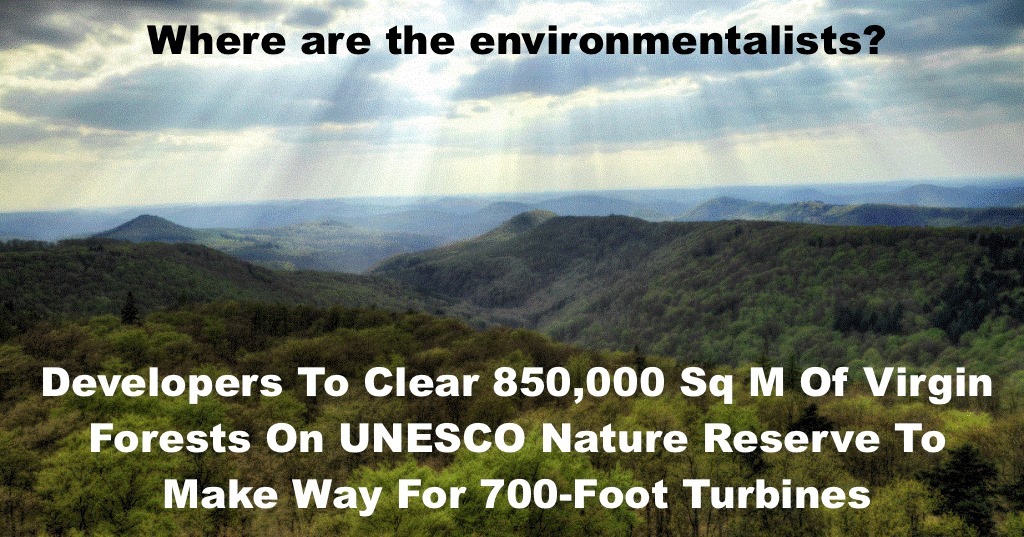
Via The-Galileo-Movement and dailymail.co.uk
Can One Enviropreneur Save an Endangered Species? See for Yourself | Learn Liberty
01 Aug 2014 Leave a comment
in entrepreneurship, environmental economics, law and economics, property rights Tags: endangered species, enviropreneurs
The poor carbon footprint of wind and solar
01 Aug 2014 Leave a comment
in economics of climate change, energy economics, environmental economics, environmentalism, global warming Tags: bootleggers and baptists, global warming, green rent seeking, solar power, wind power

Paul Joskow pointed out that these costs do not take account of the costs of intermittency: wind power is not generated on a calm day, nor solar power at night. Conventional power plants must be kept on standby. Electricity demand also varies during the day in ways that the supply from wind and solar generation may not match.
HT: The Economist via Sinclair Davidson
Why charging for plastic bags doesn’t work
31 Jul 2014 Leave a comment
in economics of regulation, environmental economics, environmentalism Tags: expressive voting, plastic bags, recycling

My local supermarket tried to charge for plastic bags then backed down because of customer protests.
In the UK, a compulsory 5p charge on plastic bags first resulted in a sharp drop consumption then a rise in in the use of plastic bags last year. It seems the immediate change in behaviour reaped by the new charges is short-lived and it doesn’t take long for old habits to re-emerge.
Attaching a cost to something that was free certainly reduces frivolous consumption, but if that cost that is too low can merely act to pay off one’s conscience.
Beware of putting a price on guilt and letting people down.
A classic paper from 2000, Gneezy and Rustichini studied what happened when day-care centres in Israel tried to reduce late parental pick-ups by introducing fines.
Before long, late pick-ups had not reduced, they had doubled. Why? Because parents felt that the fine was a price worth paying and the guilt which had previously controlled their behaviour was assuaged.

The best discussions on green interest group coalitions
26 Jul 2014 Leave a comment
in economics of regulation, environmental economics, global warming, Public Choice, rentseeking Tags: bootleggers and baptists, Bruce Yandle, environmental interest groups, global warming, green rent seeking, Todd Zywicki
Bootleggers, Baptists, and the Global Warming Battle By Bruce Yandle and Stuart Buck:
The theory’s name is meant to evoke 19th century laws banning alcohol sales.
- Baptists supported Sunday closing laws for moral and religious reasons, while bootleggers were eager to stifle their legal competition.
- Politicians were able to pose as acting in the interests of public morality, even while taking contributions from bootleggers.
Yandle and Buck argue that during the battle over the Kyoto Protocol, he “Baptist” environmental groups provided moral support while “bootlegger” corporations and nations worked in the background to seek economic advantages over their rivals.

BAPTISTS? THE POLITICAL ECONOMY OF POLITICAL ENVIRONMENTAL INTEREST GROUPS By Todd J. Zywicki who specifies three testable implications of a public interest model of the activities of environmental interest groups:
(1) a desire to base policy on the best-available science;
(2) a willingness to engage in deliberation and compromise to balance environmental protection against other compelling social and economic interests; and,
(3) a willingness to consider alternative regulatory strategies that can deliver environmental protection at lower-cost than traditional command-and-control regulation.
Zywicki concludes that It has been argued that environmental regulation can be best understood as the product of an unlikely alliance of “Baptists and Bootleggers” – public-interested environmental activist groups and private-interested firms and industries seeking to use regulation for competitive advantage.
Australia’s carbon debate mirrors global follies
19 Jul 2014 Leave a comment
in environmental economics, global warming, politics - Australia Tags: carbon tax, expressive voting


Recent Comments