Does Fractional Reserve Banking Endanger the Economy? A Debate
23 May 2020 Leave a comment
in business cycles, financial economics, law and economics, macroeconomics, monetary economics, property rights Tags: economics of banking, monetary policy
Free To Choose in Under 2 Minutes Episode 3 – Anatomy of Crisis
23 May 2020 Leave a comment
in business cycles, economic history, economics of bureaucracy, financial economics, great depression, labour economics, labour supply, macroeconomics, Milton Friedman, monetarism, monetary economics, Public Choice, unemployment Tags: monetary policy
Free To Choose in Under 2 Minutes Episode 1 – The Power of the Market
21 May 2020 Leave a comment
in applied price theory, applied welfare economics, comparative institutional analysis, constitutional political economy, development economics, economic history, economics of regulation, entrepreneurship, financial economics, growth miracles, history of economic thought, industrial organisation, international economics, labour economics, labour supply, law and economics, Milton Friedman, occupational choice, poverty and inequality, property rights, Public Choice, public economics, survivor principle, television Tags: capitalism and freedom
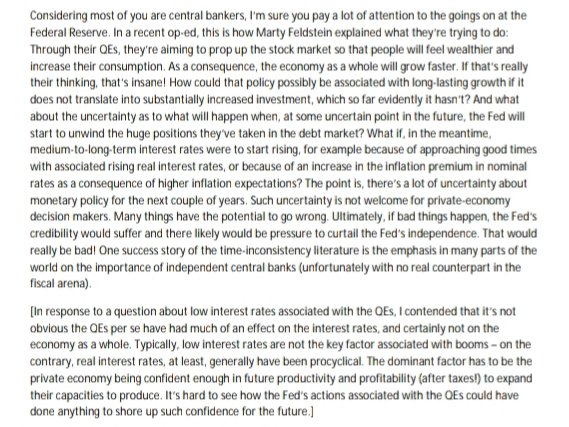
Robert Barro on the fiscal theory of inflation
18 May 2020 Leave a comment
in budget deficits, business cycles, econometerics, economic history, financial economics, fiscal policy, inflation targeting, macroeconomics, monetarism, monetary economics Tags: monetary policy, new classical macroeconomics
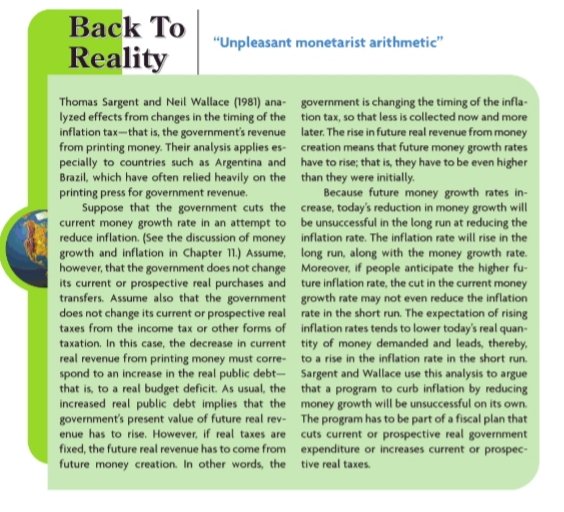
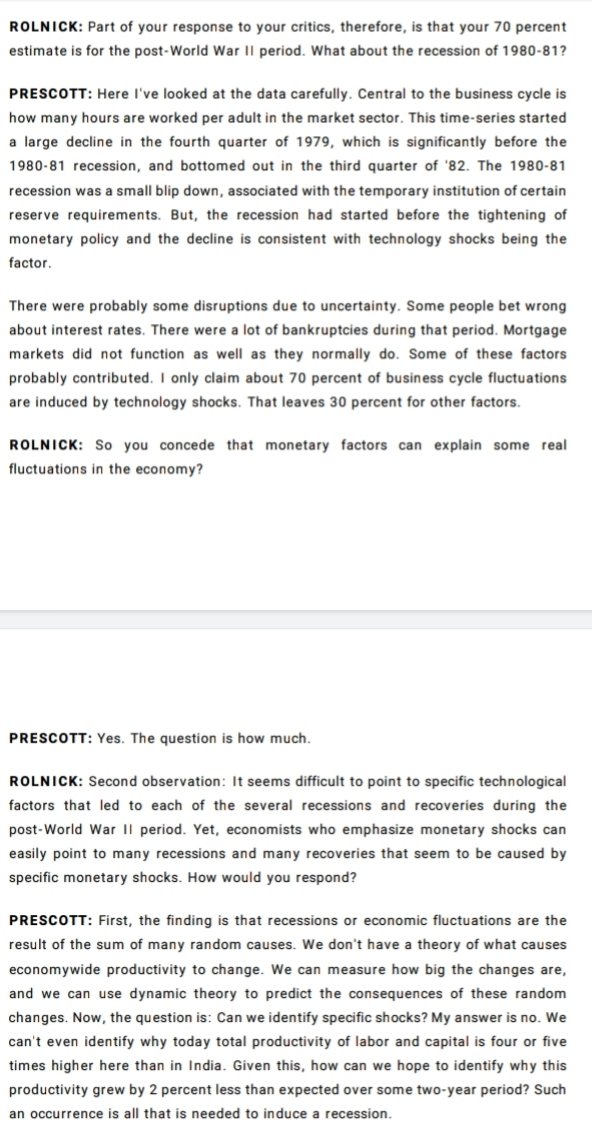
Michael Bordo – central banking
18 May 2020 Leave a comment
in business cycles, econometerics, economic history, financial economics, inflation targeting, macroeconomics, monetarism, monetary economics Tags: monetary policy
Michael D. Bordo: An Historical Perspective on the Quest for Financial Stability
13 May 2020 Leave a comment
in budget deficits, business cycles, econometerics, economic growth, economic history, financial economics, fiscal policy, global financial crisis (GFC), great depression, great recession, inflation targeting, international economics, job search and matching, macroeconomics, monetarism, monetary economics Tags: new classical macroeconomics
Free Banking and the Federal Reserve
13 May 2020 Leave a comment
in Austrian economics, business cycles, economic history, financial economics, macroeconomics, monetary economics Tags: free banking, monetary policy
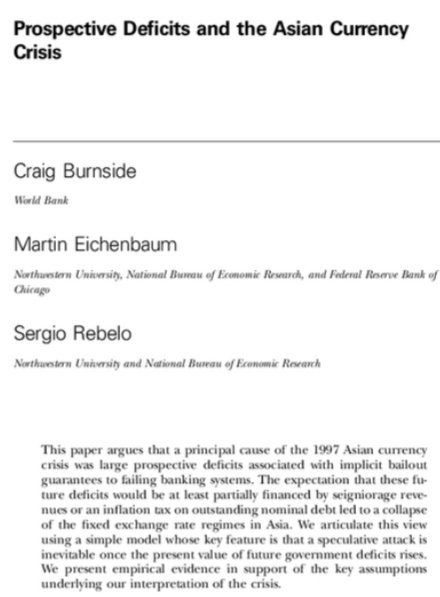
Stephen Williamson puzzles over quantitative easing
09 May 2020 Leave a comment
in business cycles, financial economics, global financial crisis (GFC), great recession, macroeconomics, monetary economics

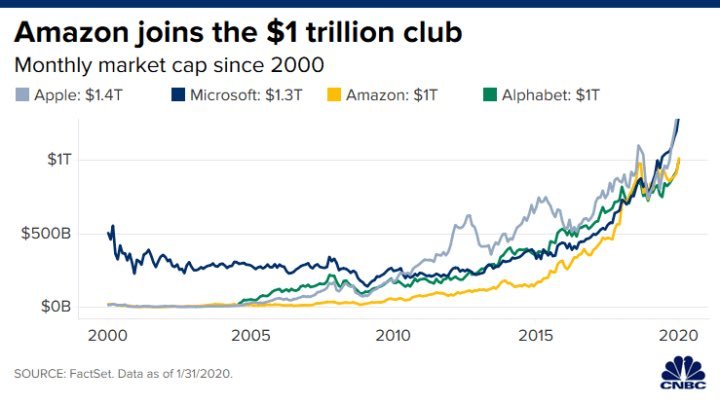
Amazon 1st made a profit in 2006
08 May 2020 Leave a comment
in economic history, entrepreneurship, financial economics, industrial organisation, survivor principle Tags: creative destruction
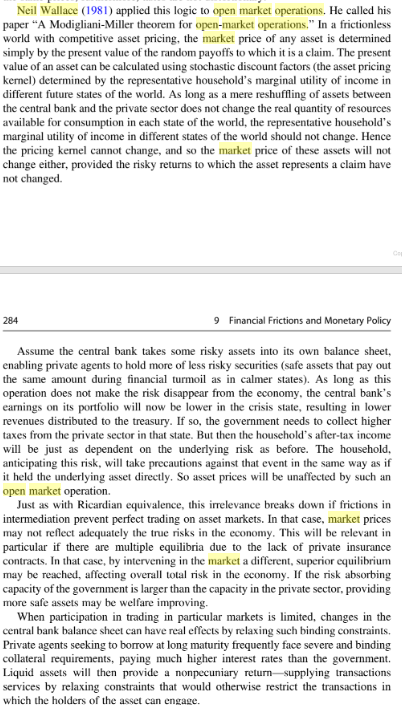
An explanation of Wallace neutrality for quantitative easing
01 May 2020 Leave a comment
in financial economics, macroeconomics, monetary economics
From https://books.google.co.nz/books?id=6kbCDwAAQBAJ&pg=PA283&lpg=PA283&dq=neil+wallace+open+market+operations&source=bl&ots=chwhTeUEA6&sig=ACfU3U1IPVipUeeC0tEa-phUVH7izIhT5A&hl=en&sa=X&ved=2ahUKEwihtKGGsZLpAhUdzDgGHSG4D5A4ChDoATACegQIChAB#v=onepage&q=neil%20wallace%20open%20market%20operations&f=false and https://www.jstor.org/stable/1802777?seq=1#metadata_info_tab_contents
Modigliani-Miller theorems for open market operations describe conditions under which central bank portfolio rearrangements will have no consequences for allocations, relative prices, or the time path of the price level.
Thomas Sargent 2013 MACROECONOMIC THEORY AND THE CRISIS
01 May 2020 Leave a comment
in budget deficits, business cycles, economic growth, economic history, Euro crisis, financial economics, fiscal policy, global financial crisis (GFC), great depression, great recession, macroeconomics, Milton Friedman, monetarism, monetary economics, Robert E. Lucas Tags: sovereign debt crises, sovereign defaults
 Utopia, you are standing in it!
Recent Comments