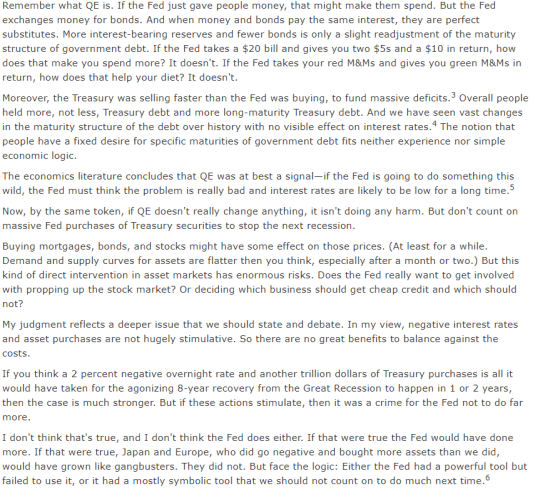
John Cochrane on quantitative easing not mattering much
01 May 2020 Leave a comment
in business cycles, financial economics, macroeconomics, monetary economics, politics - USA
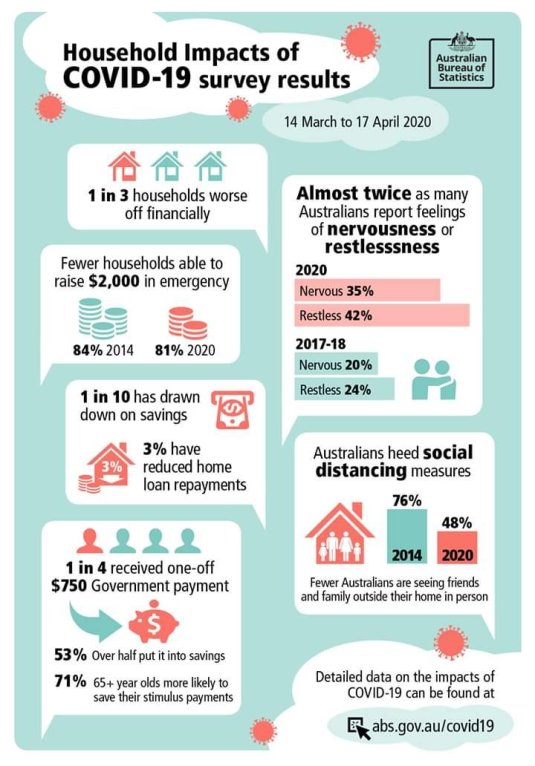
Majority saved $750 #COVID19 stimulus payment! Friedman’s permanent income hypothesis rules
01 May 2020 Leave a comment
in budget deficits, business cycles, financial economics, fiscal policy, macroeconomics, Milton Friedman, monetary economics, unemployment Tags: offsetting behaviour, permanent income hypothesis, The fatal conceit, unintended consequences
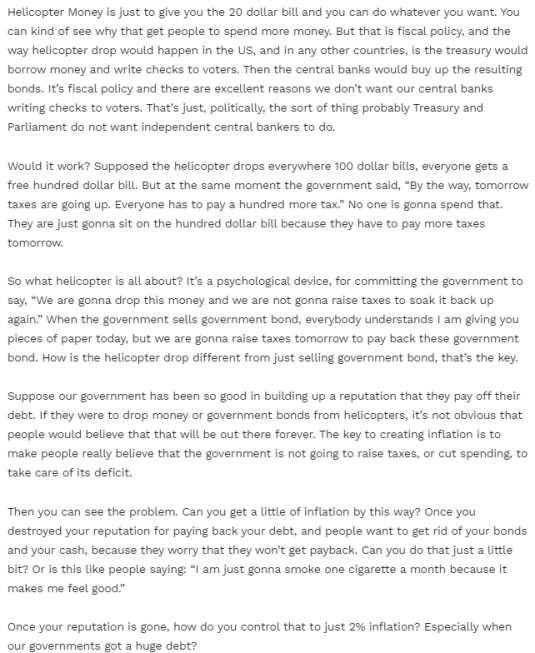
John Cochrane explains helicopter drops
01 May 2020 Leave a comment
in financial economics, fiscal policy, macroeconomics, Milton Friedman, monetarism, monetary economics, politics - New Zealand, public economics
Stephen Williamson on quantitative easing
29 Apr 2020 Leave a comment
in financial economics, monetary economics

Do economists ignore the impact of debt on the business cycle?
29 Apr 2020 Leave a comment
in business cycles, economic history, financial economics, global financial crisis (GFC), great depression, great recession, history of economic thought, macroeconomics, monetarism, monetary economics Tags: Keynesian macroeconomics, New Keynesian macroeconomics

Edward Prescott on the unimportance of monetary policy
29 Apr 2020 Leave a comment
in business cycles, economic history, Edward Prescott, financial economics, fiscal policy, global financial crisis (GFC), great depression, great recession, history of economic thought, macroeconomics, monetary economics
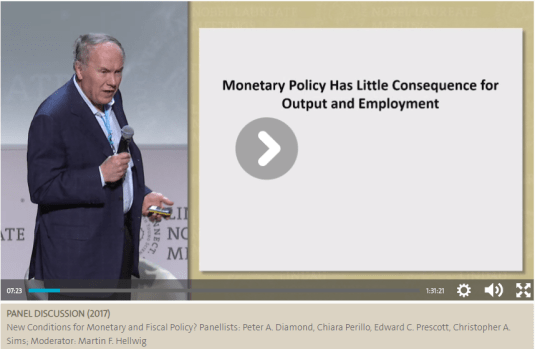
See lecture at https://www.mediatheque.lindau-nobel.org/videos/37267/panel-conditions-monetary-fiscal-policy/laureate-prescott
Edward Prescott, co-recipient of the Nobel Prize in 2004, took a different view in a presentation with the title ‘The Unimportance of Monetary Policy and Financial Crises on Output and Unemployment’. He cited financial crises that saw countries experiencing contrasting outcomes at the same time: the US and Asia in the 2008 crisis; Chile and Mexico in 1980; and Scandinavia and Japan in 1992.
‘Financial crises do not impede development,’ he claimed. While the 2008 financial crisis was localised in North America and the euro area, there was a short recession and quick recovery in Japan, Taiwan and South Korea and no recession in Scandinavia and Australia. ‘Countries where fiscal policy was irresponsible had problems’, he maintained. ‘Fiscal responsibility is crucial: to spend is to tax and to tax is to depress. That’s what happens every time.’

Are securities analysts doomed? | Lex Megatrends
29 Apr 2020 Leave a comment
in financial economics Tags: active investing, efficient markets hypothesis, passive investing
Edward C. Prescott on monetary policy
28 Apr 2020 Leave a comment
in business cycles, econometerics, economic history, Edward Prescott, financial economics, global financial crisis (GFC), great depression, great recession, inflation targeting, macroeconomics, monetary economics, Robert E. Lucas Tags: monetary policy
The Vice Fund and the wages of sin under #COVID19
27 Apr 2020 Leave a comment
in defence economics, economics of regulation, financial economics, health economics

From https://www.bloomberg.com/quote/VICEX:US
USA Mutuals Vitium Global Fund seeks long-term growth of capital by investing in equity securities of companies that derive a significant portion of their revenues from a group of vice industries that includes the alcoholic beverages, defense/aerospace, gaming and tobacco industries. The Fund will concentrate at least 25% of its net assets in this group of four vice industries.
The Destabilizing Consequences of Central Banking
27 Apr 2020 Leave a comment
in Austrian economics, business cycles, economic history, financial economics, macroeconomics, monetary economics Tags: economics of banking, free banking, monetary policy
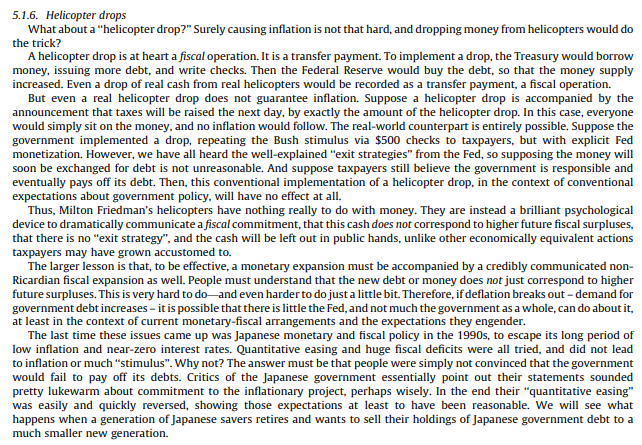
John Cochrane explains helicopter drops
25 Apr 2020 Leave a comment
in business cycles, financial economics, fiscal policy, macroeconomics, Milton Friedman, monetarism, monetary economics, politics - New Zealand, public economics
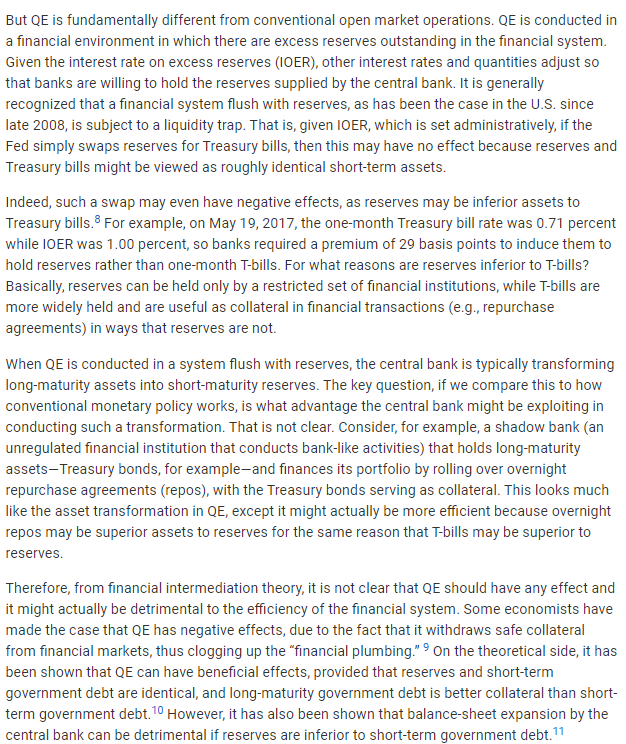
Stephen Williamson explains quantitative easing
25 Apr 2020 Leave a comment
in financial economics, macroeconomics, monetary economics
The Fed and Lehman Brothers: setting the record straight on a financial disaster
23 Apr 2020 Leave a comment
in business cycles, financial economics, global financial crisis (GFC), macroeconomics, monetary economics Tags: banking panics
A Conversation with Harold Demsetz
22 Apr 2020 Leave a comment
in applied price theory, Armen Alchian, comparative institutional analysis, economic history, economics of bureaucracy, economics of information, economics of regulation, entrepreneurship, environmental economics, financial economics, George Stigler, health economics, history of economic thought, industrial organisation, law and economics, property rights, Public Choice, resource economics, Richard Posner, Ronald Coase, Ronald Coase, Ronald Coase, survivor principle, theory of the firm, transport economics, urban economics
 Utopia, you are standing in it!
Recent Comments