.@Bagault: Large racial differences on women's health status – especially for black women #StatusOfWomen2015 http://t.co/LcmnTIA1Rv—
IWPR (@IWPResearch) May 20, 2015
Race and health outcomes in the USA
18 Sep 2015 Leave a comment
in health economics, politics - USA Tags: cancer rates, life expectancies
Good queues and bad queues at hospital emergency rooms
16 Sep 2015 Leave a comment
in health economics Tags: economics of hospitals, triage
This hospital waiting room has some unexpected wisdom. http://t.co/3iPAo0b8fj—
(@SciencePorn) September 16, 2015
The herd immunity role of #vaccinations explained
16 Sep 2015 Leave a comment
in applied price theory, applied welfare economics, health economics, politics - New Zealand, public economics Tags: Anti-Science left, anti-vaccination movement, best shot public goods, cheap riders, common law, free-riders, good shot public goods, herd immunity, measles, New Zealand Greens, public goods, quackery, tort law, vaccinations, vaccines
Some public goods can be not provided much at all if even a few do not contribute – free ride. These are called weakest shot public goods. The link in the chain is only as strong as the weakest link for some public goods. The fighting against communicable diseases is an example of that.

The classic example given by that brilliant applied price theorist Jack Hirschleifer is a dyke or a levee wall around a town. It is only as good as the laziest person contributing to its maintenance on their part of the levee wall. Vicary (1990, p. 376) lists other examples:
Similar examples would be the protection of a military front, taking a convoy across the ocean going at the speed of the slowest ship, or maintaining an attractive village/landscape (one eyesore spoils the view).
Many instances of teamwork involve weak-link elements, for example moving a pile of bricks by hand along a chain or providing a theatrical or orchestral performance (one bad individual effort spoils the whole effect.)
Another example of weakest shot public goods is community cooperation after disasters. The quality of the public good provided is equal to the contribution of the weakest person who may start a criminal rampage despite the good efforts of everyone else.
 People tend to be more cooperative after natural disasters. They realise their contribution is more important than normal to the maintaining of the social fabric which is currently hanging by a thread.

Vaccinations are example of a weakest shot public good. The quality of herd immunity depends fundamentally on just about everybody contributing by getting vaccinated. Not all public goods depend on the some of those contributions made. In some cases just a few people choosing to free ride can greatly undermine the public interest.
The reverse of a weakest shot public good is best shot public goods. Example of this is the development of vaccines themselves. The public good is only as good as the best effort at developing the new vaccine with all the others efforts pointless because the best of the vaccines is chosen.
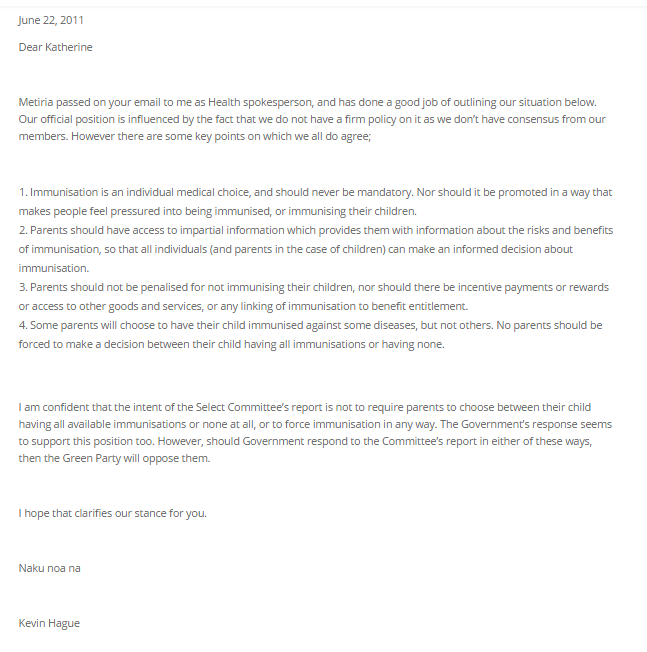
The most curious people in New Zealand to oppose measures to address the under provision of weakest shot public goods are the New Zealand Greens.
https://twitter.com/KevinHague/status/642505850360213505
The Greens are usually the 1st to stress the importance of communities working together for the common good.
https://twitter.com/KevinHague/status/642530277177192448
Herd immunity protects those who cannot be safely vaccinated including new babies, those for whom the vaccine fails, which occasionally happens, and those with compromised immunity such as adults receiving chemotherapy.
Deliriously hot @guardian sim shows why anti-measles jabs help protect your whole community gu.com/p/45f7e/stw http://t.co/H31ZKbXkqg—
Info=Beautiful (@infobeautiful) February 05, 2015
We are all in this together. It is time for the New Zealand Greens to stop pandering to those are only think of themselves and what a free ride on others including the very sick and new babies.

Source: NOVA | What is Herd Immunity?
Herd immunity requires vaccination rates of about 94%. The near universal vaccination rates required for herd immunity are to smaller margin to pander to an awkward squad who do not want to vaccinate despite the harm they do to others.
Harm to others is grounds and has always been grounds for public policy and public health interventions. Instead, the Greens are anti-science, anti-public health.
Measles is the most contagious disease known to man. Seven children died in New Zealand in the last measles outbreak in 1991. The dead are already too many from the anti-vaccination quacks and cranks.
The Great Escape for 10-year-old Americans
16 Sep 2015 Leave a comment
in economic history, health economics, politics - USA Tags: clean drinking water, health and sanitation, life expectancies, public health, The Great Escape, The Great Fact, vaccines
The Health Transition in the US + public health and medical milestones.
New paper: bit.ly/1F1OxYi http://t.co/8IW8EjCkwQ—
Max Roser (@MaxCRoser) September 12, 2015
The Great Escape by continent
14 Sep 2015 Leave a comment
in development economics, economic history, growth disasters, growth miracles, health economics Tags: Africa, child mortality, China, India, infant mortality, life expectancies, South America, The Great Escape
'The world is getting better all the time, in 11 maps and charts' – bit.ly/1M7W4Xr http://t.co/slB6oStjFq—
Max Roser (@MaxCRoser) July 14, 2015
Watch your back in Rap & Hip-Hop, look after yourself in Heavy Metal and Punk
13 Sep 2015 Leave a comment
in economic history, economics of crime, economics of media and culture, health and safety, health economics, labour economics, law and economics, Music, occupational choice Tags: crime and punishment, homicide rates, law and order, suicide
What kills popular musicians? Depends on the genre http://t.co/BTDvdWOS4F—
paulkirby (@paul1kirby) September 11, 2015
The #nannystate goes to #China
12 Sep 2015 Leave a comment
in economics of regulation, health economics Tags: China, Macau, meddlesome preferences economics of smoking, nanny state
Macau’s casinos are fuming over proposed smoking ban bloom.bg/1K08Jcg http://t.co/pCcY7XNBNh—
Bloomberg Business (@business) September 11, 2015
What do #McDonalds & @GreenpeaceNZ no longer have in common? @NZGreens @RusselNorman
12 Sep 2015 Leave a comment
in economics of regulation, environmental economics, environmentalism, global warming, health economics, politics - New Zealand Tags: anti-science left eye global warming, climate alarmism, GMOs, Greenpeace, Leftover Left, New Zealand Greens, Russell Norman, The Great Escape, The Great Fact, Twitter left
Like McDonalds, Greenpeace globally is a brand. I read the papers every day in detail but are utterly clueless as to who its leaders are. That is a deliberate branding decision so people cannot conflate the inevitably dodgy and far left backgrounds of its leaders and activist support base with self appointed environmental do-gooders brand.

That is no longer so in New Zealand where a middle-age political junkie retiring as co-leader of the New Zealand Greens will now be their CEO in New Zealand.
.@RusselNorman to lead @GreenpeaceNZ bit.ly/1K08JJj http://t.co/M4QNmeGQjr—
Greenpeace NZ (@GreenpeaceNZ) September 10, 2015
If Russell Norman wants to do his job properly, you should never give an interview, never appear in public.
Incoming @GreenpeaceNZ leader @RusselNorman says Greenpeace critical for humanity's future stuff.co.nz/national/polit… http://t.co/XqpxYjYmf4—
Greenpeace NZ (@GreenpeaceNZ) September 12, 2015
What is worse is the carrying on by the Greens about the retirement of Russell Norman to lead the Greenpeace in New Zealand.
If they wanted to maintain the political effectiveness of Greenpeace, they should have made a short press release congratulating him on his retirement and wishing him well in his new job and saying little more. The Greens should stop carrying on as though you have taken over Greenpeace New Zealand.
I do not wish Greenpeace well with its anti-growth, anti-science, anti-human agenda, so I hope this was a mistake and I hope I am not interrupting them in making that mistake.
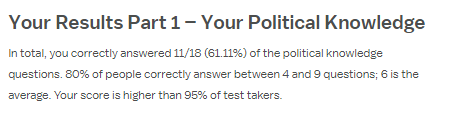
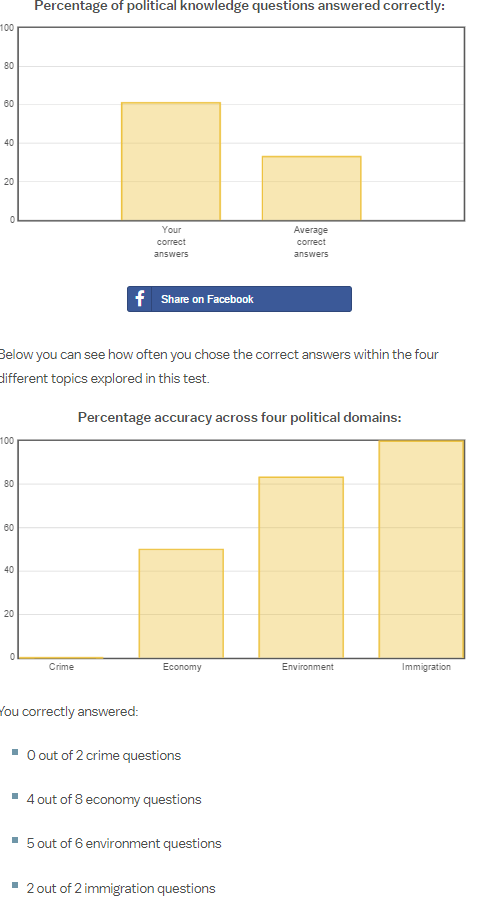
This #Vox political bias test is biased despite my good result
11 Sep 2015 Leave a comment
in economic growth, economic history, economics of climate change, economics of crime, environmental economics, health economics, macroeconomics
The Great Escape in Chinese infant mortality was stunning
11 Sep 2015 Leave a comment
in development economics, economic history, growth disasters, growth miracles, health economics, Marxist economics Tags: child mortality, China, global poverty, infant mortality, stream poverty, The Great Escape
China's infant mortality rate fell 85% since 1970, nearing the U.S. rate. buff.ly/1g7eLNk #health http://t.co/b9eno1jk6X—
HumanProgress.org (@humanprogress) September 08, 2015
How is the population bomb going?
10 Sep 2015 Leave a comment
in development economics, economic history, growth disasters, growth miracles, health economics, population economics Tags: population bomb
The Great Escape actually accelerated after the GFC
10 Sep 2015 Leave a comment
in development economics, economic history, global financial crisis (GFC), growth disasters, growth miracles, health economics, labour economics, macroeconomics, poverty and inequality Tags: child poverty, extreme poverty, global poverty, India, The Great Escape, The Great Fact
In 1993, >30% of India's urban population lived in extreme poverty. In 2011? Only 13%. buff.ly/1iutlQA http://t.co/238hsW2aeF—
HumanProgress.org (@humanprogress) September 09, 2015
The Great Fact – undernourishment in developing countries (under the jackboot of neoliberalism)
10 Sep 2015 Leave a comment
in development economics, economic history, growth disasters, growth miracles, health economics Tags: capitalism and freedom, extreme poverty, global hunger, The Great Escape, The Great Fact


Recent Comments