The cognitive biases of the…
14 Jul 2015 Leave a comment
in health economics Tags: anti-vaccination movement, antiscience left, cognitive biases, cognitive psychology, expressive voting, political psychology, rational ignorance, rational irrationality
A stunning aspect of The Great Escape since my parents were born
13 Jul 2015 Leave a comment
in applied welfare economics, development economics, economic history, growth disasters, growth miracles, health economics Tags: Africa, British economy, British history, child mortality, child poverty, infant mortality, life expectancies, The Great Enrichment, The Great Escape, The Great Fact
"Today, children in sub-Saharan Africa are more likely…"—Prof. Angus Deaton, @Princeton
Data: buff.ly/1K2tELk http://t.co/lrTdiLi3F7—
HumanProgress.org (@humanprogress) July 12, 2015
The Great Escape in China, India and Indonesia
12 Jul 2015 Leave a comment
in applied welfare economics, development economics, economic history, growth disasters, growth miracles, health economics Tags: China, India, Indonesia, life expectancies, The Great Escape, The Great Fact
These 4 nations are 50% of mankind. That's 3.5 billion people who are living longer. buff.ly/1Kle6mU #health http://t.co/949oqisMsL—
HumanProgress.org (@humanprogress) June 30, 2015
The Great Escape: infant mortality since 1990
10 Jul 2015 Leave a comment
in development economics, growth disasters, growth miracles, health economics Tags: child poverty, extreme poverty, global poverty, infant mortality, life expectancies, The Great Enrichment, The Great Escape, The Great Fact
Child mortality declined in all world regions.
Here is by how much: http://t.co/06lS3ZELKr—
Max Roser (@MaxCRoser) June 26, 2015
The reduction of Polio in Africa
10 Jul 2015 Leave a comment
in development economics, growth disasters, growth miracles, health economics Tags: Africa, anti-vaccination movement, polio, quackery, vaccinations, vaccines
The reduction of Polio in Africa. http://t.co/JKL1Kfx2qr—
Max Roser (@MaxCRoser) June 29, 2015
Diabetes prevalence by age and country
09 Jul 2015 Leave a comment
in health economics Tags: diabetes
The Great Escape in disease mortality across the industrialised countries
08 Jul 2015 Leave a comment
in health economics Tags: life expectancies, mortality rates, The Great Escape
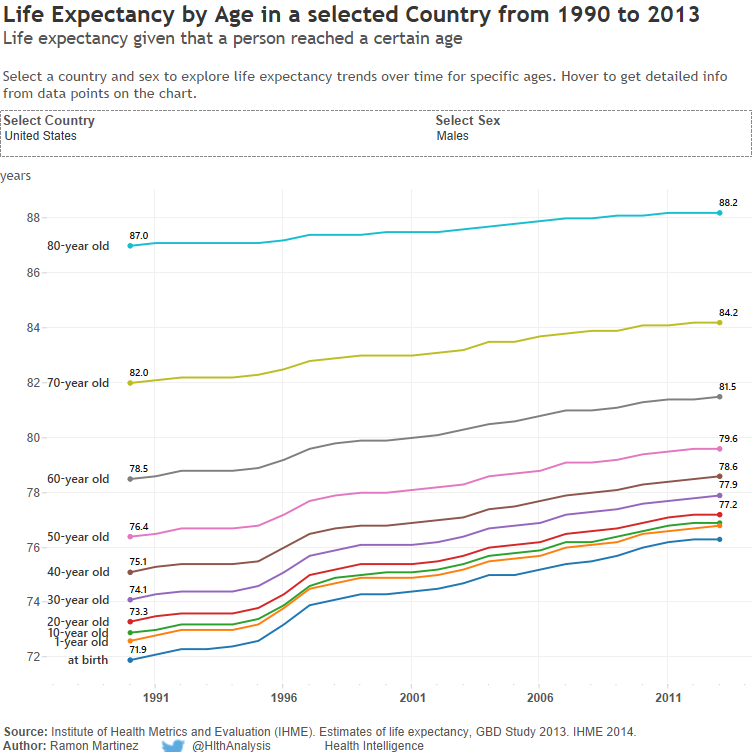
American life expectancy increases by age cohort from 1990
08 Jul 2015 Leave a comment
in economic history, health economics, politics - USA Tags: life expectancies

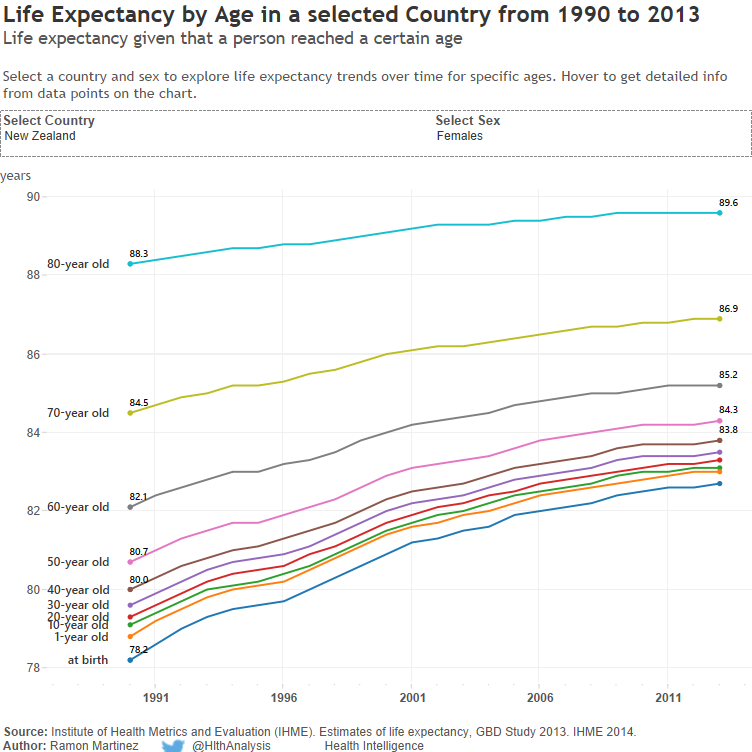
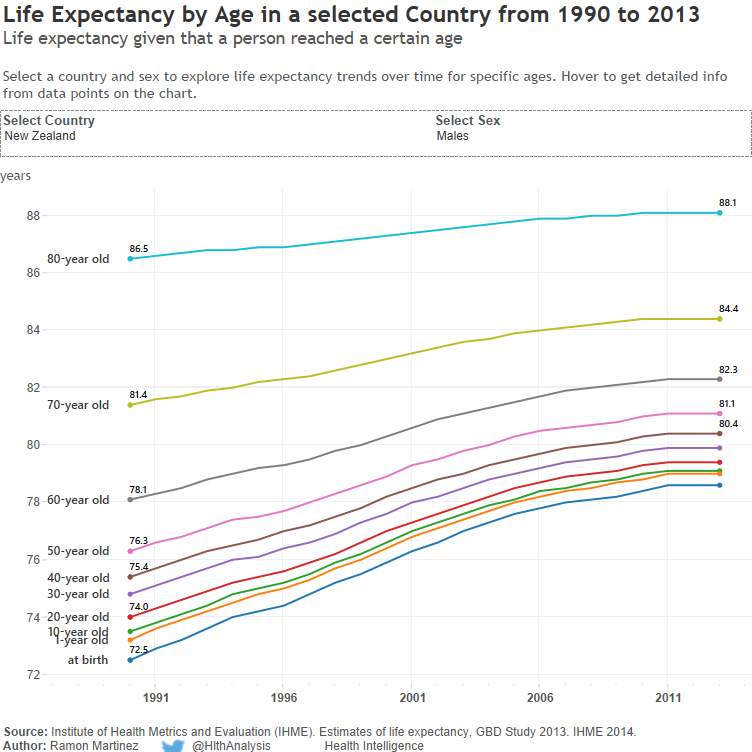
New Zealand life expectancy increases by age cohort from 1990
07 Jul 2015 Leave a comment
in health economics Tags: life expectancies, New Zealand, The Great Escape
Who invented the whooping cough vaccination?
07 Jul 2015 Leave a comment
in economic history, health economics Tags: vaccinations, vaccines, Whooping cough
Matt Ridley on the Pope and The Great Fact
06 Jul 2015 Leave a comment
in applied price theory, applied welfare economics, development economics, economic history, economics of regulation, energy economics, entrepreneurship, environmental economics, financial economics, growth disasters, growth miracles, health economics, history of economic thought, human capital, industrial organisation, labour economics, liberalism, survivor principle Tags: doomsday prophecies, Matt Ridley doomsday prophets, Papal economics, The Great Enrichment, The Great Escape, The Great Fact
See which way the data points for yourself, like @mattwridley. buff.ly/1HsZxgx #health #progress http://t.co/B3KbUJOn05—
HumanProgress.org (@humanprogress) June 30, 2015
Weight control ads in days gone by
04 Jul 2015 Leave a comment
Men wouldn't look at me when I was skinny. Surprising #vintage ad – things change. http://t.co/wbZOML4XX4—
This is stunning! (@thisisstunning) May 12, 2015
Where Cannabis is legal
03 Jul 2015 1 Comment
in economics of crime, economics of regulation, health economics, law and economics, liberalism, politics - Australia, politics - New Zealand, politics - USA Tags: marijuana decriminalisation, meddlesome preferences, medical marijuana decriminalisation, nanny state
Map of where Cannabis is legal (2014)
From: bit.ly/1uZ2uvq http://t.co/e0W7fJ8FZC—
Max Roser (@MaxCRoser) June 30, 2015


Recent Comments