Revisiting Empirical Macroeconomics with Robert Barro (Harvard Economics…
28 Sep 2025 Leave a comment
in budget deficits, business cycles, economic growth, fiscal policy, history of economic thought, macroeconomics, monetary economics
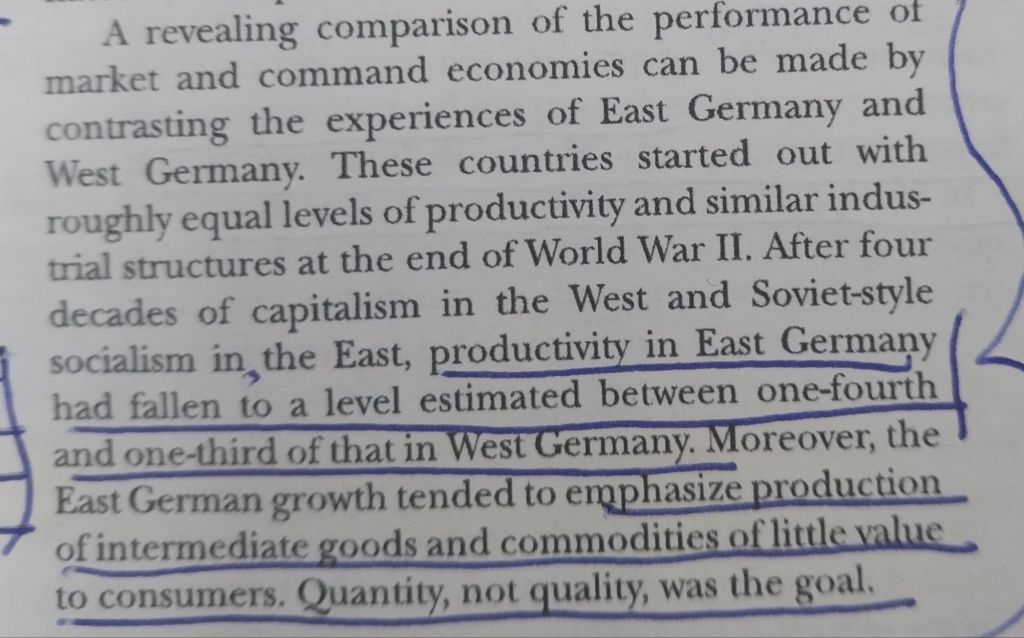
Samuelson on socialism
25 Sep 2025 Leave a comment
in applied price theory, development economics, economic history, growth disasters, growth miracles, history of economic thought, Marxist economics Tags: East Germany, economics of central planning, West Germany
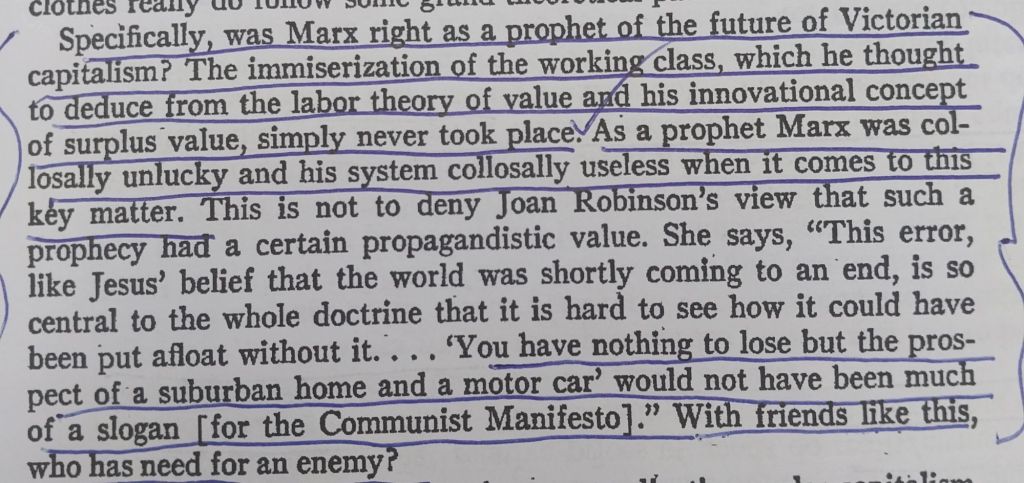
Samuelson on Marx
24 Sep 2025 Leave a comment
in applied price theory, economic history, history of economic thought, Marxist economics
Milton Friedman Did Not Concoct a False Image of Adam Smith
21 Sep 2025 Leave a comment
in Adam Smith, history of economic thought, Milton Friedman
TweetHere’s a letter to the Wall Street Journal. Editor: Glory Liu argues that, in reality, Adam Smith wasn’t as favorably disposed to free markets as Milton Friedman portrayed him as being (“Adam Smith Is Known for His ‘Invisible Hand’ Theory. The Truth Is More Complex.” September 13). Her evidence for this thesis is thin. While,…
Milton Friedman Did Not Concoct a False Image of Adam Smith
💰 Inflation, Debt & The Future of the Economy | A Conversation with John Cochrane
12 Sep 2025 1 Comment
in budget deficits, business cycles, currency unions, fiscal policy, history of economic thought, inflation targeting, macroeconomics, Milton Friedman, monetarism, monetary economics Tags: monetary policy
Vernon Smith on Donald Trump’s Protectionism
11 Sep 2025 Leave a comment
in applied price theory, development economics, economic history, economics of bureaucracy, history of economic thought, income redistribution, international economics, politics - USA, Public Choice, rentseeking Tags: free trade, tariffs
TweetMy emeritus Nobel-laureate colleague, Vernon Smith, sent the following email to me in response to this post. I share Vernon’s note with his kind permission. Don, Trump, like all businesspersons turned political, wants government favors, that is Mercantilism which is as bad today as when Adam Smith railed against such cozy relationships. Same for labor…
Vernon Smith on Donald Trump’s Protectionism
A Positive Account of Rights with David Friedman
09 Sep 2025 Leave a comment
in applied price theory, constitutional political economy, David Friedman, economic history, economics of crime, Gordon Tullock, history of economic thought, law and economics, liberalism, libertarianism, property rights, Public Choice
Book review: Lives of the Laureates
05 Sep 2025 Leave a comment
in history of economic thought

During my travels in Europe, I managed to get through reading Lives of the Laureates, which includes autobiographical accounts written by Nobel Prize winners in economics. The source material is an ongoing lecture series hosted by Trinity University in Texas, who invite recent Nobel laureates from US institutions to reflect on their ‘evolution as an…
Book review: Lives of the Laureates
The Ongoing Tragedy of Cuban Socialism
30 Aug 2025 Leave a comment
in applied price theory, development economics, econometerics, economic history, economics of bureaucracy, growth disasters, history of economic thought, industrial organisation, law and economics, Marxist economics, property rights, Public Choice Tags: Cuba

I’ve written several articles about the failure of Cuban socialism (2024, 2022, 2021, 2019, and 2016). My leftist friends almost always respond by claiming that U.S.-imposed trade restrictions are the primary reason for Cuba’s terrible economy. Since I like free trade, I certainly agree that trade restrictions are bad for growth (a lesson I wish […]
The Ongoing Tragedy of Cuban Socialism
Voltaire on the Civility of Markets
28 Aug 2025 Leave a comment
in applied price theory, history of economic thought
A person does not really read Voltaire’s Philosophical Dictionary (1764)–or at least I don’t –but instead surfs through it from time to time, trying to hit some of the high spots. Here are a couple of comments for reflection on a summer’s day, from the 1901 translation by William Fleming. In the entry under “Presbyterian,”…
Voltaire on the Civility of Markets
Civitas Institute’s Tariff Symposium
28 Aug 2025 Leave a comment
in applied price theory, applied welfare economics, development economics, history of economic thought, international economics, politics - USA Tags: tarrifs
TweetThe Civitas Institute at UT-Austin just published a superb symposium on tariffs, with contributions by Richard Epstein, Samuel Gregg, Dirk Mateer, Dominic Pino, and my intrepid Mercatus Center colleague, Veronique de Rugy. Below are some slices. “The Man Who Knew Too Little: Donald Trump on Tariffs” (Richard Epstein): It is a dangerous state of affairs…
Civitas Institute’s Tariff Symposium
More On Alleged Chinese Dumping
24 Aug 2025 Leave a comment
in applied price theory, development economics, economic history, entrepreneurship, growth miracles, history of economic thought, industrial organisation, international economics, politics - USA, Public Choice, rentseeking Tags: free trade, tariffs
TweetHere’s a second note to a commenter at my Facebook page. Mr. Schlomach: Commenting on my Facebook page, you allege that China ‘dumps’ goods in the U.S. and, in doing so, “has used our love of cheap stuff to suck our country of strategically critical technology/industry.” By suggesting that your fellow Americans buy stuff simply…
More On Alleged Chinese Dumping
Some Links
11 Aug 2025 1 Comment
in applied price theory, economic history, history of economic thought, international economics, politics - USA Tags: tarrifs
TweetFareed Zakaria, writing in the Washington Post, eloquently corrects many of the fallacies believed by MAGA-types (and also by many – most? – progressives’) about the American economy. Two slices: The Organization for Economic Cooperation and Development’s measure of median disposable household income in America was higher than in all but one advanced industrial economy…
Some Links
Diocletian, the Roman Empire, and Forever Failing Price Controls
08 Aug 2025 1 Comment
in applied price theory, economic history, economics of regulation, history of economic thought Tags: price controls, Roman empire
By Tarnell Brown. At EconLog.”The Roman Empire was in trouble. During the fifty-plus years known as the Crisis of the Third Century (235-284 AD), the throne of Rome changed some 26 times, with the Roman Army engaging in a steady diet of crowning and removing claimants to the throne. These autocrats, known as “barracks emperors,”…
Diocletian, the Roman Empire, and Forever Failing Price Controls
Horseshoe Theory: Trump and the Progressive Left
26 Jul 2025 Leave a comment
in applied price theory, economics of regulation, history of economic thought, income redistribution, international economics, International law, labour economics, labour supply, Marxist economics, politics - USA, Public Choice, rentseeking Tags: 2024 presidential election, regressive left, tarrifs
Many of Trump’s signature policies overlap with those of the American progressive left—e.g. tariffs, economic nationalism, immigration restrictions, deep distrust of elite institutions, and an eagerness to use the power of the state. Trump governs less like Reagan, more like Perón. As Ryan Bourne notes, this ideological convergence has led many on the progressive left […]
Horseshoe Theory: Trump and the Progressive Left


Recent Comments