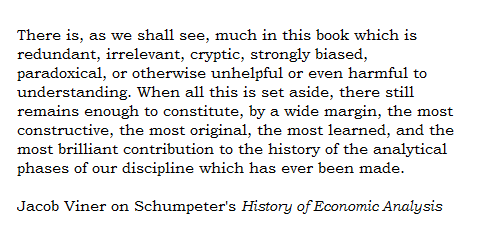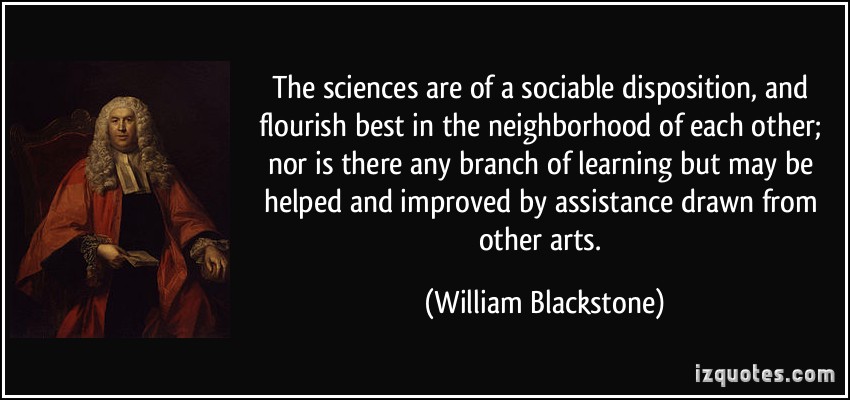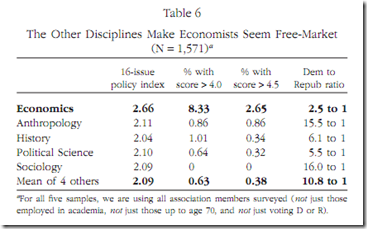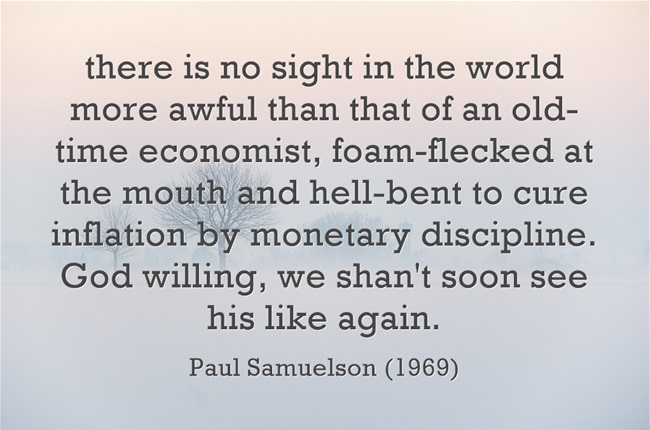
HT: deirdremccloskey via cafehayek
Celebrating humanity's flourishing through the spread of capitalism and the rule of law
20 Aug 2014 Leave a comment
in applied welfare economics, development economics, growth disasters, growth miracles, history of economic thought, income redistribution, liberalism Tags: Deirdre McCloskey, poverty versus inequality, The Great Escape The Age of Enlightenment, The Great Fact

HT: deirdremccloskey via cafehayek
05 Aug 2014 Leave a comment
in Adam Smith, history of economic thought Tags: Deirdre McCloskey
21 Jul 2014 4 Comments
in history of economic thought, human capital, labour economics Tags: Alfred Marshall, human capital
Marshall viewed education as an instrument capable of lifting up the poor and relocating them into the middle class. The direct benefits come from eliminating much of
that wasteful negligence which allows genius that happens to be born of lowly parentage to expend itself in lowly work
The indirect benefits of education came from character formation:
[Education] confers great indirect benefits even on the ordinary workman. It stimulates his mental activity, it fosters in him a habit of wise inquisitiveness: it makes him more intelligent, more ready, more trustworthy in his ordinary work; it raises the tone of his life in working hours and out of working hours; it is thus an important means toward the production of material wealth; at the same time that, regarded as an end in itself, it is inferior to none of those which the production of material wealth can be made to subserve.
Marshall’s primary solution to the problem of poverty is education, but he also exhorts individuals to behave responsibly, with thrift and self control.
11 Jul 2014 Leave a comment

21 Jun 2014 Leave a comment
in Adam Smith, health and safety, history of economic thought, human capital, labour economics, labour supply, occupational choice Tags: Adam Smith, Alfred Marshall, compensating differences, george stigler, human capital, The wealth of nations, wage determination

Adam Smith anticipated much of labour economics by basing it on his principle that individuals invest resources to earn the highest possible return. All uses of a resource must yield an equal rate of return adjusted for relative riskiness for otherwise reallocation would result.
The whole of the advantages and disadvantages of the different employments of labour and stock must, in the same neighbourhood, be either perfectly equal or continually tending to equality.
If in the same neighbourhood, there was any employment evidently either more or less advantageous than the rest, so many people would crowd into it in the one case, and so many would desert it in the other, that its advantages would soon return to the level of other employments.
Smith used this insight on be equality of returns to explain why wage rates differed. Workers care about the whole aspects of the job, not only the cash wage payment: it is the “whole advantages and disadvantages” of the job that is equated across jobs in a competitive market, not wage alone. Smith set out criteria that determined how wages compensated or were discounted for the different characteristics of specific jobs:
The supply and demand for labour in different industries determines relative wages and the relative numbers of employees in different occupations. Individuals are willing to make a trade-off between less desirable occupations and increased income. Smith spoke of how these five circumstances listed above lead to considerable inequalities in the wages and profits.
George Stigler thought that the second greatest triumph of Adam Smith in his Wealth of Nations was his famous list of cost factors that generate apparent but not real differences in rates of wages and profits because of training, hardships, unemployment, risk and trust. This list was quoted almost verbatim by his successors down to this day and is the direct ancestor of both Alfred Marshall’s famous chapters on wages and of the modern theory of human capital.
17 Jun 2014 Leave a comment
in Gary Becker, George Stigler, history of economic thought Tags: methodology of economics

this recession had got a lot worse, we would have seen two major changes: much more government intervention in the economy, and a lot more concentration in economics in trying to understand what went wrong.
Assuming I’m right and, fundamentally, the recession is over—a severe recession but maybe not much greater than the 1981 recession, or those in the nineteen-seventies—I think you are not going to see a huge increase in the role of government in the economy.…
Economists will be struggling to understand how this crisis happened and what you can do to head another one off in the future, but it will be nothing like the revolution in the role of government and in thinking that dominated the economics profession for decades after the Great Depression.

If the problems of economic life changed frequently and radically, and lacked a large measure of continuity in their essential nature, there could not be a science of economics.
An essential element of a science is the cumulative growth of knowledge, and that cumulative character could not arise if each generation of economists faced fundamentally new problems calling for entirely new methods of analysis…
[Economics] will continuously be confronted with new circumstances which call for more than a routine application of standard knowledge. Thus the energy crisis of the nineteen-seventies has provided much employment to economists, but it has not called for important changes in economic science…
The responsiveness of economics to environmental problems will naturally be more complete and more prompt, the more urgent the problems of the day. The response will also be more complete, the less developed the relevant body of economic analysis.
The responsiveness of macroeconomics to contemporary events is notorious. Keynes’s conquest in the nineteen-thirties was due to the fact that the neoclassical theory could not account for the persistent unemployment of that decade. A generation later, persistent inflation even with less than full employment was equally decisive in ending Keynes’s supremacy. If and when macroeconomics produces a good theory of the business cycle, its responsiveness to environmental changes will diminish sharply
16 Jun 2014 Leave a comment
in history of economic thought, industrial organisation, law and economics, Ronald Coase Tags: blackboard economics, methodology of economics
This neglect of other aspects of the system has been made easier by another feature of modern economic theory – the growing abstraction of the analysis, which does not seem to call for a detailed knowledge of the actual economic system or, at any rate, has managed to proceed without it.
Holmstrom and Tirole, writing on The Theory of the Firm in the recently published Handbook of Industrial Organization, conclude at the end of their article of 63 pages that "the evidence/theory ratio… is currently very low in this field". Peltzman has written a scathing review of the Handbook in which he points out how much of the discussion in it is theory without any empirical basis.
What is studied is a system which lives in the minds of economists but not on earth.
I have called the result "blackboard economics". The firm and the market appear by name but they lack any substance. The firm in mainstream economic theory has often been described as a "black box". And so it is.
This is very extraordinary given that most resources in a modern economic system are employed within firms, with how these resources are used dependent on administrative decisions and not directly on the operation of a market.
Consequently, the efficiency of the economic system depends to a very considerable extent on how these organisations conduct their affairs, particularly, of course, the modern corporation.
Even more surprising, given their interest in the pricing system, is the neglect of the market or more specifically the institutional arrangements which govern the process of exchange.
As these institutional arrangements determine to a large extent what is produced, what we have is a very incomplete theory.
Four years before his Nobel lecture, Coase was more specific:
Marginal cost pricing is a policy is largely without merit.
How then can one explain the widespread support that it has enjoyed in the economics profession?
I believe it is the result of economists using an approach which I have termed “blackboard economics.”
The policy under consideration is one which is implemented on the blackboard. All the information needed is assumed to be available and the teacher plays all the parts. He fixes prices, imposes taxes, and distributes subsidies (on the blackboard) to promote the general welfare.
But there is no counterpart to the teacher within the real economic system. There is no one who is entrusted with the task that is performed on the black- board.
In the back of the teacher’s mind (and sometimes in the front of it) there is, no doubt, the thought that in the real world the government would fill the role he plays. But there is no single entity within the government which regulates economic activity in detail, carefully adjusting what is done in one place to accord with what is done elsewhere.
Coase argued that marginal cost pricing is not only inefficient, but even inferior to average cost pricing due to:
(i) the fact that under marginal cost pricing, consumers are not forced to pay the full costs of the goods they purchase, leading to potentially inefficient consumption choices;
(ii) the lack of information necessary for the government to determine whether consumers would be willing to pay an amount sufficient to cover the total cost of the goods produced, and costly nature of attempts to make such estimates; and
(iii) the fact that the governmental subsidy necessary to ensure firm survival under a marginal cost pricing scheme will likely be financed through distortionary taxes, thereby creating or exacerbating a distortion in one market at the same time that it corrects a distortion in another.
15 Jun 2014 Leave a comment
in history of economic thought, Public Choice Tags: conspiracy theories, FA Hayek, Milton Friedman, Mont Pelerin Society, neoliberalism, vast right-wing conspiracy
![]() |
![]() |
Few had even heard of the Mont Pelerin Society until the late 1990s and the internet age. The ringmaster of the neoliberal conspiracy still has a very ordinary looking webpage.
Lead conspirator Hayek was so little known at his death in 1992 that finding extensive obituaries of him in newspapers is hard. Some may be behind pay walls. Of those that were found, they weren’t very long and forgot to mention Hayek as the leader of a global cabal that rule the waves :
When Keynesian thought prevailed and his reputation went into eclipse, Mr. Hayek turned to philosophy and psychology, which he first taught at the University of Chicago, where he wrote what many consider to be a second masterpiece, “The Constitution of Liberty “.
His son’s obituaries in 2006 were longer and more fulsome than his father’s mostly on the back of who his now famous father were:
Lawrence Hayek escaped from the formidable shadow of his father, the great economist-philosopher, Professor F. A. Hayek, into high-level medical research within the NHS, only to spend much of his final decade responding to the worldwide interest in the scholar many regard — along with Milton Friedman — as the father of Thatcherism.
Hayek, the Mont Pelerin Society’s and neoliberal conspiracy’s alleged linchpin wasn’t even able to get a job in the University of Chicago economics department. Along with Mises, their salaries were paid by a private foundation. Neither could get paid university appointments in the United States. Hayek was Keynes’s principal critic in the 1930s, and upon Keynes’s death in 1946, the most famous economist in the world at that time.
Despite being a colony of the vast neo-liberal conspiracy, mentioning Milton Friedman’s name in the 1980s at job interviews in Canberra would have been extremely career limiting. Not much better in the early 1990s.
How times has changed. The reasons are well summarised by Bruce Caldwell:
But how important were [members of the Mont Pèlerin Society] in the emerging global consensus that began in the 1980s in favour of trade liberalization and privatization?
Were not, for example, the dismal performance of Keynesian demand management policies in the United States, Britain, and elsewhere in the 1970s; the heavy-handed actions of the trade unions in Britain during the “Winter of Discontent”; the sclerotic performance of countries like India who had embraced a modified version of the planning model for their own; and, of course, the patent economic and political failures of the East Bloc, far more important in turning the tide, however briefly, towards globalization?
Was not George Stigler (himself a founding member of the Society) right in his comment about economists that “our influence appears to be powerful only when we support policies ripe for adoption” (Stigler 1987, p. 11)?
see Daniel Stedman Jones (2012). Masters of the Universe: Hayek, Friedman, and the Birth of Neoliberal Politics and P. Mirowski and D. Plehwe, eds. (2009), The Road from Mont Pelerin: The Making of the Neoliberal Thought Collective for the handbook on the cabal leading the vast right-wing conspiracy. For example,
The Road from Mont Pèlerin presents the key debates and conflicts that occurred among neoliberal scholars and their political and corporate allies regarding trade unions, development economics, antitrust policies, and the influence of philanthropy. The book captures the depth and complexity of the neoliberal “thought collective” while examining the numerous ways that neoliberal discourse has come to shape the global economy.
Masters of the Universe traces the ascendancy of neoliberalism from the academy of interwar Europe to supremacy under Reagan and Thatcher and in the decades since. Daniel Stedman Jones argues that there was nothing inevitable about the victory of free-market politics. Far from being the story of the simple triumph of right-wing ideas, the neoliberal breakthrough was contingent on the economic crises of the 1970s and the acceptance of the need for new policies by the political left.
06 Jun 2014 1 Comment
in development economics, economic history, growth miracles, history of economic thought Tags: Deirdre McCloskey, The Great Enrichment, The Great Escape, The Great Fact, The Industrial Revolution
Capitalism has raised living standards worldwide by a thousand fold. Societies that respect innovation and entrepreneurship can expect more of the same.
In the space of just a couple of hundred years real incomes and living standards have risen dramatically. From peasantry to prosperity – how did it happen ?
According to McCloskey in her 2013 John Bonython lecture presented by the Centre for Independent Studies, it was ideological change, rather than saving or exploitation, that created this prosperous modern world.
McCloskey proclaims “it’s OK to be in business” and asks those critical of capitalism to re-think their opposition.
Business and enterprise, she suggests, is altruistic, cooperative and the best way to lift living standards in developing and emerging economies.
In a marvellous speech in India on the origins of economic freedom (and its subsequent fruits), Deirdre McCloskey aptly crystallizes the deeper implications of her work on bourgeois virtues and bourgeois dignity:
The leading Bollywood films changed their heroes from the 1950s to the 1980s from bureaucrats to businesspeople, and their villains from factory owners to policemen, in parallel with a similar shift in the ratio of praise for market-tested improvement and supply in the editorial pages of The Times of India…
Did the change from hatred to admiration of market-tested improvement and supply make possible the Singh Reforms after 1991?
Without some change in ideology Singh would not in a democracy have been able to liberalize the Indian economy…
…After 1991 and Singh much of the culture didn’t change, and probably won’t change much in future.
Economic growth does not need to make people European.
Unlike the British, Indians in 2030 will probably still give offerings to Lakshmi and the son of Gauri, as they did in 1947 and 1991.
Unlike the Germans, they will still play cricket, rather well.
So it’s not deep “culture.” It’s sociology, rhetoric, ethics, how people talk about each other.
18 May 2014 Leave a comment
in George Stigler, history of economic thought Tags: textual exegesis
There are cottage industries of academics living of the questions such as what did Marx actually say, or what did Keynes really mean? A sign that you have really made it is people squabbling over what you really said.
Stigler’s law of textual exegesis (1965) is that because even the great and the good are human enough to contradict themselves, change their minds, and even write in vague terms from time to time and are misheard, rely on their own summaries of their own work to work out what they really think rather than hand-picked quotation. You can then check if their analytical system supports their summaries of their main work:
Let us recognize the fact that the interpretation of a man’s position –– especially if the man has a complex and subtle mind –– is a problem in inference, not to be solved by the choice of quotations.
As for why we ponder over the great texts, our goal should not be to understand what an author really believed, instead it is
…to maximize the value of a theory to the science… The man’s central theoretical position is isolated and stated in a strong form capable of contradictions by facts. The net scientific contribution, if any, of a man’s work is thus identified, amended if necessary, and rendered capable of evaluation and possible acceptance.
10 May 2014 1 Comment
in gender, history of economic thought, labour economics Tags: minimum wage, progressive era
The minimum wage is a rare policy bird. Its employment effects change at the whim of its latest proponents.
Minimum wages were initially introduced in the USA shortly after 1900 solely for women and children. The express aim was to price women out of jobs and raise men’s wages by enough so that they could provide for their families.
These days, some argue that minimum wages actually increase employment. Times change, and the slopes of supply and demand curves must change with them.
Tim Leonard in Protecting Family and Race The Progressive Case for Regulating Women’s Work showed that these women-only minimum wages were justified by political progressive including women on grounds that they would:
(1) Protect the biologically weaker sex from the hazards of market work;
(2) Protect working women from the temptation of prostitution;
(3) Protect male heads of household from the economic competition of women; and
(4) Ensure that women could better carry out their eugenic duties as “mothers of the race.”

The above photo from the Minnesota Post has the following caption:
Fuelled by the Progressive Era, Minnesota becomes one of the first dozen states to pass a law establishing work standards for women and children and established a Minimum Wage Commission.
Women-only minimum wage laws were held unconstitutional by the Supreme Court in 1923 but were upheld by a Progressive-dominated Supreme Court in 1937. In the 1930s depression, single-sex, state minimum-wage laws were revived and flourished.
Xenophobia, race prejudice, and sexism should come as no surprise to any student of left-wing politics. Progressive politics in the first half of the 20th century was infested with racism:
As Tim Leonard has shown, in days gone by, budding progressives not only revelled in exposes of capitalistic barons and attacks on laissez-faire economics by muckraking journalists, they also poured over racist tracts that drew on the latest anthropology, biology, psychology, sociology, eugenics, and medical science. Social Democrat Party Sweden practised eugenics until the 1960s.
10 May 2014 Leave a comment
in applied welfare economics, economics, history of economic thought, Public Choice Tags: diffusion of ideas, textbook content
23 leading Principles of Economics texts reveals huge differences in the coverage of government failure versus market failure
On average, the coverage of market failure in the 23 texts is nearly six times that of government failure.
As a result of the omission of public choice, many current students of economics are presented a naïve and largely fallacious view of government and the power of economics to explain the presence of debt financing, unfunded promises, special interest spending, and the institutional environment underlying economic growth and development.

Krugman’s textbook does not mention government failure at all!
Via Economicsone
Celebrating humanity's flourishing through the spread of capitalism and the rule of law
A History of the Alt-Right
Econ Prof at George Mason University, Economic Historian, Québécois
Celebrating humanity's flourishing through the spread of capitalism and the rule of law
Scholarly commentary on law, economics, and more
Beatrice Cherrier's blog
Celebrating humanity's flourishing through the spread of capitalism and the rule of law
Why Evolution is True is a blog written by Jerry Coyne, centered on evolution and biology but also dealing with diverse topics like politics, culture, and cats.
Celebrating humanity's flourishing through the spread of capitalism and the rule of law
A rural perspective with a blue tint by Ele Ludemann
DPF's Kiwiblog - Fomenting Happy Mischief since 2003
Celebrating humanity's flourishing through the spread of capitalism and the rule of law
The world's most viewed site on global warming and climate change
Tim Harding's writings on rationality, informal logic and skepticism
A window into Doc Freiberger's library
Let's examine hard decisions!
Commentary on monetary policy in the spirit of R. G. Hawtrey
Thoughts on public policy and the media
Celebrating humanity's flourishing through the spread of capitalism and the rule of law
Politics and the economy
A blog (primarily) on Canadian and Commonwealth political history and institutions
Reading between the lines, and underneath the hype.
Economics, and such stuff as dreams are made on
"The British constitution has always been puzzling, and always will be." --Queen Elizabeth II
Celebrating humanity's flourishing through the spread of capitalism and the rule of law
WORLD WAR II, MUSIC, HISTORY, HOLOCAUST
Undisciplined scholar, recovering academic
Celebrating humanity's flourishing through the spread of capitalism and the rule of law
Res ipsa loquitur - The thing itself speaks
In Hume’s spirit, I will attempt to serve as an ambassador from my world of economics, and help in “finding topics of conversation fit for the entertainment of rational creatures.”
Researching the House of Commons, 1832-1868
Articles and research from the History of Parliament Trust
Reflections on books and art
Posts on the History of Law, Crime, and Justice
Celebrating humanity's flourishing through the spread of capitalism and the rule of law
Exploring the Monarchs of Europe
Cutting edge science you can dice with
Small Steps Toward A Much Better World
“We do not believe any group of men adequate enough or wise enough to operate without scrutiny or without criticism. We know that the only way to avoid error is to detect it, that the only way to detect it is to be free to inquire. We know that in secrecy error undetected will flourish and subvert”. - J Robert Oppenheimer.
The truth about the great wind power fraud - we're not here to debate the wind industry, we're here to destroy it.
Celebrating humanity's flourishing through the spread of capitalism and the rule of law
Recent Comments