18 Feb 2016
by Jim Rose
in economic history, industrial organisation, politics - New Zealand, public economics
Tags: government ownership, KiwiRail, New Zealand Greens, New Zealand Labor Party, privatisation, rational irrationality, state owned enterprises
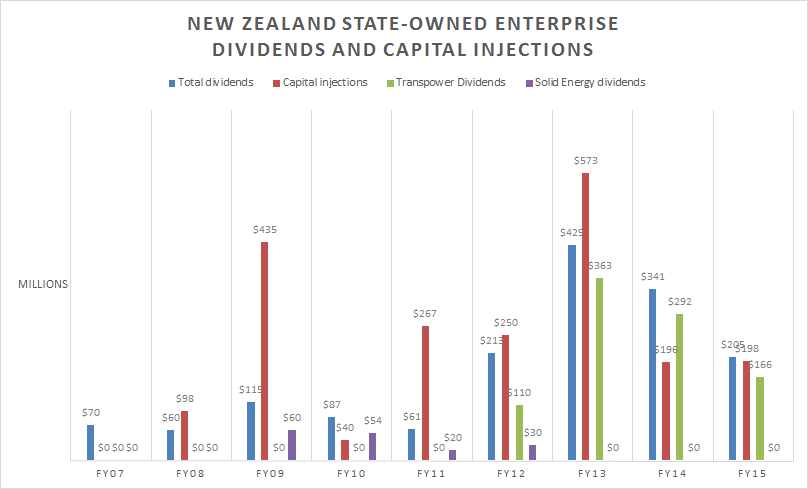
With a straight face, the Labour Party and the Greens claim that state-owned enterprises should not be sold because taxpayers give up the future dividend stream.
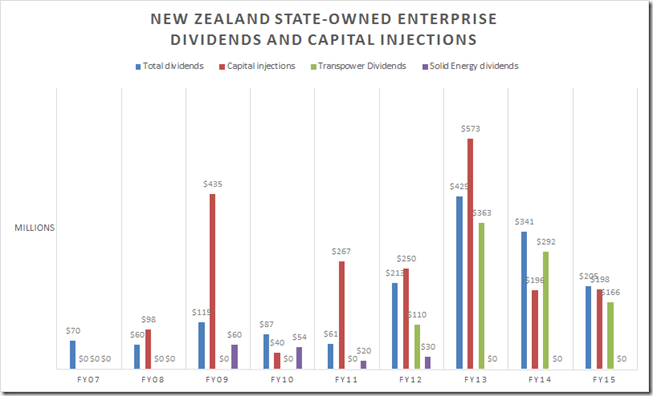
Source: New Zealand Treasury – data released under the Official Information Act.
Leaving to one side what the sale price is the net present value of, for as far back as I could obtain data from the Treasury, it is a rare year in which the taxpayers does not pour more money into state-owned enterprises than they get back in dividends.
Transpower is carrying the entire state-owned enterprise portfolio. Earlier on, Solid Energy – a now bankrupt coal mining company– was carrying the portfolio in terms of cash flow to the taxpayer.
17 Feb 2016
by Jim Rose
in applied welfare economics, development economics, economic history, economics of regulation, entrepreneurship, growth disasters, growth miracles, industrial organisation
Tags: billionaires, entrepreneurial alertness, India, superstars, top 1%
16 Feb 2016
by Jim Rose
in applied welfare economics, economic history, economics of regulation, entrepreneurship, financial economics, human capital, industrial organisation, labour economics, poverty and inequality, survivor principle
Tags: billionaires, British economy, entrepreneurial alertness, superstars, top 1%

Inheriting wealth is not what it used to be in Britain. There are all these upstarts running businesses or working in the City.

Source: Caroline Freund and Sarah Oliver, The Origins of the Superrich: The Billionaire Characteristics Database (2016).
15 Feb 2016
by Jim Rose
in applied price theory, development economics, economic history, entrepreneurship, growth miracles, human capital, industrial organisation, labour economics
Tags: billionaires, China, entrepreneurial alertness, superstars, top 1%
13 Feb 2016
by Jim Rose
in economics of bureaucracy, economics of regulation, energy economics, entrepreneurship, industrial organisation, poverty and inequality, privatisation, rentseeking, resource economics
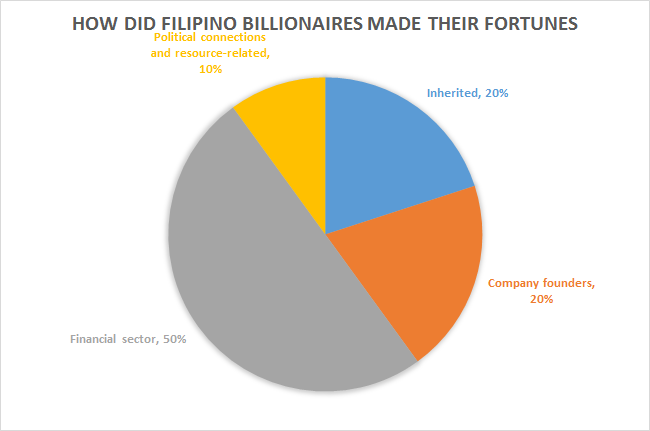
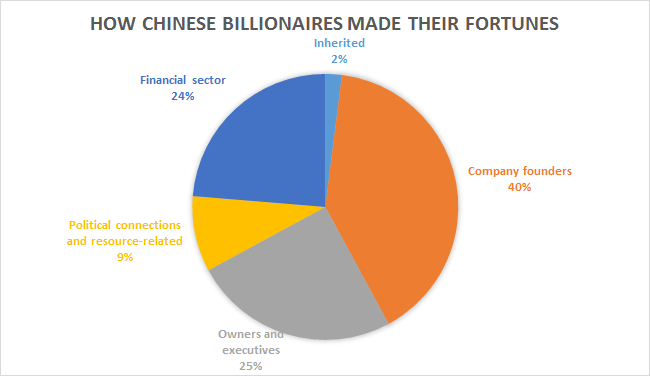
The 1826 Billionaires in the Forbes 2015 list are classified as rich through political connections if they made their money through past political positions, close relatives or friends in government, or questionable licenses, privatisations or resource extraction industries.
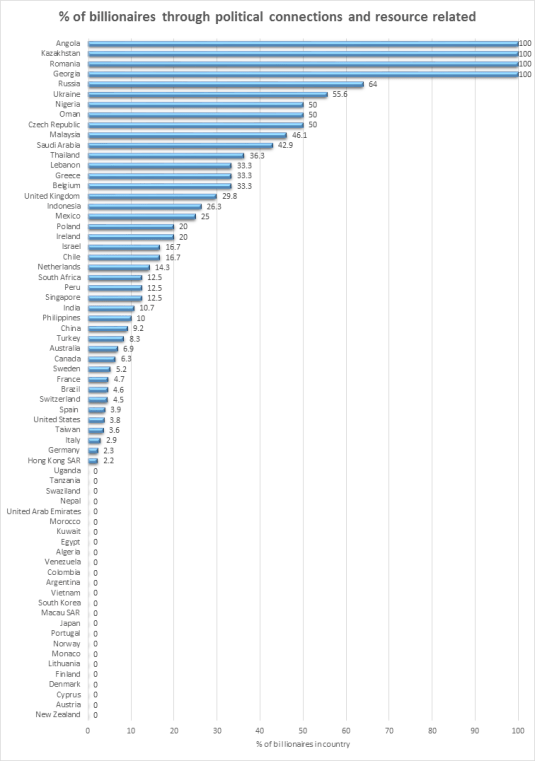
Source: Caroline Freund and Sarah Oliver, The Origins of the Superrich: The Billionaire Characteristics Database (2016).
All privatizations were included in the politically-connected/resource-related category despite my data source acknowledging the possibility that the new owners may have transformed the company. Resource billionaires were all deemed to be lucky or cronies by my data source rather than diligent as some most certainly were. This is something of a slur by my data source given the industriousness of some resource billionaires some of whom were even geologists.
Political cronyism is a path to billionaire wealth mainly in the developing countries. Less than 10% of Chinese billionaires made their money through political connections, which is surprising.
Previous Older Entries Next Newer Entries



 Utopia, you are standing in it!
Recent Comments