Pierre Desrochers explains why the ‘buy local’ food movement overstates environmental benefits
08 May 2016 Leave a comment
in applied price theory, applied welfare economics, development economics, economic history, economics of media and culture, environmental economics, growth disasters, growth miracles, health economics, industrial organisation, transport economics Tags: food miles
Asymmetric Information and Used Cars
05 May 2016 Leave a comment
in economics of information, industrial organisation Tags: asymmetric information
Creative destruction in top ICT company pay
05 May 2016 Leave a comment
in human capital, industrial organisation, labour economics, labour supply, occupational choice, survivor principle Tags: Apple, CEO pay, creative destruction, entrepreneurial alertness, Facebook, Google, Microsoft, superstar wages, superstars, top 1%, Twitter, Uber, Yahoo
I am surprised to see that Yahoo is in business much less competing for top talent. Microsoft is in decline too. Apple does not pay people as much as everybody else.
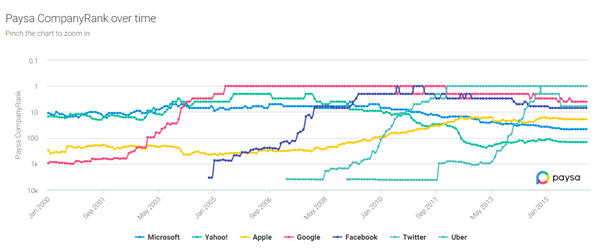
Source: Paysa Company Rank | Paysa.
Some other colours seem to duplicate so you will have to work out which is which by when they exploded in hiring top talent.
Many emerging countries see steep increase in smartphone ownership
05 May 2016 Leave a comment
in development economics, economics of media and culture, growth miracles, industrial organisation Tags: international technology diffusion, smart phones, technology diffusion

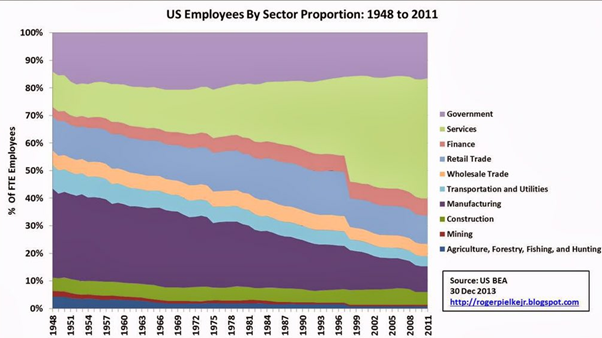
Jobs in the US economy as a percentage of total.
01 May 2016 Leave a comment
in economic history, industrial organisation, labour economics, labour supply, survivor principle Tags: labour demographics
Two myths about multinationals by Tyler Cowen
30 Apr 2016 Leave a comment
in comparative institutional analysis, development economics, economics, economics of media and culture, entrepreneurship, growth disasters, growth miracles, industrial organisation, survivor principle Tags: multinational corporations
Does labor market regulation really protect the interests of workers?
29 Apr 2016 Leave a comment
in economics of media and culture, economics of regulation, industrial organisation, labour economics, occupational regulation Tags: employment law, employment protection laws, employment regulation
“Bourgeois Equality” lecture
28 Apr 2016 Leave a comment
in applied welfare economics, development economics, economic history, economics, economics of regulation, entrepreneurship, growth disasters, growth miracles, history of economic thought, industrial organisation, poverty and inequality, survivor principle Tags: Deirdre McCloskey, industrial revolution, The Great Enrichment
Why Private Investment Works & Govt. Investment Doesn’t
27 Apr 2016 1 Comment
in applied price theory, comparative institutional analysis, constitutional political economy, economic history, economics of media and culture, economics of regulation, industrial organisation, survivor principle Tags: industry policy, picking winners, The fatal conceit, The pretence to knowledge

@Economicpolicy shows that top CEO pay has been a miserable rollercoaster for 15 years
25 Apr 2016 Leave a comment
Creative destruction in billionaires
25 Apr 2016 Leave a comment
in economic history, entrepreneurship, industrial organisation, survivor principle Tags: billionaires, entrepreneurial alertness, superstars

Source: Price Waterhouse Coopers (2016) BILLIONAIRES INSIGHTS The changing faces of billionaires.


Recent Comments