Top 10 Horribly Outdated Technologies That Are Still Used Today
10 Dec 2017 Leave a comment
in industrial organisation Tags: creative destruction
The Economic Cost of EU Membership
30 Nov 2017 Leave a comment
in applied price theory, applied welfare economics, industrial organisation, international economics Tags: Brexit

The robots didn’t come for the bank tellers
24 Nov 2017 Leave a comment
in applied price theory, economic history, industrial organisation, labour economics, labour supply, survivor principle Tags: creative destruction
Case against @OwenJones84 case for socialism
23 Nov 2017 Leave a comment
in applied price theory, economic history, industrial organisation, television Tags: British politics, economics of socialism
A century of America’s 10 largest companies
21 Nov 2017 Leave a comment
in economic history, financial economics, industrial organisation, survivor principle
Yesteryear’s robots came for many more jobs
17 Nov 2017 Leave a comment
in economic history, industrial organisation, labour economics, labour supply, occupational choice, survivor principle, unemployment Tags: creative destruction, technological unemployment
Creative destruction in high tech
14 Nov 2017 Leave a comment
in economic history, industrial organisation, survivor principle Tags: creative destruction
Creative destruction has not quite done its work: Blockbuster Video Has Become An Alaskan Tourist Attraction
09 Nov 2017 Leave a comment
in industrial organisation, survivor principle Tags: creative destruction
Jean Tirole on creative destruction in France and the USA
05 Nov 2017 Leave a comment
in economic history, industrial organisation, survivor principle

Creative destruction in newspapers
28 Oct 2017 Leave a comment
in economic history, economics of media and culture, industrial organisation, survivor principle Tags: creative destruction

How QWERTY conquered keyboards
27 Oct 2017 Leave a comment
in economic history, industrial organisation, survivor principle Tags: creative destruction
Construction is not a rising costs industry
22 Oct 2017 Leave a comment
in applied price theory, industrial organisation, urban economics
The literatures on urban, housing and construction economics all suggest that construction is a constant costs industry (Glaeser, Gyourko and Saiz 2008). Differences in building costs in the wider construction industry arise from differences in: local topology, local regulatory environments, the extent of unionisation, and the level of local wages generally (Glaeser, Gyourko and Saiz 2008).
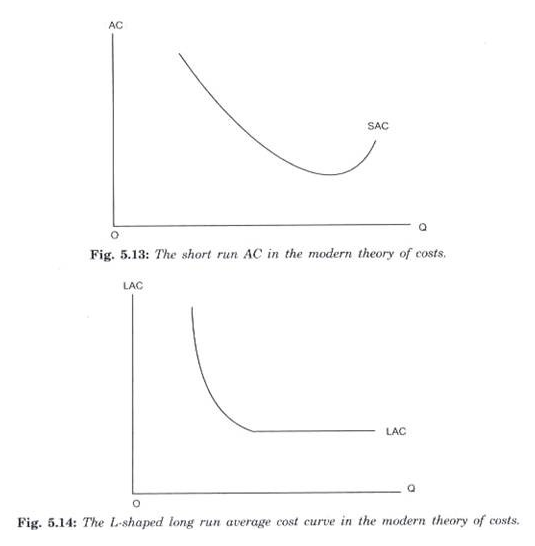
A constant costs industry can expand rapidly such as when a large project arises without putting pressure on costs. The construction industry everywhere developed with many small firms with prolific use of subcontractors much smaller than the head contractor. Firms in most industries including construction capture all available economies of scale at relatively small sizes. After that point where these scale economies are capture, there is a long region of production where the marginal cost of increases in production is constant (Stigler 1958, 1987; Barzel and Kochin 1992; and Shughart 1997).
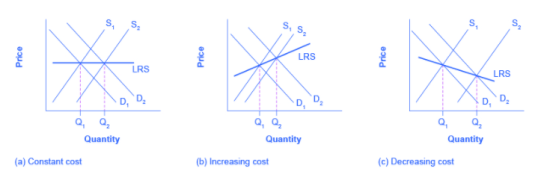
As an example of constant costs in construction, recall the construction boom in New Zealand between 2001 and 2008. The Department of Labour (2011) found the construction industry found a great many additional workers to meet this rapidly rising demand without large increases in labour costs. There was a 54% increase in employment between 2001 and 2008, from 125,000 in 2001 to 194,000 in 2008; employment across all industries over the same period increased by 23% (Department of Labour 2011). The majority of these new construction workers came from other industries with the rest were from outside the labour force or from relying on welfare benefits (Department of Labour 2011).
Despite this need to find a great mass of new workers, pay increases were only marginally higher than the construction industry than those across all industries, as the Department of Labour (2011) explains:
The Labour Cost Index (LCI), which adjusts for human capital and hours of work supplied, shows that wages in construction increased by 3.0% per year over this period compared with 2.8% for all industries. In what was a strong economy of the mid-2000s, the construction industry recruited many more workers without a relatively large increase in real labour costs.
The construction cost increases during the last housing boom were not due to input cost inflation. The industry wanted to build more houses on a faster timeline. This put a different type of pressure on costs.
Costs are sensitive to the speed of output as well as the total output planned (Alchian 1959; Stigler 1987). Producing the same thing sooner rather than later increases total, marginal, incremental, and average costs (Alchian 1959). Fast-tracking raises co-ordination costs, less efficient lower quality inputs must be used to increase the rate of production, and there is less time to identify the best inputs and lowest cost production processes. Wage premiums are paid for longer hours and lost weekends. There are few opportunities to learn by doing. Learning by doing reduces the cost of future output, but with fast tracking, more is produced now and less at the lower cost in the future (Alchian 1959; Stigler 1987).
Cost overruns is just not something that happens in the construction industry because costs rise rapidly with scale when a big project is underway. The industry is a constant costs industry. Something more fundamental must be driving cost blow-outs in road construction than purported diseconomies of scale.
 Utopia, you are standing in it!
Recent Comments