
via Samuelson vs. Friedman, David Henderson | EconLog | Library of Economics and Liberty and An Interview With Paul Samuelson, Part One — The Atlantic.
Celebrating humanity's flourishing through the spread of capitalism and the rule of law
13 Mar 2015 Leave a comment
in applied price theory, Austrian economics, behavioural economics, comparative institutional analysis, entrepreneurship, industrial organisation, survivor principle Tags: efficient markets hypothesis, entrepreneurial alertness, Paul Samuelson
via Samuelson vs. Friedman, David Henderson | EconLog | Library of Economics and Liberty and An Interview With Paul Samuelson, Part One — The Atlantic.
12 Mar 2015 Leave a comment

11 Mar 2015 1 Comment
in economics of bureaucracy, politics - New Zealand, survivor principle Tags: corporate welfare
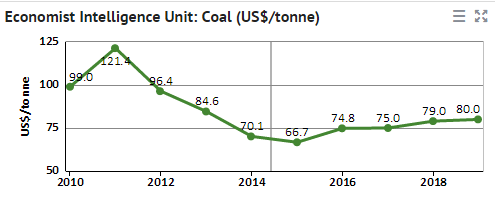
Government owned mining company Solid Energy lost $182 million last year. It is already received nearly $200 million in corporate welfare in bailouts from the New Zealand taxpayer. It’s time to call a halt.

The Christchurch-based coalminer is negotiating with banks in a bid to reduce its $320 million debt. In 2013, its annual revenue dropped by a third to $631 million.
Solid Energy invested heavily on a strategy that energy prices were going to go up and up. That investment strategy was against the market sentiment of that time, much less afterwards and the collapse of oil prices.

While Prime Minister John Key said on March 2 that it was not the Government’s preferred option to put more taxpayer cash into Solid Energy, Minister of Finance Bill English flatly ruled out cash, loans or guarantees. I hope Bill English wins that political struggle at the Cabinet table for the sake of the long-suffering New Zealand taxpayer.
What is worse, the government has indemnified the directors of Solid Energy against unspecified liabilities thus giving them an open-ended cheque-book, from what I can see, to trade while insolvent:
State Owned Enterprises Minister Todd McClay confirmed last month that the Crown has offered an indemnity to the board of Solid Energy last year, but would not comment on what it was.
Asked if directors had raised concerns with him that they might be trading while insolvent, English said: “Any director of a company like this has that question uppermost in their mind. They need to be sure all the time that they’re not trading while insolvent.”
Directors’ duties regarding trading while insolvent is the last line of defence against financial irresponsibility. There are both civil liability and criminal penalties for trading while insolvent under company law.
Solid Energy has already been a black hole for nearly $200 million in taxpayers’ money as well as considerable bank write-offs of loans.
The company appeared before the Finance and Expenditure Select Committee of Parliament this morning. It told MPs the company was solvent and marginally cash positive, but looking at another significant loss this year.
It should be a matter of policy that the government, any government, should not indemnify directors of any company, be they government owned or not, for breaches of directors’ duties. It’s a matter of the rule of law and of governments not privileging itself in the marketplace at the expense of the taxpayer.
What is the point of having a State Owned Enterprises Act and setting up these businesses as companies with a duty to be as successful as a company not owned by the government if they don’t have to obey the most fundamental safeguards in company law when push comes to shove?
If these indemnities have indeed been issued by the government for breaches of directors’ duties regarding insolvency, and it seems as though they have been, what is the Crown liability to creditors if Solid Energy is indeed trading while insolvent? These indemnities may allow the creditors to pierce the corporate veil and sue the New Zealand government.
In the revenge of directors duties, the directors of banks and any other creditor will have a director’s duty to sue the New Zealand government for all it can get as a result of these indemnities.
At a minimum, the New Zealand government will have to settle out of court or go all the way to the Supreme Court because hundreds of millions of dollars are involved from the bank write-offs, past and present.
Naturally, the ideological blinkers of the opposition party in New Zealand prevents it from saying the obvious, which is calling for the Solid Energy to be put in receivership. The Labour Party spokesman on state owned enterprise attacked the stewardship of the Minister of Finance as a shareholding Minister, but had nothing to say in terms of solutions, including putting the company into receivership.
The Green Party did a little bit better in 2013 when its spokesman talked about a need for a transition to sustainable jobs – the Green party code for layoffs:
“The National Government need to take responsibility for their mismanagement of Solid Energy and cut their losses,” said Mr Hughes.
“The banks that made risky loans to Solid Energy need to bear the cost of their mistakes”. “Coal is not going to be the fuel of our future if we are to stabilise our climate”.
“New Zealanders and Solid Energy workers need a just transition into more sustainable jobs – jobs that don’t fry the planet.”
“The longer this Government effectively denies climate change, the more taxpayer money will go to subsidising coal and its foreign backers.”
Things are getting desperate when the Greens find a corporate welfare so appalling that they actually oppose it, if only because of support for lower carbon emissions. That is one green hypocrisy too many if it supported a bailout of a coal miner.
05 Mar 2015 Leave a comment
in applied price theory, industrial organisation, survivor principle Tags: creative destruction, food, Indian food

No need to rage against the gaucheness of Americans who, in fact, have embraced many foods:
The cuisine is among the most labor intensive in the world. And yet Americans are unwilling to pay beyond a certain, and decidedly low, price point.
Via Why delicious Indian food is surprisingly unpopular in the U.S. – The Washington Post.
05 Mar 2015 Leave a comment
in economic history, economics of media and culture, industrial organisation, survivor principle Tags: creative destruction, Google, legacy media

HT: zerohedge.com
04 Mar 2015 7 Comments
in applied price theory, Austrian economics, entrepreneurship, F.A. Hayek, George Stigler, human capital, industrial organisation, job search and matching, labour economics, law and economics, Ludwig von Mises, politics - New Zealand, survivor principle Tags: Armen Alchian, employment law, employment protection laws, entrepreneurial alertness, France, Israel Kirzner, The fatal conceit, The pretence to knowledge
As discussed yesterday, if the Employment Court had its way, New Zealand case law under the Employment Relations Act regarding redundancies and layoffs would be as job destroying as those in France.
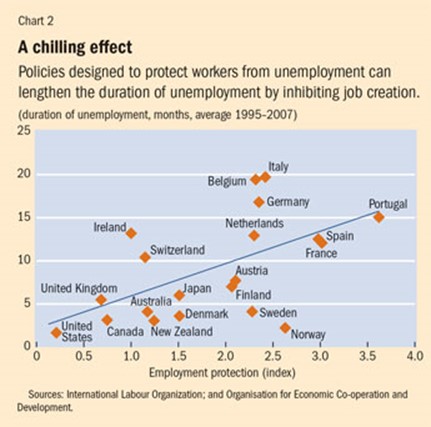
The Employment Court’s war against jobs goes back more than 20 years. To 1991 and G N Hale & Son Ltd v Wellington etc Caretakers etc IUW where the Court held that a redundancy to be justifiable under law it must be ‘unavoidable’, as in redundancies could only arise where the employer’s capacity for business survival was threatened.
The Court of Appeal slapped that down and affirm the right of the employer to manage his business in no uncertain terms:
…this Court must now make it clear that an employer is entitled to make his business more efficient, as for example by automation, abandonment of unprofitable activities, re-organisation or other cost-saving steps, no matter whether or not the business would otherwise go to the wall…
The personal grievance provisions … should not be treated as derogating from the rights of employers to make management decisions genuinely on such grounds. Nor could it be right for the Labour Court to substitute its own opinion as to the wisdom or the expediency of the employer’s decision.
When a dismissal is based on redundancy, it is the good faith of that basis and the fairness of the procedure followed that may fall to be examined on a complaint of unjustifiable dismissal
… the Court and the grievance committees cannot properly be concerned with an examination of the employer’s accounts except in so far as it bears on the true reason for dismissal.
The Employment Court could only inquire as to the genuineness of the employer’s decision and the procedures adopted. The Court could not substitute their views on management decisions. No second-guessing.
In Brake v Grace Team Accounting Ltd, the Employment Court found its way back into second-guessing employer’s decisions about how to manage their business. The figures used by the employer to decide that a redundancy was required were in error. The employer miscalculated.
The Employment Court had previously held in Rittson-Thomas T/A Totara Hills Farm v Hamish Davidson that the statutory test of what a fair and reasonable employer could have done in all the circumstances applies to the substantive reasoning for redundancies. Some enquiry into the employer’s substantive decision is required to establish that a hypothetical fair and reasonable employer could also make the same decision in all of the circumstances.
Subsequently in Brake v Grace Team Accounting Ltd, the Employment Court found that the actions by the employer were “not what a fair and reasonable employer would have done in all the circumstances” and “failed to discharge the burden of showing that the plaintiff’s dismissal for redundancy was justified”.
The Court found that the redundancy was “a genuine, but mistaken, dismissal”, but it still found that the dismissal was substantively unjustified. That is a major new development. Mistaken dismissals that are genuine are unlawful and grounds for compensation under the employment law.
The case was appealed where the issues were whether the correct test had been applied. The Court of Appeal, in a sad day for employers, job creation and the unemployed, found that the Employment Court was within its rights to do what it did and applied the statutory tests correctly:
GTA acted precipitously and did not exercise proper care in its evaluation of its business situation and it made its decision about Ms Brake’s redundancy on a false premise.
So it never turned its mind to what its proper business needs were but rather proceeded to evaluate its options based on incorrect information. We can see no error in the finding by the Employment Court that a fair and reasonable employer would not do this.
The test is now that fair and reasonable employers in New Zealand do not make mistakes. A much greater burden is now laid upon employers to show that not only that redundancies are justified, but they have made careful calculations and no mistakes.
No more seat of your pants entrepreneurship in New Zealand. No more entrepreneurial hunches – the essence of entrepreneurship is acting on hunches and other judgements that are incapable of being articulated to others and about which there is mighty disagreement in many cases. As Lavoie (1991) states:
…most acts of entrepreneurship are not like an isolated individual finding things on beaches; they require efforts of the creative imagination, skillful judgments of future costs and revenue possibilities, and an ability to read the significance of complex social situations.
The essence of entrepreneurship is your hunches are better than the next guy’s and you survive in competition by backing that hunch often to the consternation of the crowd. As Mises explains:
[Economics] also calls entrepreneurs those who are especially eager to profit from adjusting production to the expected changes in conditions, those who have more initiative, more venturesomeness, and a quicker eye than the crowd, the pushing and promoting pioneers of economic improvement…
The entrepreneurial idea that carries on and brings profits is precisely that idea which did not occur to the majority… The prize goes only to those dissenters who do not let themselves be misled by the errors accepted by the multitude
In many cases, those entrepreneurial hunches are sorted, sifted and selected on the basis of trial and error in the marketplace. Central to Hayek’s conception of the meaning of competition is it is a process of trial and error with many errors:
Although the result would, of course, within fairly wide margins be indeterminate, the market would still bring about a set of prices at which each commodity sold just cheap enough to outbid its potential close substitutes — and this in itself is no small thing when we consider the insurmountable difficulties of discovering even such a system of prices by any other method except that of trial and error in the market, with the individual participants gradually learning the relevant circumstances.
Remember Hayek’s conception of competition as a discovery procedure where prices and production emerge through the clash of entrepreneurial judgements and competitive rivalry:
…competition is important only because and insofar as its outcomes are unpredictable and on the whole different from those that anyone would have been able to consciously strive for; and that its salutary effects must manifest themselves by frustrating certain intentions and disappointing certain expectations
Errors are no longer permitted in the New Zealand labour market by the Employment Court. The Court has outlawed error in redundancy decisions.
This is despite the fact that the conception by Kirzner of the market process is that it is an error correction procedure without rival and a central role of entrepreneurial alertness is to correct errors in pricing and production:
It is important to notice the role played in this process of market discovery by pure entrepreneurial profit. Pure profit opportunities emerge continually as errors are made by market participants in a changing world. The inevitably fleeting character of these opportunities arises from the powerful market tendency for entrepreneurs to notice, exploit, and then eliminate these pure price differentials.
The paradox of pure profit opportunities is precisely that they are at the same time both continually emerging and yet continually disappearing. It is this incessant process of the creation and the destruction of opportunities for pure profit that makes up the discovery procedure of the market. It is this process that keeps entrepreneurs reasonably abreast of changes in consumer preferences, in available technologies, and in resource availabilities.
Rothbard made similar arguments about the centrality of discrepancies and error in entrepreneurship:
The capitalist-entrepreneur buys factors or factor services in the present; his product must be sold in the future. He is always on the alert, then, for discrepancies, for areas where he can earn more than the going rate of interest.
In Frank Knight’s conception of profit, there were temporary profits that arise from the correction of error:
In the theory of competition, all adjustments “tend” to be made correctly, through the correction of errors on the basis of experience, and pure profit accordingly tends to be temporary.
The Employment Court misunderstands the market process as a process of error correction. Those errors are identified through entrepreneurial alertness and trial and error. These errors are both of over-optimism and over-pessimism as Kirzner explains:
Errors of over-pessimism are those in which superior opportunities have been overlooked. They manifest themselves in the emergence of more than one price for a product which these resources can create. They generate pure profit opportunities which attract entrepreneurs who, by grasping them, correct these over-pessimistic errors.
The other kind of error, error due to over-optimism, has a different source and plays a different role in the entrepreneurial discovery process. Over-optimistic error occurs when a market participant expects to be able to complete a plan which cannot, in fact, be completed.
A considerable part of entrepreneurial alertness arises from the business opportunities created by sheer ignorance and pure error as Kirzner explains:
What distinguishes discovery (relevant to hitherto unknown profit opportunities) from successful search (relevant to the deliberate production of information which one knew one had lacked) is that the former (unlike the latter) involves that surprise which accompanies the realization that one had overlooked something in fact readily available. (“It was under my very nose!”)
The market process is a selection procedure where the more efficient survive for reasons that may be unknown to the entrepreneurs directly concerned as well as to observers and officious judges. Alchian pointed out the evolutionary struggle for survival in the face of market competition ensured that only the profit maximising firms survived:
The surviving firms may not know why they are successful, but they have survived and will keep surviving until overtaken by a better rival. All business needs to know is a practice is successful.
One method of organising production and supplying to the market will supplant another when it can supply at a lower price (Marshall 1920, Stigler 1958). Gary Becker (1962) argued that firms cannot survive for long in the market with inferior product and production methods regardless of what their motives are. They will not cover their costs.
The more efficient sized firms are the firm sizes that are currently expanding their market shares in the face of competition; the less efficient sized are those firms that are currently losing market share (Stigler 1958; Alchian 1950; Demsetz 1973, 1976). Business vitality and capacity for growth and innovation are only weakly related to cost conditions and often depends on many factors that are subtle and difficult to observe (Stigler 1958, 1987). The Employment Court pretends to know better than the outcome of the competitive struggle in the market for survival.
The Employment Court also believes employers have something akin to academic tenure. In 2010, the Court found that an employee’s redundancy was unjustified because the employer did not offer redeployment and there is no requirement that the right of the redeployment be written into the employment agreement (Wang v Hamilton Multicultural Services Trust). The particulars of this case were quite interesting:
In the case at hand, the Employment Court held that the employer was obliged to look for alternatives to making the employee redundant. Given that he would be able to perform the new finance manager position with some up-skilling, the employer should have offered him the position rather than simply inviting him to apply for it.

The notion that an employee through training can quickly increase their marginal productivity by 50% to fill a more senior role contradicts the modern labour economics of human capital. A 50% salary increase through a bit of training would imply extraordinary annual returns on other forms of on-the-job training and formal education as well as the training at hand in the Employment Court case.
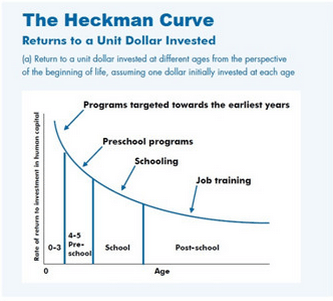
I would very much like to be in the position where I can get a 50% salary increase after a bit of training. As I recall, I required about 5-10 years of on-the-job human capital acquisition before my starting salary as a graduate was 50% higher through promotion and transfers.
In summary, the Employment Court stands apart from the modern labour economics of human capital and job search and matching as well as the modern theory of entrepreneurial alertness, and the market as a discovery procedure and an error correction mechanism. The Employment Court has fallen for both the pretence to knowledge and the fatal conceit.
02 Mar 2015 Leave a comment
in economic history, entrepreneurship, survivor principle
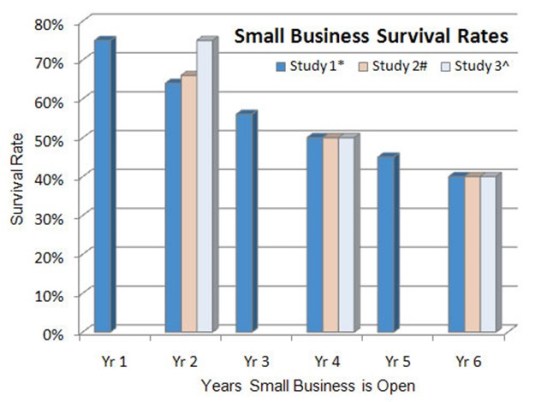

HT: Do nine out of 10 new businesses fail, as Rand Paul claims? – The Washington Post.
For venture capital start-ups, about three or 4 out of 10 fail; three or 4 out of 10 return the original investment, with the rest offering a substantial profit.
02 Mar 2015 Leave a comment
in economics of media and culture, industrial organisation, survivor principle Tags: creative destruction, legacy media
28 Feb 2015 Leave a comment
in economics of media and culture, industrial organisation, survivor principle Tags: creative destruction, legacy media
20 Feb 2015 Leave a comment
in economics of media and culture, entrepreneurship, rentseeking, survivor principle Tags: legacy media, The Guardian

A small levy on UK broadband providers – no more than £2 a month on each subscriber’s bill – could be distributed to news providers in proportion to their UK online readership. This would solve the financial problems of quality newspapers, whose readers are not disappearing, but simply migrating online.
via A £2-a-month levy on broadband could save our newspapers | Media | The Guardian.
Did The Guardian just come out in support of a poll tax? Most people have broadband, so it’s the same practical effect?
20 Feb 2015 Leave a comment
in entrepreneurship, financial economics, industrial organisation, survivor principle Tags: active investing, efficient markets hypothesis, passive investing, William F. Shape
After costs, the return on the average actively managed dollar will be less than the return on the average passively managed dollar for any time period.
—William F. Sharpe, 1990 Nobel Laureate
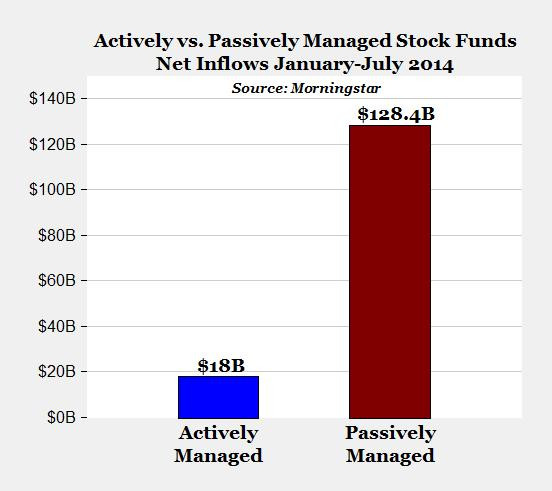
4 out of 5 actively managed fund portfolios underperformed all index fund portfolios in all scenarios tested.
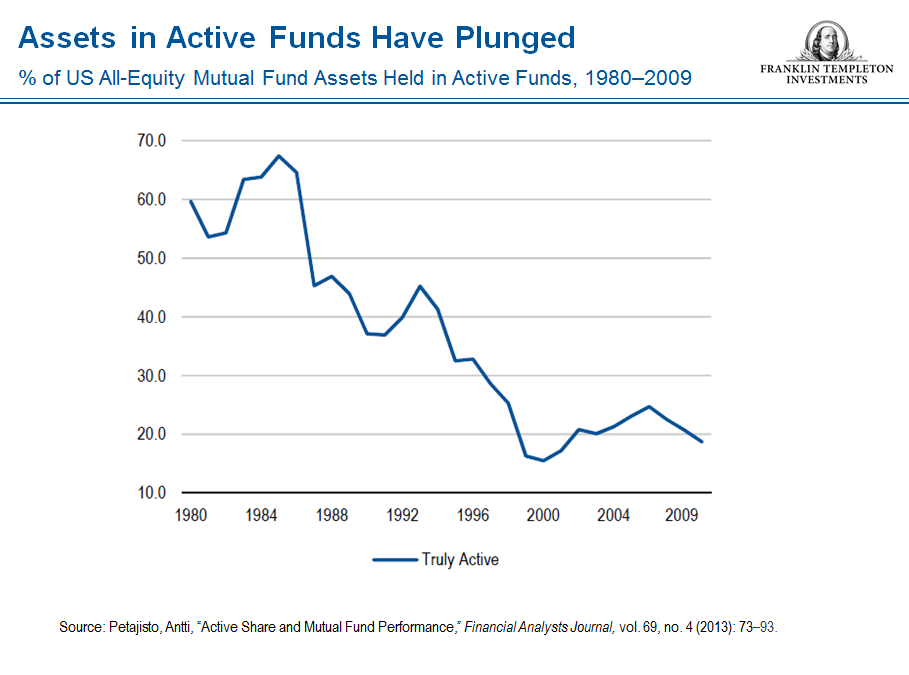

via The tide is turning as investors switch from high-cost, actively managed funds to index funds for lower costs, higher returns » AEI | Carpe Diem Blog » AEIdeas and Mutual Fund Expenses | Lion’s Share.
.
19 Feb 2015 Leave a comment
in entrepreneurship, industrial organisation, managerial economics, organisational economics, personnel economics, survivor principle Tags: entrepreneurial alertness, management, MBA

“Avoid jargon” because most people misuse it. Force yourself to spell out what you mean in simple plain English. It will help your thinking and communication.
“What about the organizational design?” Figure out what is causing the problem, and then think about how to avoid the problem. A lot of papers identified a bad decision, and then suggested reversing it. But they neglected to address the issue of why the bad decision was made, and how to make sure the same mistakes wouldn’t be made in the future.
“Don’t define the problem as the lack of your solution.” For example, if the problem is “the lack of centralized purchasing,” then you are locked into a solution of “centralized purchasing.” Instead, define the problem as “high acquisition cost” and then examine “centralized purchasing” vs. “decentralized purchasing” (or some other alternative) as two solutions to the problem.
“What is the trade-off?” Every solution has costs as well as benefits. If you list only the benefits, it makes your analysis seem like an ex post rationalization of a foregone decision, rather than a careful weighing of the benefits and costs. If you spent some time thinking through the tradeoffs, show it. If not, then you should.
“Which language is this?” I write this when I get gobbledygook written in the passive voice with big words that don’t mean anything. Instead write simple declarative sentences that clarify rather than obfuscate. Form is not a substitute for content.
via Managerial Econ: Top 5 problem-solving mistakes by MBA’s.
Celebrating humanity's flourishing through the spread of capitalism and the rule of law
Celebrating humanity's flourishing through the spread of capitalism and the rule of law
Celebrating humanity's flourishing through the spread of capitalism and the rule of law
Celebrating humanity's flourishing through the spread of capitalism and the rule of law
Celebrating humanity's flourishing through the spread of capitalism and the rule of law
Celebrating humanity's flourishing through the spread of capitalism and the rule of law
Celebrating humanity's flourishing through the spread of capitalism and the rule of law
A History of the Alt-Right
Econ Prof at George Mason University, Economic Historian, Québécois
Celebrating humanity's flourishing through the spread of capitalism and the rule of law
Scholarly commentary on law, economics, and more
Beatrice Cherrier's blog
Celebrating humanity's flourishing through the spread of capitalism and the rule of law
Celebrating humanity's flourishing through the spread of capitalism and the rule of law
Celebrating humanity's flourishing through the spread of capitalism and the rule of law
Why Evolution is True is a blog written by Jerry Coyne, centered on evolution and biology but also dealing with diverse topics like politics, culture, and cats.
Celebrating humanity's flourishing through the spread of capitalism and the rule of law
A rural perspective with a blue tint by Ele Ludemann
DPF's Kiwiblog - Fomenting Happy Mischief since 2003
Celebrating humanity's flourishing through the spread of capitalism and the rule of law
The world's most viewed site on global warming and climate change
Tim Harding's writings on rationality, informal logic and skepticism
A window into Doc Freiberger's library
Let's examine hard decisions!
Commentary on monetary policy in the spirit of R. G. Hawtrey
Thoughts on public policy and the media
Celebrating humanity's flourishing through the spread of capitalism and the rule of law
Politics and the economy
A blog (primarily) on Canadian and Commonwealth political history and institutions
Reading between the lines, and underneath the hype.
Economics, and such stuff as dreams are made on
"The British constitution has always been puzzling, and always will be." --Queen Elizabeth II
Celebrating humanity's flourishing through the spread of capitalism and the rule of law
Celebrating humanity's flourishing through the spread of capitalism and the rule of law
WORLD WAR II, MUSIC, HISTORY, HOLOCAUST
Undisciplined scholar, recovering academic
Celebrating humanity's flourishing through the spread of capitalism and the rule of law
Res ipsa loquitur - The thing itself speaks
In Hume’s spirit, I will attempt to serve as an ambassador from my world of economics, and help in “finding topics of conversation fit for the entertainment of rational creatures.”
Researching the House of Commons, 1832-1868
Articles and research from the History of Parliament Trust
Reflections on books and art
Posts on the History of Law, Crime, and Justice
Celebrating humanity's flourishing through the spread of capitalism and the rule of law
Exploring the Monarchs of Europe
Cutting edge science you can dice with




Recent Comments