Gender equality paradox in STEM education
16 Feb 2018 Leave a comment
in discrimination, economics of education, gender, human capital, labour economics, occupational choice Tags: gender wage gap
Women can say things about the gender wage gap that men cannot
16 Feb 2018 Leave a comment
in discrimination, economics of love and marriage, gender, labour economics

Will this be the workplace of the future or already today?
12 Feb 2018 Leave a comment
in discrimination, gender, managerial economics, organisational economics
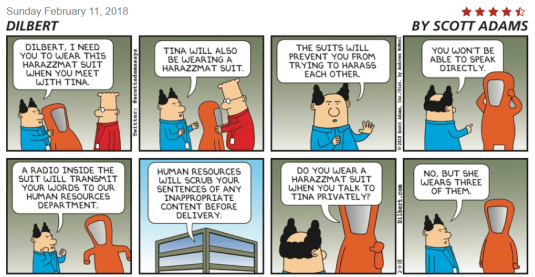
Laura Kipnis: Political Correctness is Now Eating the Left Too
11 Feb 2018 Leave a comment
in discrimination, economics of education, gender, law and economics Tags: free speech, political correctness
A Women of Color Healing Retreat in Costa Rica; yoga, vegan food, political education seminars and a ban on white people
10 Feb 2018 Leave a comment
in discrimination Tags: political correctness
#MeToo: Movement or witch hunt? | FACTUAL FEMINIST
10 Feb 2018 Leave a comment
in discrimination, economics of crime, gender, health and safety, law and economics Tags: political correctness
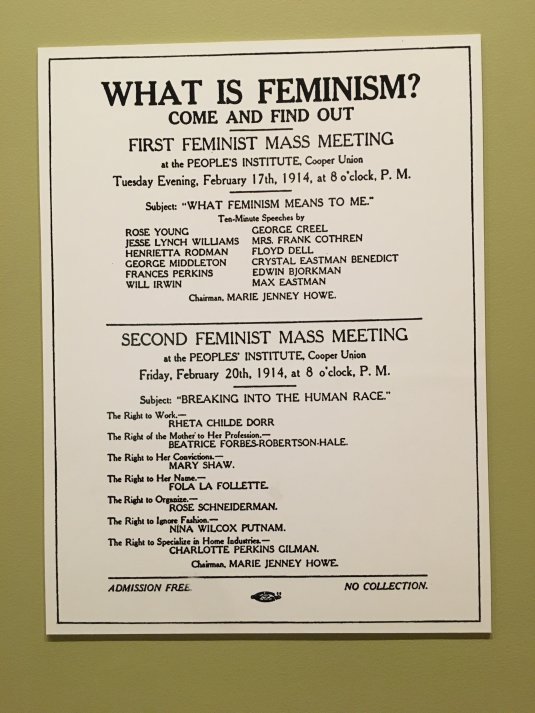
Started out well, but what about these days?
04 Feb 2018 Leave a comment
in discrimination, economic history, gender, labour economics Tags: feminism, feminist
How Musicians Smashed Racial Barriers
02 Feb 2018 Leave a comment
in discrimination, economic history, entrepreneurship, industrial organisation, survivor principle
Firing Line – Thomas Sowell w/ William F. Buckley Jr. (1981)
27 Jan 2018 Leave a comment
in applied price theory, comparative institutional analysis, development economics, discrimination, economic history, economics of education, economics of regulation, human capital, labour economics Tags: racial discrimination, Thomas Sowell
Did banning alcohol in 1837 fit in with deliberate genocide?
25 Jan 2018 Leave a comment
in discrimination, health economics, politics - Australia, Public Choice
Laws banning the sale of alcohol to aboriginals were first passed in 1837. Later that century the ban was extended to opium. In time, all states and territories banned the sale of alcohol to aboriginals.
Australia figures prominently in the Journal of Genocide Research. The black armband theory of Australian history alleges genocidal intent towards Australian aboriginals by the state and territory protectors of aboriginals and their accomplices. Then why the ban on alcohol and the opium?
There were strong temperance movements in Australia in the first half of the 20th century. They achieved considerable political success. Their intention was to save their fellow Australians from the demon drink.

Why then was a policy of alcohol prohibition extended to aboriginals when the state protectors aboriginals were apparently according to the black armband theory of history practising genocide?
A credible theory must make risky predictions and strictly forbid certain things if its fundamental thesis is valid. Temperance movements were well-intentioned attempts to save their fellow man and, in particular, husbands and sons. The pubs closed at 6 for white Australians and were not open at all for aboriginals.
Why was this well-intentioned policy to save people from the demon drink extended to aboriginals in an era of genocide against aboriginals? Certainly, genocidal governments of that time would have known that binge drinking would have helped kill off the aboriginal people. Did they just miss a step? Keep missing that step from 1837 until 1972?
Something does not add up here? Drinking was seen as a serious social evil. The supposedly otherwise genocidal state and territory protectors of aboriginals sought to protect aboriginals from this serious social evil.
Genocidal state and territory protectors of aboriginals, if it is true they were intent on a genocide, must be expected to do little or nothing to promote aboriginal welfare. Yet they sought bans on alcohol and opium.
Moral relativism explained
23 Jan 2018 Leave a comment
in discrimination, economic history, economics of crime, gender, law and economics Tags: Age of Enlightenment, India, moral relativism
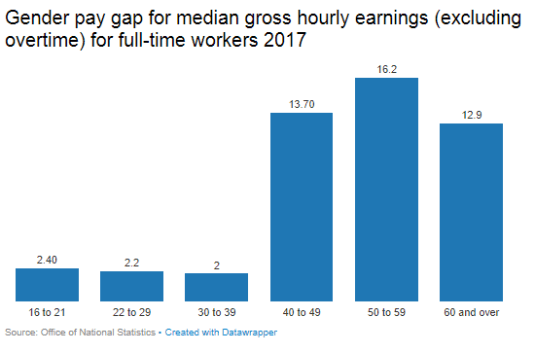
British gender wage gap 2017
19 Jan 2018 Leave a comment
in discrimination, gender, labour economics
Once again, that explosion of unconscious bias against women when they turn 40, excluding them from promotions, pay rises and wherever possible paying them less for the same job. I do not know anyone can work that out unconsciously when people struggle to get people’s ages right within a decade these days even when they know the person for many months. That is before you introduce the difficulty of judging ages across racial groups. At a minimum, the beauty premium in the labour market, that is the premium for looking younger for women must be enormous.
Why are women paid less than men? | The Economist
16 Jan 2018 Leave a comment
in discrimination, gender, human capital, labour economics, labour supply, occupational choice Tags: gender wage gap
.@jamespeshaw has asked Stats NZ to collect gender pay gap data
14 Jan 2018 Leave a comment
in discrimination, economics, gender, labour economics, politics - New Zealand Tags: gender wage gap
The Sunday Star Times reported today that
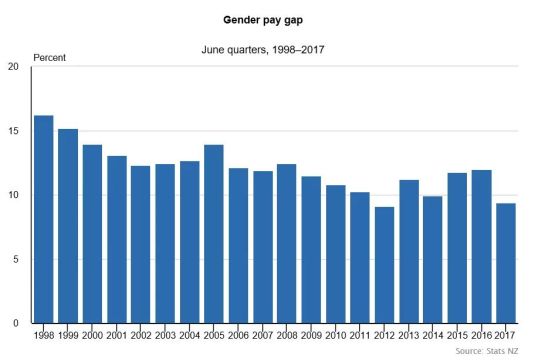
The Government has ordered Statistics NZ to begin measuring the country’s gender pay gap… new Statistics Minister James Shaw believed there was an onus on his department to gather the data, so the Government could fix it.
It was too early to know exactly how it was going to be measured, Shaw said in a written statement.
Not sure to what to make of this because extensive data is already collected.


Recent Comments