Celebrating humanity's flourishing through the spread of capitalism and the rule of law
03 Feb 2018 Leave a comment
in development economics, economic history, health and safety
02 Feb 2018 Leave a comment
in discrimination, economic history, entrepreneurship, industrial organisation, survivor principle
01 Feb 2018 Leave a comment
in economic history, politics - USA, poverty and inequality

31 Jan 2018 1 Comment
in economics of education, human capital, labour economics
Bryan Caplan thinks 80% of education is signalling. I think it is no more than 50%. One reason is the times I have worked with managers and colleagues who are not economists doing policy analysis work.
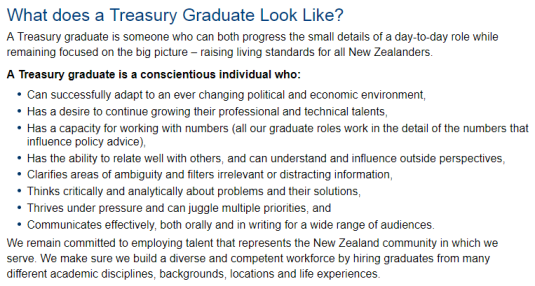
If education is 80% signalling, people from noneconomic backgrounds should be as good as those with economic backgrounds particularly at the more senior levels as they gain experience and the economists forget their university training.
My experience with managers who are not economists at the Treasury, and the Department of Labour was they were difficult to deal with compared to the one manager I had that did have an economics degree. They simply did not know what they were doing on a number of occasions, often substituting their own opinions based on what they would say in the pub for good economic analysis. They did not know any better. They are not gone through microeconomics 101 that showed how many common explanations of things did not work if scrutinised according to the economic way of thinking. They are often resentful of economists as colleagues because they kept pointing out what they could not do or what unintended consequences might spring up.
When the manager had training in economics, considerable more progress could be made both in argument and then working out how to tailor it to a ministerial audience.
As for colleagues who were policy analyst with no economic training, they seem to lack the ability to define what the problem was, develop options and check for unintended consequences. They certainly had no idea how to marshal evidence to support competing options and test the evidence in front of them, much less have a general background knowledge of an area to be able to quickly change their mind away from their private opinions in the light of new arguments and evidence.
Most of all, both the managers and policy analysts who I worked with who did not have economic training did not know what they did not know. It was the Dunning Kruger effect. They did not know there are literatures on this issue and they could not remember even in sketch outline that there was research in this area and many well-known facts and results is what with a well-known uncertainties. They suffered the overconfidence of amateurs.
In time, it got so frustrating that I would ask a Socratic question about that was an interesting question be it about rent control, minimum wages, employment law, exchange rates, industry policy or financial crises, and wonder if anyone had looked into that at universities. Reading econometrics results taught me that if the main result is not in doubt, that there is at least not mixed evidence or a few countervailing studies, the econometricians are not working hard enough for PhD scholarships and academic tenure.
Luke Froeb made considerable progress by simply redefining market failure as a business opportunity, a missing market or missing product. Whenever people talked of the market failure, I would ask who could profit from fixing that market failure.
To be fair, I always thought the quality of economic analysis would double if everyone remembered the first 6 weeks of microeconomics 101. I gained the impression when I was a graduate at the Australian Department of Finance.
Watching non-economists do macroeconomic policies is frightening in that they have no idea how to tell fallacies from good analysis. I spotted that in the prime minister’s department in the mid-1980s in Australia when everyone got deeply concerned about the current account deficit because everyone else was deeply concerned about it and it attracted a lot of newspaper headlines saying it was a problem.
Also, I noticed as I got older, ideas rejected 10-20 years ago were recycled. Because I understood the economics behind those ideas, I remembered them in their new disguises and remembered the relevant literature that developed since their last appearance.
I also worked with many econometricians in the public sector. I learnt enough econometrics to the graduate level to be able to talk to them. I never pretended I could do their job and most of their job was based on what they learnt at University and then refined in the workplace.
Finally, I found out in the kitchen at parties in Canberra in the 1980s and 1990s that strangers would come up and abuse you as soon as they found out there is an economist about. They would tell me how ignorant economists were and did not know anything about this, that and the other. I would then point to the vast literatures on every one of those topics. They still has to be done these days even to academic economists who should know better.
30 Jan 2018 Leave a comment
in economics of education, gender, human capital, occupational choice
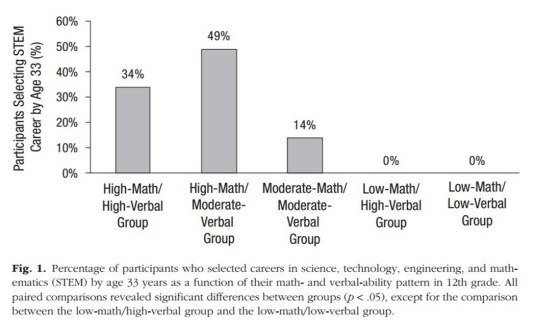
Source: “Not Lack of Ability but More Choice: Individual and Gender Differences in Choice of Careers in Science, Technology, Engineering, and Mathematics,” by Ming-Te Wang, Jacquelynne S. Eccles, and Sarah Kenny,
29 Jan 2018 Leave a comment
in gender
28 Jan 2018 2 Comments
in comparative institutional analysis, constitutional political economy, economic history, economics of crime, history of economic thought, income redistribution, law and economics, Marxist economics, poverty and inequality, Public Choice Tags: fall of communism, Twitter left
27 Jan 2018 Leave a comment
in applied welfare economics, economic history, poverty and inequality
27 Jan 2018 Leave a comment
in applied price theory, comparative institutional analysis, development economics, discrimination, economic history, economics of education, economics of regulation, human capital, labour economics Tags: racial discrimination, Thomas Sowell
25 Jan 2018 Leave a comment
in applied price theory, economic history, labour economics, labour supply
25 Jan 2018 Leave a comment
in discrimination, health economics, politics - Australia, Public Choice
Laws banning the sale of alcohol to aboriginals were first passed in 1837. Later that century the ban was extended to opium. In time, all states and territories banned the sale of alcohol to aboriginals.
Australia figures prominently in the Journal of Genocide Research. The black armband theory of Australian history alleges genocidal intent towards Australian aboriginals by the state and territory protectors of aboriginals and their accomplices. Then why the ban on alcohol and the opium?
There were strong temperance movements in Australia in the first half of the 20th century. They achieved considerable political success. Their intention was to save their fellow Australians from the demon drink.

Why then was a policy of alcohol prohibition extended to aboriginals when the state protectors aboriginals were apparently according to the black armband theory of history practising genocide?
A credible theory must make risky predictions and strictly forbid certain things if its fundamental thesis is valid. Temperance movements were well-intentioned attempts to save their fellow man and, in particular, husbands and sons. The pubs closed at 6 for white Australians and were not open at all for aboriginals.
Why was this well-intentioned policy to save people from the demon drink extended to aboriginals in an era of genocide against aboriginals? Certainly, genocidal governments of that time would have known that binge drinking would have helped kill off the aboriginal people. Did they just miss a step? Keep missing that step from 1837 until 1972?
Something does not add up here? Drinking was seen as a serious social evil. The supposedly otherwise genocidal state and territory protectors of aboriginals sought to protect aboriginals from this serious social evil.
Genocidal state and territory protectors of aboriginals, if it is true they were intent on a genocide, must be expected to do little or nothing to promote aboriginal welfare. Yet they sought bans on alcohol and opium.
Celebrating humanity's flourishing through the spread of capitalism and the rule of law
Celebrating humanity's flourishing through the spread of capitalism and the rule of law
Celebrating humanity's flourishing through the spread of capitalism and the rule of law
Celebrating humanity's flourishing through the spread of capitalism and the rule of law
Celebrating humanity's flourishing through the spread of capitalism and the rule of law
A History of the Alt-Right
Econ Prof at George Mason University, Economic Historian, Québécois
Celebrating humanity's flourishing through the spread of capitalism and the rule of law
Scholarly commentary on law, economics, and more
Beatrice Cherrier's blog
Celebrating humanity's flourishing through the spread of capitalism and the rule of law
Celebrating humanity's flourishing through the spread of capitalism and the rule of law
Celebrating humanity's flourishing through the spread of capitalism and the rule of law
Why Evolution is True is a blog written by Jerry Coyne, centered on evolution and biology but also dealing with diverse topics like politics, culture, and cats.
Celebrating humanity's flourishing through the spread of capitalism and the rule of law
A rural perspective with a blue tint by Ele Ludemann
DPF's Kiwiblog - Fomenting Happy Mischief since 2003
Celebrating humanity's flourishing through the spread of capitalism and the rule of law
The world's most viewed site on global warming and climate change
Tim Harding's writings on rationality, informal logic and skepticism
A window into Doc Freiberger's library
Let's examine hard decisions!
Commentary on monetary policy in the spirit of R. G. Hawtrey
Thoughts on public policy and the media
Celebrating humanity's flourishing through the spread of capitalism and the rule of law
Politics and the economy
A blog (primarily) on Canadian and Commonwealth political history and institutions
Reading between the lines, and underneath the hype.
Economics, and such stuff as dreams are made on
"The British constitution has always been puzzling, and always will be." --Queen Elizabeth II
Celebrating humanity's flourishing through the spread of capitalism and the rule of law
Celebrating humanity's flourishing through the spread of capitalism and the rule of law
WORLD WAR II, MUSIC, HISTORY, HOLOCAUST
Undisciplined scholar, recovering academic
Celebrating humanity's flourishing through the spread of capitalism and the rule of law
Res ipsa loquitur - The thing itself speaks
In Hume’s spirit, I will attempt to serve as an ambassador from my world of economics, and help in “finding topics of conversation fit for the entertainment of rational creatures.”
Researching the House of Commons, 1832-1868
Articles and research from the History of Parliament Trust
Reflections on books and art
Posts on the History of Law, Crime, and Justice
Celebrating humanity's flourishing through the spread of capitalism and the rule of law
Exploring the Monarchs of Europe
Cutting edge science you can dice with
Small Steps Toward A Much Better World
“We do not believe any group of men adequate enough or wise enough to operate without scrutiny or without criticism. We know that the only way to avoid error is to detect it, that the only way to detect it is to be free to inquire. We know that in secrecy error undetected will flourish and subvert”. - J Robert Oppenheimer.


Recent Comments