
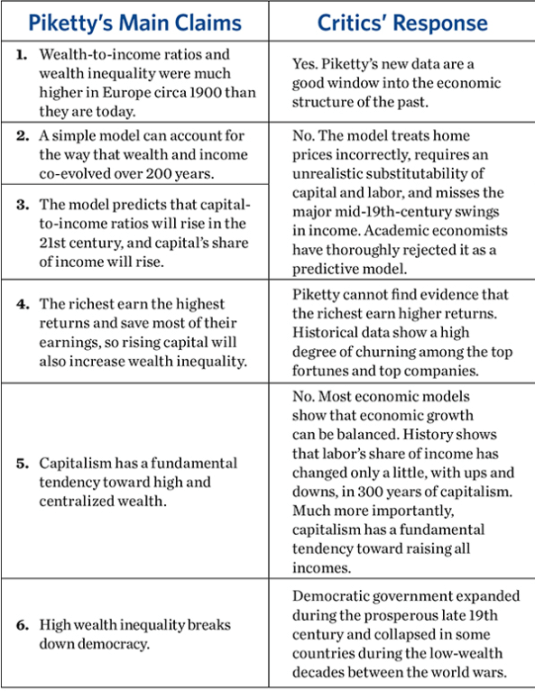
Nice summary of the Piketty debate
08 Jan 2018 Leave a comment
Sociologists are unhappy when women are happy
06 Jan 2018 Leave a comment
in economics of love and marriage, poverty and inequality Tags: gender gap, marriage and divorce, sociology
It is successful immigration that stirs up populist opposition
04 Jan 2018 Leave a comment
in applied price theory, economic history, labour economics, labour supply Tags: economics of immigration
Waiting for #RegressiveLeft to arrange a #TakeOffYourHijab day
02 Jan 2018 Leave a comment
in discrimination, gender, liberalism
Richard Burton on mining in his family
01 Jan 2018 Leave a comment
in energy economics, health and safety, labour economics, labour supply, movies, occupational choice Tags: mining
The economic incentives for criminal behaviour
31 Dec 2017 Leave a comment
in economics of crime, labour economics, law and economics, occupational choice Tags: crime and punishment
Charles Murray | Peter Thiel: College Education is a Disaster
31 Dec 2017 Leave a comment
in economics of education, human capital, labour economics, labour supply, occupational choice Tags: Charles Murray
“College is a MASSIVE Waste!!” Tucker’s Interview with Bryan Caplan
27 Dec 2017 Leave a comment
in applied price theory, economics of education, human capital, occupational choice Tags: Bryan Caplan, signaling
Left still claims some Americans & Canadians are poorer than poor Indians!? China has many more wretchedly poor than India!
25 Dec 2017 Leave a comment
in applied welfare economics, development economics, poverty and inequality

Source: The World Inequality Report 2018.
In the last 25 years, more than 750 million people came out of poverty in China. Truly an amazing achievement:… twitter.com/i/web/status/7…—
Alvaro SantosPereira (@santospereira_a) October 13, 2016
60 years of #poverty reduction in #India: A look at the data @voxeu wrld.bg/105GJ6 https://t.co/iI6I7RxGWR—
World Bank Poverty (@WBG_Poverty) April 06, 2016

Alan Dershowitz: Israel an apartheid state?
25 Dec 2017 2 Comments
in constitutional political economy, discrimination, law and economics Tags: Israel
Ten Questions about the Gaza War. @elderofziyon @HillelNeuer @JudeanPF @IsraelMatzav @BritsForIsrael http://t.co/D78ZJEsCdM—
Rabbi Yaakov Menken (@ymenken) September 17, 2015
Remember this the next time a lefty prats on about the top 1%’s wealth @EricCrampton
24 Dec 2017 Leave a comment
in applied price theory, development economics, growth miracles, human capital, poverty and inequality
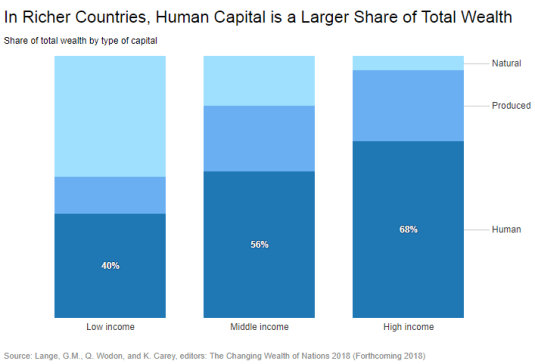
#Dailychart: In almost every country, mortality rates fell during the four decades to 2010 econ.st/XUYuSn http://t.co/kTg4oyQPRY—
The Economist (@ECONdailycharts) September 23, 2014
#FightFor15 must have been an ambit claim?
24 Dec 2017 Leave a comment
in applied price theory, labour economics, minimum wage, politics - USA
https://twitter.com/EconBizFin/status/626687442834300928
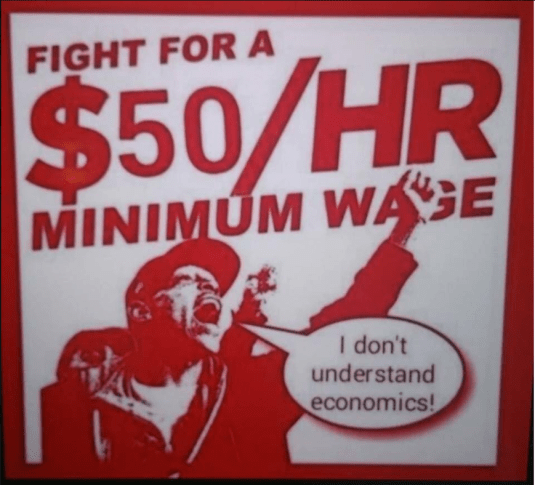
The fight for $15 movement in the minimum wage could not have been serious about doubling the minimum wage to $15.
Perhaps to their own surprise, they won despite living in what they say is an oligarchic political system dominated by the rich which keeps the poor poorer and poorer.
Why California’s #minimumwage will backfire, Part I: CA is business-hostile now@Mark_J_Perry goo.gl/7wbr14 https://t.co/y1pF4UGATK—
AEIdeas Blog (@AEIdeas) April 05, 2016
California, New York, San Francisco and Seattle are among the states and cities increasing their local minimum wages, currently of up to $12, to $15 by 2021 or 2022.
There is nothing special about minimum wages when it comes to mandating wage rises. If it is safe to double the minimum wage, it is safe to double everybody’s wage. That logic is undeniable.
The efficiency wage and inequality of bargaining power arguments that suggest that the wage rise will be paid out of employers’ profits are not special to minimum wage employers.
https://twitter.com/dylanmatt/status/720786520509165568
If minimum wage employers can handle a doubling of their labour costs, any employer can handle the doubling of the cost of employing any of their employees?
Some such as Arindrajit Dube say that these very large wage increases by cities and states in their federal system are experiments “worth running and monitoring” (Lane 2016). As Dube said recently:
“… 30 to 40 percent of the California workforce will get a raise … This will be a big experiment. It’s far outside of our evidence base… If you’re risk-averse, this would not be the scale at which to try things. On the other hand, if you think that wages are really low and they’ve been low for a really long time and we can afford to take some risks, doing things at this scale will get us more evidence” (Lee 2016).
Noah Smith (2016) concluded that the empirical literature on minimum wages suggests that a 10% minimum wage increase would reduce employment by about 2% so doubling the federal minimum wage would see the employment of young people go down by one-fifth. Smith (2016) said this is a
“small but real effect — a $15 federal minimum wage might throw a million kids out of work”.
You should remember that in the USA, if you lose your job, your unemployment insurance is time-limited.
Venn Diagram of the Day on the $15 Minimum Wage…… https://t.co/aANb26iShi—
Mark J. Perry (@Mark_J_Perry) November 29, 2015
It is not like New Zealand where you can stay on the unemployment benefit forever if you are priced out of the market by a doubling of the minimum wage.
Since I was indirectly quoted in a WaPo op-ed on CA min wage, here's exactly what I wrote to Mr. Lane. (@tylercowen) https://t.co/Q326lgyvzz—
Arindrajit Dube (@arindube) March 31, 2016
What happens to minimum wage workers who lost their jobs because of the large minimum wage increase after their unemployment insurance runs out?


Recent Comments