Who loses from Morgan’s #UBI of $11,000?
13 Aug 2017 Leave a comment
in labour economics, politics - New Zealand, poverty and inequality, public economics, welfare reform Tags: 2017 New Zealand election, universal basic income

.@XTOTL claim that women & Maori being screwed by neoliberalism since 1984
13 Aug 2017 Leave a comment
in discrimination, economic history, gender, labour economics, politics - New Zealand
Toby Morris claimed in an inequality graphic on thewireless.com in 2015 that subsequent to the 1980s economic reforms, the rich got the income of the rich double while the incomes of the majority of New Zealanders was largely static. He then claimed that
in short, regular Kiwis were screwed, especially women, Maori and Pacific Island communities
Figure 1 shows that real household incomes increased pretty much evenly across all 10 income deciles between 1994 and 2013, ranging between 40 to 50%.
Figure 1: Real household incomes (BHC), changes for top of income deciles, 1994 to 2013

Source: Bryan Perry, Household incomes in New Zealand: Trends in indicators of inequality and hardship 1982 to 2013. Ministry of Social Development (July 2014).
The figure below shows that since the end of the recession in the early 1990s, there has been rapid income growth including from Maori and Pacifika, at least 50%, if not 70%.

Source: Bryan Perry, Household incomes in New Zealand: Trends in indicators of inequality and hardship 1982 to 2016. Ministry of Social Development (2017).
The massive improvements in Māori incomes since 1992 were based on rising Māori employment rates, fewer Māori on benefits, more Māori moving into higher paying jobs, and greater Māori educational attainment. Māori unemployment reached a 20-year low of 8 per cent from 2005 to 2008.
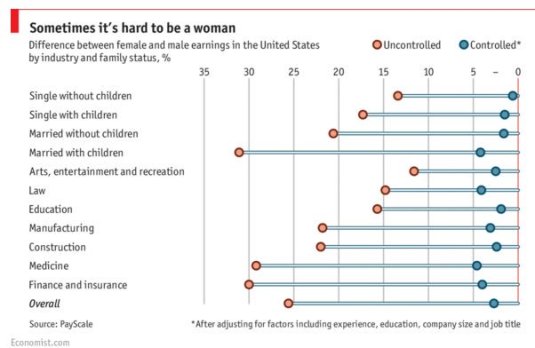
New Zealand has the smallest gender wage gap of any country; 60% of university graduates are now women.
Greg Mankiw on comparable worth #payequity
12 Aug 2017 Leave a comment
in applied price theory, labour economics, politics - New Zealand
Are the @NZGreens @Metiria ok with mum of 10 not naming father?
27 Jul 2017 Leave a comment
in labour economics, occupational choice, politics - New Zealand, population economics, poverty and inequality Tags: deadbeat dads, expressive voting, New Zealand Greens, single mothers

dav
NZ top 1% should be drummed out of the international ruling class? @EricCrampton
25 Jul 2017 Leave a comment
in applied welfare economics, politics - New Zealand, poverty and inequality
What a poor effort! The US top 1% is going from strength to strength by whatever explanation or conspiracy theory is your poison. The NZ top 1% is failing completely on its job as the ruling class extracting the labour surplus without mercy or pity to immiserise the proletariat just because it thinks that is a viable long-term strategy for its class.

Source: The material wellbeing of NZ households: Overview and Key Findings from the 2017 Household Incomes Report and the companion report using non-income measures (the 2017 NIMs Report) prepared by Bryan Perry, Ministry of Social Development, Wellington, July 2017.
The income share of the New Zealand top 1% has been falling and falling for a long time now. The class struggle has been cancelled in New Zealand. What is a point of the class war if the ruling class is losing and the proletariat winning. Marxists have nothing to whine about.
Another job taken by robots
22 Jul 2017 Leave a comment
in economic history, industrial organisation, labour supply, survivor principle Tags: creative destruction, technological unemployment
NZ more homeless than Mexico? @MaxRashbrooke @EricCrampton @tslumley
21 Jul 2017 Leave a comment
in politics - New Zealand, population economics, poverty and inequality Tags: homelessness
https://twitter.com/MPD_NZ/status/887960123259277312

Source: OECD Affordable Housing Database – http://oe.cd/ahd OECD – Social Policy Division – Directorate of Employment, Labour and Social Affairs Last updated on 21/02/2017 HC3.1 HOMELESS POPULATION via http://www.oecd.org/social/affordable-housing-database.htm
The 1940s UK Kitchen shows how time consuming housework was
19 Jul 2017 Leave a comment
in defence economics, economic history, gender, labour economics, labour supply Tags: engines of liberation, household production, World War II
Banned from r/ProtectAndServe
18 Jul 2017 Leave a comment
in discrimination, economics of bureaucracy, economics of crime, politics - USA
The American police subreddit did not want to know that there were a few bad apples in their rank ranks despite the overall good news about the use of lethal force.

Blacks are not shot dead out of proportion but there are more incidents of excessive force which is nonlethal. Racists are cowards. There is excessive force under the colour of authority but they chicken out when there are real consequences and serious investigations.
Back when I was to evict a drug addict from a rented house and throw him out on the street
18 Jul 2017 Leave a comment
in applied welfare economics, poverty and inequality, urban economics
While feuding with strangers on Facebook, I remembered I sat on the student housing committee as Treasurer of the Tasmanian University Union.

The committee worked very well because when students were defaulting on their rent or otherwise would be difficult, it was common for a member of the committee should know them. They could comment on whether the student was short of money or spending their money on alcohol or drugs often with them at the pub on Friday night. Several of us lived at university colleges so we knew lots of people. I told the committee to come down hard on one defaulting tenant because I knew he was wealthy and he just did not want to pay. He was just trying to on because he did not like to pay bills. We had the same problem with him paying the student club fees at my college.
I had a rather sleepless weekend because on Monday morning it was going to be the job of the committee to go around together and evict a student who refuse to pay his rent and refused to communicate with the housing officer, who was a professional housing officer. On Monday morning, I was greatly relieved to hear that he got in contact so he was not going to be evicted. I was one of several who knew of his drug habit.
My brother-in-law was a youth housing officer at the office of emergency housing in an Australian state. To do his job properly he had to face the world as it is.
He said that the clients he dealt with, the teenagers and so forth, would never be taken in by a private landlord because they do not pay their rent, damage the place and invite all their mates over for parties. He believed everyone should have a house, but he did not pretend they are all model tenants.


Recent Comments