When Milton Friedman pondered what would happen if a helicopter dropped $1,000 from the sky, he likely never imagined that one day a military cargo plane would scatter millions of dollars into one of Bolivia’s largest cities. But while the Nobel Prize-winning economist worried about the inflation that an influx of cash could generate, the impact in…
The actual helicopter drop?
The actual helicopter drop?
07 Mar 2026 Leave a comment
in applied price theory, development economics, financial economics, growth disasters, history of economic thought, macroeconomics, Milton Friedman, monetarism, monetary economics, property rights
Dismantling the competition myth
06 Mar 2026 Leave a comment
in Austrian economics, comparative institutional analysis, economic history, economics of regulation, entrepreneurship, history of economic thought, industrial organisation, law and economics, organisational economics, politics - Australia, technological progress, theory of the firm Tags: competition law, creative destruction
Ask anyone in Australia’s competition law community what transformed the economy, and you will hear a familiar story. Australia was once a cartelised, complacent place where businesses divided up markets and consumers paid the price. Then came the Trade Practices Act in 1974, and competition law forced firms to compete. This is not a fringe […]
Dismantling the competition myth
The Evaluative Emptiness of the Economic Approach to Law
04 Mar 2026 Leave a comment
in applied price theory, applied welfare economics, comparative institutional analysis, history of economic thought, law and economics, Public Choice

Law & economics traces its intellectual roots to the University of Chicago. That lineage still shapes how the field is understood. Chicago price theory—especially Gary Becker’s (1976) systematic application of maximization, equilibrium, and stable preferences across social life, and George Stigler’s (1992, p. 459) suggestion that “every durable social institution or practice is efficient, or…
The Evaluative Emptiness of the Economic Approach to Law
Jack Smith’s Secret Orders Targeting Patel and Wiles Should Alarm Us All
04 Mar 2026 Leave a comment
in economics of crime, law and economics, politics - USA Tags: 2020 presidential election, 2024 presidential election

Below is my column on Fox.com on the new disclosures of secret orders targeting now FBI Director Kash Patel and…
Jack Smith’s Secret Orders Targeting Patel and Wiles Should Alarm Us All
The Clintons and the Politics of Scandal
03 Mar 2026 Leave a comment
in economics of crime, law and economics, politics - USA

Below is my column in the Hill on the deposition of former President Bill Clinton and former Secretary of State…
The Clintons and the Politics of Scandal
Bet On It Book Club: For a New Liberty, Chapter 4
02 Mar 2026 Leave a comment
in applied price theory, Austrian economics, comparative institutional analysis, economics of bureaucracy, industrial organisation, law and economics, liberalism, Murray Rothbard, privatisation, Public Choice
Update: I’m doing a Substack Live today on You Have No Right to Your Culture with the Boyd Institute’s Peter Banks. 4 PM ET.SummaryThis is the shortest chapter of the book, just six pages long. Rothbard makes a laundry list of what he calls “the major problem areas of our society” and argues that government…
Bet On It Book Club: For a New Liberty, Chapter 4
So much for being a refugee
01 Mar 2026 Leave a comment
in economics of crime, Economics of international refugee law, law and economics, politics - New Zealand
The Herald reports: New Zealand citizen and Algerian political activist Ahmed Zaoui has been released from prison after more than two years behind bars. Zaoui was arrested at gunpoint in the city of Medea in 2023 for holding a political meeting at his home and commenting on the “political and human rights situation” in the country. He…
So much for being a refugee
The Treaty – Drowning in a sea of misinformation in 2026
01 Mar 2026 Leave a comment
in constitutional political economy, economic history, law and economics, politics - New Zealand, property rights Tags: political correctness, constitutional law, racial discrimination, regressive left
I write this as a descendant of Henry Williams, who arrived here in 1823 as an ex Royal Navy officer and Head of the Church Missionary Society of New Zealand. He translated the Treaty of Waitangi into te reo Maori in 1840. The document he prepared with his eldest son Edward, on the evening of […]
The Treaty – Drowning in a sea of misinformation in 2026
LINDSAY MITCHELL: HOW THE SALLIES HAVE EVOLVED TO BECOME PART OF THE PROBLEM
28 Feb 2026 Leave a comment
in discrimination, economics of crime, economics of education, labour economics, law and economics, politics - New Zealand, welfare reform Tags: Maori economic development, racial discrimination
The 2026 Salvation Army State of the Nation Report revealed their official conversion to wokeism by repeatedly finding excuses for Maori over-representation in poor social stats because of victimisation through colonisation. This caused a number of readers to ponder future contributions to the organisation. But it isn’t just this development that should concern donors. The…
LINDSAY MITCHELL: HOW THE SALLIES HAVE EVOLVED TO BECOME PART OF THE PROBLEM
The history of anti-semitism
27 Feb 2026 Leave a comment
in defence economics, economic history, economics of crime, law and economics, liberalism, politics, war and peace Tags: Nazi Germany, The Holocaust racial discrimination, World War II
Ashley Church writes: The Holocaust did not begin with the gas chambers of Auschwitz or Treblinka. It began much earlier, with ideas, laws, exclusions, and the slow normalisation of cruelty. The part that history often forgets. When Hitler became Chancellor of Germany in 1933, there was no plan to exterminate the Jews. What did exist…
The history of anti-semitism
“Tough on crime” is good for young men
26 Feb 2026 Leave a comment
in politics - USA, law and economics, econometerics, applied price theory, economics of crime Tags: crime and punishment, law and order, criminal deterrence
Using data from hundreds of closely contested partisan elections from 2010 to 2019 and a vote share regression discontinuity design, we find that narrow election of a Republican prosecutor reduces all-cause mortality rates among young men ages 20 to 29 by 6.6%. This decline is driven predominantly by reductions in firearm-related deaths, including a large reduction in firearm…
“Tough on crime” is good for young men
No Laughing Matter: John Cleese Declares “I’m Afraid They are Going to Have to Arrest Me.”
25 Feb 2026 Leave a comment
in law and economics, liberalism, Marxist economics Tags: British politics, free speech, political correctness, regressive left

In the classic movie comedy, A Fish Called Wanda, John Cleese lamented, “do you have any idea what it’s like being English? Being so correct all the time, being so stifled by this dread of, of doing the wrong thing.” Now 86, Cleese has a more pressing concern about being English: whether his exercise of […]
No Laughing Matter: John Cleese Declares “I’m Afraid They are Going to Have to Arrest Me.”
From Discount to Discrimination: The Strange Economics of Anti-Competitive Antitrust
24 Feb 2026 Leave a comment
in applied price theory, economics of regulation, entrepreneurship, history of economic thought, industrial organisation, law and economics Tags: competition law, creative destruction
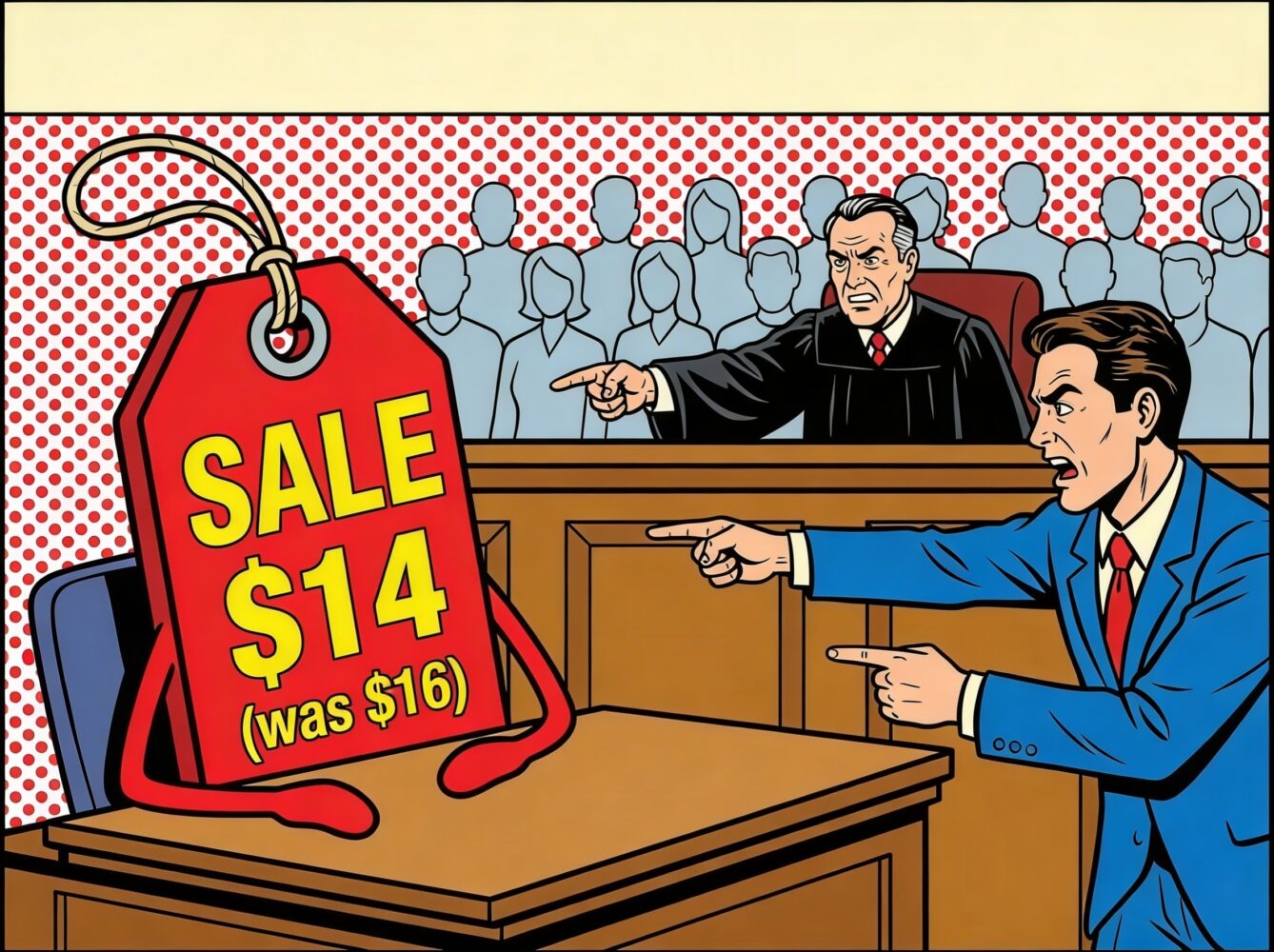
Antitrust has always been a strange regulatory enterprise. Businesses are largely free to engage in various commercial practices involving price, output, product design, distribution, research, and innovation—until they’re not. Outside the paradigmatic examples of explicit agreements among competitors to fix price and output, many business practices live in a gray zone. Whether a particular pricing…
From Discount to Discrimination: The Strange Economics of Anti-Competitive Antitrust
Lawfare Begins Against Repealing Endangerment Finding–Legalities Outlook
24 Feb 2026 Leave a comment
in economics of climate change, economics of regulation, energy economics, environmental economics, environmentalism, global warming, law and economics, politics - USA, Public Choice, transport economics, urban economics Tags: constitutional law

The expected blowback from invested climatists is underway, as reported by legacy media whose bias is with the alarmists. Examples: EPA faces lawsuit over scrapping the ‘endangerment finding,’ a pillar of climate regulation, Scientific American E.P.A. Faces First Lawsuit Over Its Killing of Major Climate Rule, NY Times Lawsuit: EPA revoking greenhouse gas finding risks […]
Lawfare Begins Against Repealing Endangerment Finding–Legalities Outlook
“It’s Not Going to End Well for Them”: Susan Rice Joins Call for a Revenge Purge After Democrats Re-Take Power
22 Feb 2026 Leave a comment
in economics of crime, law and economics, politics - USA

As Democrats plan for the possible takeover in the midterms and 2028 election, they are already openly discussing their push…
“It’s Not Going to End Well for Them”: Susan Rice Joins Call for a Revenge Purge After Democrats Re-Take Power
 Utopia, you are standing in it!
Recent Comments