Regulating Monopolies: A History of Electricity Regulation
09 Feb 2016 Leave a comment
in applied price theory, economic history, economics of bureaucracy, economics of religion, industrial organisation, law and economics, Public Choice, rentseeking, survivor principle Tags: competition law, electricity industry, natural monopolies, network industries
Software piracy by country
08 Feb 2016 Leave a comment
in economics of crime, economics of media and culture, law and economics, property rights Tags: intellectual property, patents and copyrights, software piracy
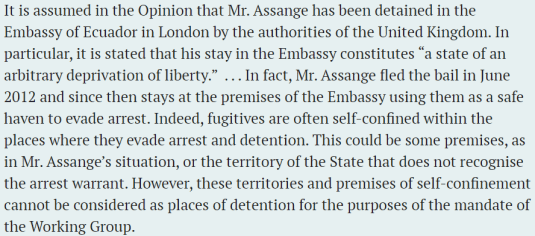
The Arbitrary Detention of Julian Assange? – Lawfare
07 Feb 2016 Leave a comment
in economics of crime, international economics, law and economics
@jacindaardern wrong to say Australia is last place to follow in race relations
07 Feb 2016 Leave a comment
in constitutional political economy, discrimination, economic history, law and economics, politics - Australia, politics - New Zealand, property rights, Public Choice Tags: Aboriginal land rights, Maori economic development, native title, racial discrimination
From 1965 onwards, 1/3rd of terrestrial Australia – 2.5 million sq kms of land – was returned to indigenous owners, with half of that since the Native Title decision in 1993. Tasmania pioneered aboriginal land rights with the Cape Barron Island Act 1912.
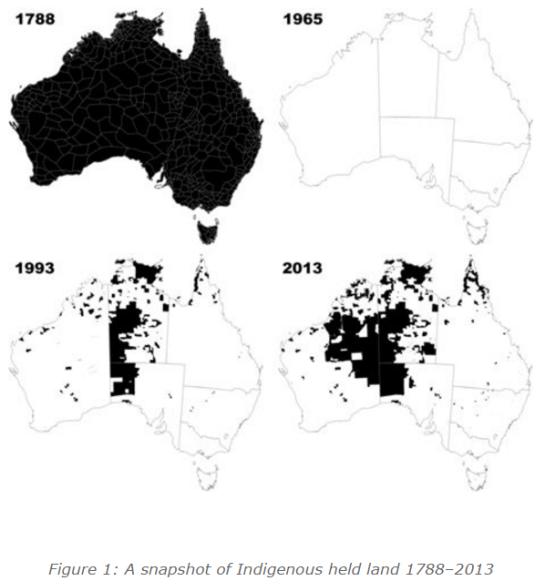
Source: Jon Altman, The political ecology and political economy of the Indigenous land titling ‘revolution’ in Australia, March 2014 Māori Law Review.
New Zealand extinguished native title twice in its history with the 2nd of these takings of Māori land by the last Labour government with the foreshore and seabed legislation. In her op-ed today, has Jacinda Ardern forgotten why the Māori party came into being?
Unlike New Zealand, Australia welcomed migrants from a wide range of ethnicities after the Second World War. It abolished the White Australia policy in the 1960s along with any discrimination in its Constitution against aboriginals.
Australia takes 8 times as many refugees as New Zealand on a per capita basis.
Sweden – the OECD's highest per capita recipient of asylum seekers bit.ly/1vfFEUh http://t.co/y6DmdJjAsE—
Guardian Data (@GuardianData) December 02, 2014
This redress of indigenous grievances was done out of the generosity of the Australian heart. Aboriginals are a tiny minority in Australia with little independent political pull.
@paul1kirby why does @OECD claim that Indians trust their judicial system so much?
07 Feb 2016 Leave a comment
in development economics, economics of regulation, growth disasters, law and economics, property rights Tags: bribery and corruption, capitalism and freedom, doing business, economics of corruption, Index of Economic Freedom, India, rule of law
For a country riddled with corruption, Indians report the surprising amount of confidence in their courts despite the corruption in those courts as well.
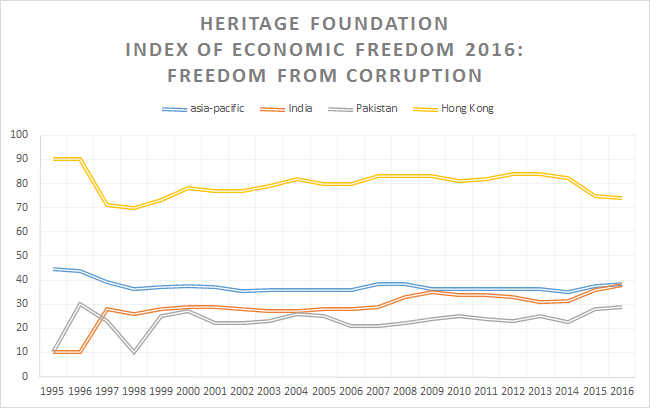
Source: Index of Economic Freedom.

Is @HillaryClinton a Reformer or Hypocrite?
07 Feb 2016 Leave a comment
in discrimination, gender, labour economics, law and economics, politics - USA Tags: 2016 presidential election, Bill Clinton, Hillary Clinton, Left-wing hypocrisy, sexual harassment
Why Robert Hanson leans Libertarian
06 Feb 2016 Leave a comment
in comparative institutional analysis, law and economics, liberalism, libertarianism
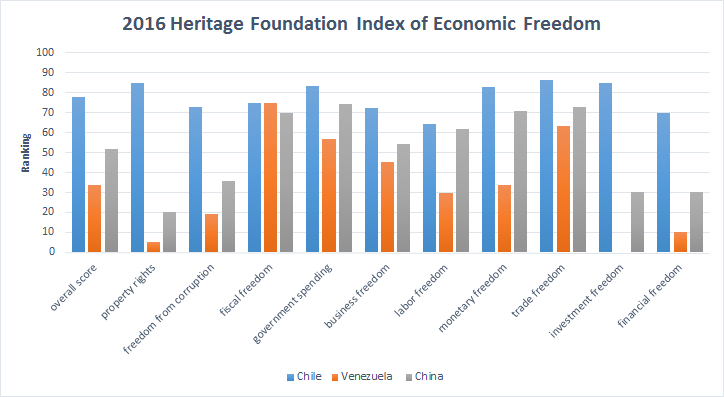
@OwenJones84 @K_Niemietz Venezuelan, Chilean and Chinese index of economic freedom rankings 2016
06 Feb 2016 Leave a comment
in development economics, economics of regulation, entrepreneurship, fiscal policy, growth disasters, growth miracles, industrial organisation, labour economics, law and economics, macroeconomics, monetary economics, property rights, public economics Tags: capitalism and freedom, Chile, China, The Great Escape, Venezuela
A bizarre Finnish amateur racing car practice for redistributing winning
06 Feb 2016 Leave a comment
in economics of media and culture, fiscal policy, income redistribution, labour economics, labour supply, law and economics, poverty and inequality, property rights, public economics, rentseeking Tags: basic income, car racing, Finland, guaranteed minimum income, negative income tax
@NewStatesman Q&A: Why the UN’s Julian Assange ruling is meaningless
06 Feb 2016 Leave a comment
in economics of crime, law and economics Tags: conspiracy theories, extradition, Leftover Left, renegade Left, Twitter left

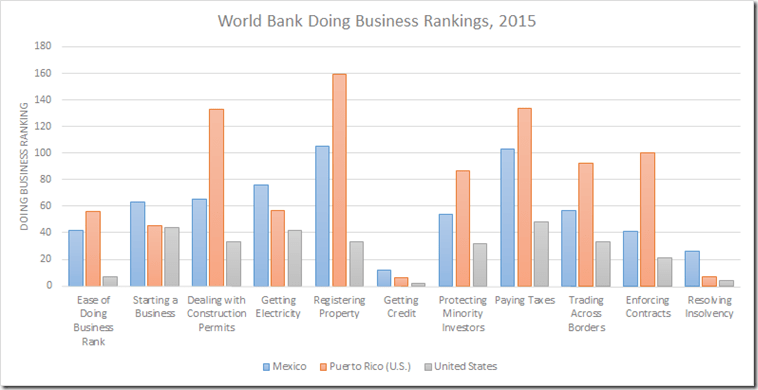
Much more than a high minimum wage – Puerto Rican, Mexican and U.S. Doing Business rankings 2015
05 Feb 2016 Leave a comment
in economics of religion, entrepreneurship, industrial organisation, law and economics, politics - USA, property rights Tags: doing business, Mexico, Puerto Rico
Having a high minimum wage is the least of the problems that the US territory of Porto Rico has when you consider reasons from its recent sovereign default. It owes about US$70 billion. It is a terrible place to do do business – worse than Mexico! Mexicans find it easier to export to the USA!
@OwenJones84 @K_Niemietz Ease of Doing Business in Latin America and the Caribbean – World Bank rankings
05 Feb 2016 Leave a comment
in development economics, economics of regulation, growth disasters, growth miracles, law and economics, property rights Tags: doing business, Venezuela
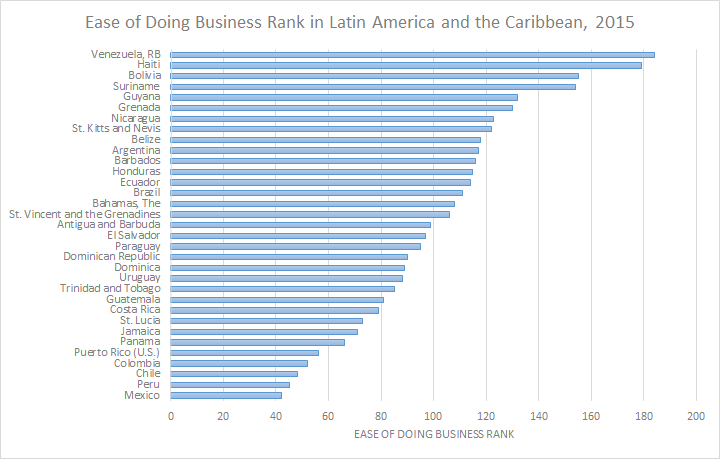
Source: World Bank Doing Business Database 2015.
@GreenpeaceUK thinks these wind turbines are a pretty sight
05 Feb 2016 Leave a comment
in energy economics, environmental economics, global warming, law and economics, property rights Tags: Big Wind, land use conflicts, visual pollution, wind power
#TPPANoWay sovereignty objections apply equally to @ILO conventions
04 Feb 2016 Leave a comment
in constitutional political economy, economics of regulation, international economic law, international economics, International law, labour economics, law and economics, politics - New Zealand, unions Tags: employment law, employment protection, employment regulation, ILO, labour market regulation, social clauses, TPPA
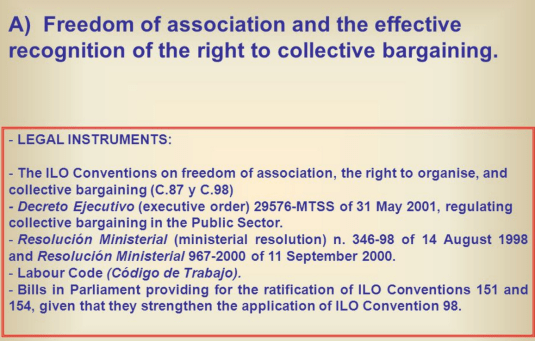
New Zealand has signed and ratified dozens of International Labour Organisation Conventions dating back to 1921. They all fetter the sovereignty of New Zealand. As a member of the ILO, New Zealand is required to report on its application of ILO Conventions.
That limitation on the sovereignty of New Zealand is no more and no less than in an international trade agreement. New Zealand can renounce an international trade agreement and has renounced nine International Labour Organisation conventions.
Jane Kelsey makes the following points about the legal implications of the Trans-Pacific Partnership agreement:
The 30 chapter Trans-Pacific Partnership Agreement (TPPA) constrains domestic law and policy at central government level, and in places by local government and SOEs, in diverse areas beyond traditional aspects of international trade.
…The TPP provides cumulative opportunities for foreign states and corporations to influence domestic decisions which may be burdensome and intrusive.
The exact same objections apply to the ILO conventions. The union movement does not hesitate to argue that the democratic process in New Zealand should be overridden because the proposal at hand purportedly conflicts with an ILO convention.
For example, when the government was choosing to deregulate collective bargaining, the sovereignty of Parliament was questioned because of an ILO convention. Helen Kelly, CTU President said:
in Parliament on 4 June, the Minister was asked if he agreed with advice from officials that the ability for employers to opt out of multi-employer bargaining may breach our obligations under ILO Convention 98 on the right to organise and collective bargaining.
…There is no point attending such an important UN ILO conference at the time your Government is being advised it is breaching its undertakings to that very organisation…
The CTU President also referred to the regulatory impact statement prepared for that collective bargaining legislation:
The paper also points out that these changes open NZ up to international examination by the International Labour Organisation (ILO) for non-compliance with Convention 98 – on the Right to Organise and Collectively Bargain, which New Zealand has signed up to.
Helen Kelly says “at least four of the proposals are deemed to be inconsistent with our international obligations, and two of them are classified as uncertain. Why the Government wants law changes that damage our international obligations is unclear.”
Council of Trade Unions submissions to minimum wage reviews have at least a dozen references to ILO conventions and the requirement to honour their provisions.
Posner and Goldsmith rightly argue that international law is a product of states pursuing their interests on the international stage. It does not induce states to comply contrary to their interests. The possibilities for what it can achieve are limited.
Government sign-up to various international agreements depending on their political priorities. You cannot complain that governments that you did not vote do what government you voted for also did, which was sign up to international agreements that suited their political agendas. The solution is to work harder to win the next general election.
As for opposing trade agreements on sovereignty grounds, it is rank hypocrisy for the union movement to do so given the number of times it cites international labour agreements when it suits them and seeks their inclusion in trade agreements to raise labour costs in developing countries.
 Utopia, you are standing in it!
Recent Comments