A lot of readers and heterodox colleagues have sent me this link to Bari Weiss’s interview with Harvard economics professor Roland G. Fryer, Jr., often accompanied by big encomiums. Despite my unwillingness to watch long videos, I did watch all 77 minutes of it. Unfortunately, I wasn’t mesmerized, or even much interested. There are interesting […]
Bari Weiss interviews Roland Fryer
Bari Weiss interviews Roland Fryer
22 Feb 2024 Leave a comment
in applied price theory, discrimination, econometerics, economic history, economics of crime, economics of education, human capital, labour economics, labour supply, law and economics, occupational choice, politics - USA, poverty and inequality Tags: academic bias, crime and punishment, free speech, law and order, political correctness, racial discrimination, regressive left
Pay to Play: Trump Faces a Staggering Cost for Appeal
21 Feb 2024 Leave a comment
in law and economics, politics - USA, property rights Tags: 2024 presidential election

Below is my column on Fox.com on the demand for roughly a $455 million dollar deposit or equivalent bond for Donald Trump to be able to seek appellate review of the recent judgment against him. The combination of the fine and the deposit rule highlight the confiscatory elements of this judgment. Here is the column:
Pay to Play: Trump Faces a Staggering Cost for Appeal
Raffael N. Fasel: Ouster Clauses and the Silent Constitutional Crisis
20 Feb 2024 Leave a comment
in law and economics, property rights Tags: British constitutional law

In a recent comment on the Government’s Rwanda Bill and on speculations about an unprecedented strike down by the Supreme Court, Professor Mark Elliott asked a question that has been on many UK public lawyers’ minds lately: “Are we headed for a constitutional crisis?” This question, to be sure, is not new. However, with a […]
Raffael N. Fasel: Ouster Clauses and the Silent Constitutional Crisis
Tino Rangatiratanga and localism
20 Feb 2024 1 Comment
in applied price theory, comparative institutional analysis, constitutional political economy, development economics, economics of regulation, law and economics, property rights Tags: Canada
My piece for the Saturday papers weekend before last, and now ungated here, went back to a theme that Richard Harman had noticed in the Waitangi speeches. Minister Shane Jones argued fuller debate on the meaning of Tino Rangatiratanga is inevitable, saying, “There is a deep, committed view from Pita Tipene and others that article two…
Tino Rangatiratanga and localism
Brian Christopher Jones: Nigel Farage and the UK Constitution
20 Feb 2024 Leave a comment
in constitutional political economy, currency unions, economic history, law and economics, macroeconomics Tags: British constitutional law, British politics, European Union

The upheaval of the UK constitution from 2016 onwards has been associated with a host of individuals, from David Cameron to Boris Johnson to Dominic Cummings, who have received the significant bulk of academic attention in recent years. And yet, another individual has had a substantial impact upon the UK constitution during this time: Nigel […]
Brian Christopher Jones: Nigel Farage and the UK Constitution
Blind Justice or Blind Rage: New York’s Legal System Faces Ultimate Test With Obscene Trump Award
20 Feb 2024 Leave a comment
in law and economics, politics - USA Tags: 2024 presidential election

Below is my column in The Hill on the $355 million verdict against Trump and his corporation in New York. The damages in my view are excessive and absurd after the court acknowledged that no one lost a dime in these exchanges. Indeed, the “victims” wanted to do more business with Trump and made handsome […]
Blind Justice or Blind Rage: New York’s Legal System Faces Ultimate Test With Obscene Trump Award
@TaxpayersUnion Submission on the Fair Digital News Bargaining Bill
19 Feb 2024 Leave a comment
in economics of media and culture, industrial organisation, law and economics, property rights
RODNEY HIDE interviews PROF PAUL MOON
19 Feb 2024 Leave a comment
in economic history, economics of crime, economics of education, International law, law and economics, liberalism, Marxist economics, politics - New Zealand, property rights Tags: constitutional law
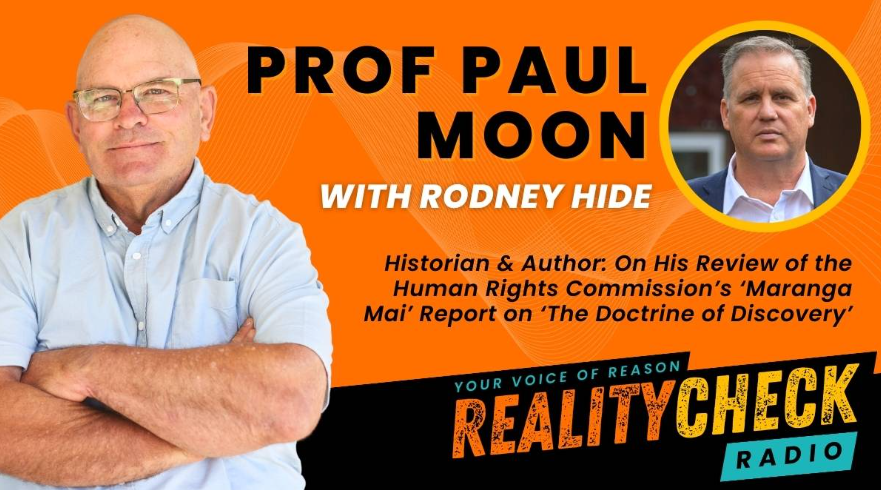
PROF PAUL MOON: Historian and Author: On His Review of The Human Rights Commission’s ‘Maranga Mai’ Report on ‘The Doctrine of Discovery’ Paul Moon joins Rodney to discuss his review of the Human Rights Commission’s ‘Maranga Mai’ report on ‘The Doctrine of Discovery’. Listen here You can read Paul’s review on ‘The Doctrine of Discovery’…
RODNEY HIDE interviews PROF PAUL MOON
Willis Goes Full Trump . . . and May Get Away With It
17 Feb 2024 Leave a comment
in economics of crime, law and economics, politics - USA Tags: 2024 presidential election, crime and punishment

Below is a slightly expanded version of my column on Fox.com on the hearing in Georgia over allegations of improper conduct by Fulton County District Attorney Fani Willis. In her combative testimony, Willis looked strikingly like the man she is prosecuting. Here is the column:
Willis Goes Full Trump . . . and May Get Away With It
OLIVER HARTWICH: Absurd – NZ courts can now decide on climate change
17 Feb 2024 Leave a comment
in comparative institutional analysis, economics of climate change, energy economics, environmental economics, environmentalism, global warming, law and economics, liberalism, politics - New Zealand, property rights, Public Choice, public economics, rentseeking Tags: climate activists, rule of law
Oliver Hartwich writes – The World Justice Project ranks New Zealand 7th out of 142 countries on its ‘Rule of Law Index’, narrowly ahead of Australia’s 13th place. However, Australia still has hope – if only because of a recent decision by the Supreme Court of New Zealand. The case is easily told. Mike Smith, […]
OLIVER HARTWICH: Absurd – NZ courts can now decide on climate change
Supreme Court Unanimously Throws Out Bridgegate Convictions — And Rejects Prior Legal Arguments Against Trump
17 Feb 2024 Leave a comment
in economics of bureaucracy, economics of crime, law and economics, politics - USA, property rights, Public Choice

The Supreme Court today unanimously threw out the convictions of Bridget Kelly, a former aide to Christie, and Bill Baroni, a former Port Authority official, for their role in “Bridgegate.” The dispute involved the controversial closing of lanes on the George Washington Bridge to create traffic problems for the mayor of Fort Lee, N.J., who […]
Supreme Court Unanimously Throws Out Bridgegate Convictions — And Rejects Prior Legal Arguments Against Trump
February 13, 1542: Execution of Catherine Howard, Queen of England and Ireland. Part III
16 Feb 2024 Leave a comment
in economics of crime, economics of love and marriage, law and economics Tags: British history
Catherine remained in limbo until Parliament introduced on January 29, 1542 a Bill of Attainder, which was passed on February 7, 1542. The Royal Assent by Commission Act 1541 made it treason, and punishable by death, for a Queen Consort to fail to disclose her sexual history to the king within 20 days of their […]
February 13, 1542: Execution of Catherine Howard, Queen of England and Ireland. Part III
Glenn Loury (and, to some extent, John McWhorter) backpedal about the death of George Floyd
15 Feb 2024 Leave a comment
in discrimination, economics of crime, law and economics, movies, politics - USA Tags: crime and punishment, law and order, racial discrimination
The death of George Floyd, and his presumed murder by Derek Chauvin with the complicity of several Minneapolis policemen, was an iconic moment in today’s race relations, the most important event leading to the “racial reckoning” of the last few years. In late December of last year, I posted a movie, “The Fall of Minneapolis” […]
Glenn Loury (and, to some extent, John McWhorter) backpedal about the death of George Floyd
February 13, 1542: Execution of Catherine Howard, Queen of England and Ireland. Part II
15 Feb 2024 Leave a comment
in economic history, economics of crime, law and economics Tags: British history
Letter from Catherine Howard to Thomas Culpeper During the investigation a love letter written in the Queen’s distinctive handwriting was found in Culpeper’s chambers. This is the only letter of hers that has survived (other than her later “confession”). On All Saints’ Day, November 1, 1541, the King arranged to be found praying in the […]
February 13, 1542: Execution of Catherine Howard, Queen of England and Ireland. Part II
Congress and Courts enable Energy and Climate Fantasy and Tyranny
15 Feb 2024 Leave a comment
in comparative institutional analysis, economics of bureaucracy, economics of climate change, economics of regulation, energy economics, environmental economics, environmentalism, global warming, law and economics, politics - USA, property rights, Public Choice Tags: constitutional law
Supreme Court should end “Chevron deference” to restore checks, balances and reality
Congress and Courts enable Energy and Climate Fantasy and Tyranny
 Utopia, you are standing in it!
Recent Comments