Here is a gloomy account from Vladimir Mirov: Ruble depreciation will contribute to inflation even further, as Russia is continued to be heavily reliant on imports – this is a kind of self-sustaining spiral. I also strongly disagree with those who say that cheaper ruble is “good” for exporters and the budget. Exporters have yet […]
How is the Russian war economy doing?
How is the Russian war economy doing?
08 Dec 2024 1 Comment
in applied price theory, defence economics, development economics, economic growth, economics of regulation, entrepreneurship, fiscal policy, growth disasters, income redistribution, industrial organisation, international economics, law and economics, macroeconomics, monetary economics, property rights, Public Choice, war and peace Tags: Russia, Ukraine
Why are no trillion dollar companies being created in Europe?
07 Dec 2024 Leave a comment
in applied price theory, economics of regulation, entrepreneurship, industrial organisation, labour economics, law and economics, property rights
That is the theme of a new Substack by Pieter Garicano, here is one excerpt: These answers, according to a recent paper by Olivier Coste and Yann Coatanlem, two French investors, miss the point: the reason more capital doesn’t flow towards high-leverage ideas in Europe is because the price of failure is too high. Coste estimates that, […]
Why are no trillion dollar companies being created in Europe?
Climate Lawfare Goes International
06 Dec 2024 Leave a comment
in economics of climate change, economics of regulation, energy economics, environmental economics, environmentalism, global warming, law and economics, property rights Tags: lawfare
DW reports on hearings underway at ICJ International Court of Justice in the Hague. Overview of the proceedings in italics with my bolds. Vanuatu urges ICJ to recognise climate change harms The outcome of the landmark case could lead to the establishment of legal framework for holding countries accountable in the fight against climate change. […]
Climate Lawfare Goes International
Andrew Le Sueur: Finally, separation of powers in Jersey?
05 Dec 2024 Leave a comment
in comparative institutional analysis, constitutional political economy, economic history, economics of bureaucracy, economics of crime, law and economics, property rights, Public Choice, public economics Tags: British politics, constitutional law

The question of separating constitutional powers in Jersey is more complex than it appears. Here’s why. Jersey and Guernsey are unique globally in having constitutions that in the ancient office of Bailiff fuse together the roles of chief justice and presiding officer of their respective courts and parliaments. As I argue, this is further complicated […]
Andrew Le Sueur: Finally, separation of powers in Jersey?
Misuse of land use planning
05 Dec 2024 Leave a comment
in economics of bureaucracy, economics of regulation, health economics, industrial organisation, law and economics, politics - New Zealand, property rights, Public Choice, rentseeking Tags: nanny state, zoning
If you thought McDonald’s was some kind of public health hazard, using processes under the Resource Management Act to try to block one from opening in Wanaka would be among the stupidest possible ways of dealing with it. The country already has food safety regulations. If you thought that (in fact delicious and fine) McDonald’s food…
Misuse of land use planning
The end of oil?
05 Dec 2024 Leave a comment
in applied price theory, econometerics, economics of climate change, energy economics, environmental economics, environmentalism, global warming, law and economics, politics - USA, property rights, Public Choice, rentseeking, resource economics Tags: peak oil
It is now plausible to envision scenarios in which global demand for crude oil falls to essentially zero by the end of this century, driven by improvements in clean energy technologies, adoption of stringent climate policies, or both. This paper asks what such a demand decline, when anticipated, might mean for global oil supply. One […]
The end of oil?
The Missing Myths
04 Dec 2024 Leave a comment
in applied price theory, comparative institutional analysis, constitutional political economy, discrimination, economic history, economics of climate change, economics of information, economics of media and culture, economics of regulation, energy economics, entrepreneurship, environmental economics, environmentalism, financial economics, gender, global warming, health economics, human capital, income redistribution, labour economics, labour supply, law and economics, liberalism, libertarianism, Marxist economics, occupational choice, politics - USA, poverty and inequality, property rights, Public Choice, rentseeking Tags: Age of Enlightenment, crime and punishment, criminal deterrence, free speech, gender wage gap, law and order, political correctness, racial discrimination, regressive left, sex discrimination
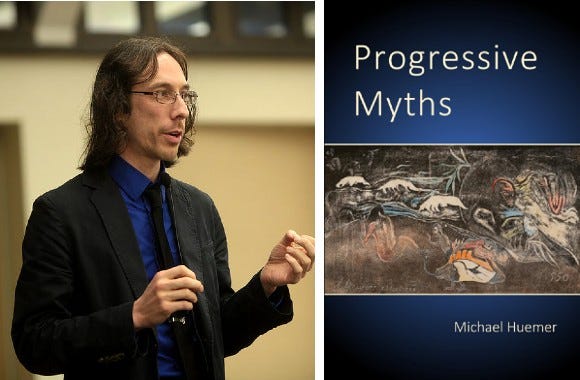
Michael Huemer’s Progressive Myths is the best book on wokeness. One of its many strengths is its focus on basic facts. As the author explains:I have selected beliefs that can be debunked fairly quickly and forcefully. Many other progressive beliefs require long argumentation and subjective judgment calls to assess. About these more difficult issues, I…
The Missing Myths
Paul Krugman Is Right…albeit Selectively and Hypocritically
04 Dec 2024 Leave a comment
in applied price theory, comparative institutional analysis, economic history, economics of bureaucracy, economics of regulation, entrepreneurship, income redistribution, industrial organisation, international economics, law and economics, politics - USA, property rights, Public Choice, public economics, rentseeking Tags: tarrifs
I like profits. But let me qualify that statement. I like profits that are the result of businesses providing goods and services that consumers value. Those profits are earned. By contrast, I don’t like it when businesses get in bed with government and get money via cronyism, bailouts, subsidies, protectionism, or industrial policy. Those profits […]
Paul Krugman Is Right…albeit Selectively and Hypocritically
Sabotaging productivity
03 Dec 2024 Leave a comment
in applied price theory, economics of bureaucracy, economics of regulation, health economics, law and economics, politics - New Zealand, property rights, Public Choice, rentseeking, urban economics Tags: land supply, nanny state, zoning
Is there any better – or should that be worse? – example of how the consenting process sabotages productivity than the current hearings on McDonalds’ application to open in Wanaka? Public submissions were sought, and of the 366 made, 339 were opposed, 21 in support and six wanted changes to the plan. Among the submissions […]
Sabotaging productivity
Appalling behaviour by Public Health Te Waipounamu
01 Dec 2024 Leave a comment
in economics of regulation, health economics, law and economics, liberalism, Marxist economics, politics - New Zealand, property rights Tags: nanny state, regressive left
It is no surprise that the Government is reducing the number of public health staff members, when they are spending their time on opposing resource consent applications for a McDonalds in Wanaka, rather than oh preventing the current whooping cough epidemic. Around half the public health staff (those who deal with infectious diseases) do amazing […]
Appalling behaviour by Public Health Te Waipounamu
Massachusetts has occupational licensing for fortune tellers
30 Nov 2024 Leave a comment
in economics of information, economics of regulation, human capital, industrial organisation, labour economics, labour supply, law and economics, occupational choice, occupational regulation, politics - USA, property rights, Public Choice, rentseeking Tags: cranks
Here is the link, “Prohibits fraudulently taking money by “pretended fortune telling.”” Seen referenced somewhere on Twitter.
Massachusetts has occupational licensing for fortune tellers
Marc Andreesen Gives Examples of Fascism
29 Nov 2024 Leave a comment
in economics of regulation, law and economics, politics - USA, property rights Tags: regressive left

Marc Andreessen is not as well known now as he was at the dawn of the Interwbbby age when he developed the world’s first widely used web browser that had a graphic interface, Mosaic, which was rapidly copied by everybody else. From that success he leveraged it into co-founding Netscape, whose software engineers contributed important Web […]
Marc Andreesen Gives Examples of Fascism
Gallup: Public Support for Gun Bans Craters
29 Nov 2024 1 Comment
in economics of crime, law and economics, politics - USA, property rights Tags: gun control

According to Gallup’s latest polling, support for a handgun ban has fallen to just 20 percent and support for an “assault weapons” ban has cratered to just 52 percent. Gun bans were a constant call from both President Joe Biden and Vice President Kamala Harris over the last four years. President Biden often combined the […]
Gallup: Public Support for Gun Bans Craters
Centrist: Debbie Ngarewa-Packer admits Māori have ‘different rights’
26 Nov 2024 Leave a comment
in law and economics, liberalism, Marxist economics, politics - New Zealand, property rights Tags: Age of Enlightenment, constitutional law, free speech, political correctness, racial discrimination, regressive left
The Centrist reports – In a Q&A interview with Jack Tame, Te Pāti Māori co-leader Debbie Ngarewa-Packer acknowledged Māori have separate rights under Te Tiriti o Waitangi as tangata whenua. When pressed on whether this meant different standards of citizenship, she said, “We have different expectations and different rights, absolutely.”
Centrist: Debbie Ngarewa-Packer admits Māori have ‘different rights’
The Treaty Principles debate: Parliament is having a third go at addressing this conundrum
25 Nov 2024 Leave a comment
in economics of bureaucracy, income redistribution, International law, law and economics, politics - New Zealand, property rights, Public Choice, rentseeking Tags: constitutional law
Muriel Newman writes- ACT’s Principles of the Treaty of Waitangi Bill was tabled in Parliament on November 7, and the first reading debate was held on November 14. The Bill was referred to the Justice Select Committee, where a closing date for submissions of 7 January 2024 has been set – full details can be found HERE. This […]
The Treaty Principles debate: Parliament is having a third go at addressing this conundrum
 Utopia, you are standing in it!
Recent Comments