
Judge Richard Posner on judging civil liberties challenges to national security laws
18 Dec 2014 Leave a comment


"The Rise and Fall of Judicial Self-Restraint" with Judge Richard Posner
03 Dec 2014 Leave a comment
in law and economics, Richard Posner Tags: constitutional law, Richard Posner, statutory interpretation
Richard Posner and Sam Peltzman joint interview 2009
02 Dec 2014 Leave a comment
in Richard Posner, Sam Peltzman Tags: Richard Posner, Sam Peltzman


Richard Posner on behavioural economics and its real-world applications
19 Nov 2014 Leave a comment
in applied price theory, behavioural economics, comparative institutional analysis, labour economics, occupational choice, Richard Posner Tags: behavioural economics, experimental economics, Richard Posner

Richard A. Posner – Our Domestic Intelligence Crisis
17 Nov 2014 Leave a comment
in economics of crime, law and economics, liberalism, Richard Posner, war and peace Tags: national security, privacy, Richard Posner, security and intelligence, terrorism


Posner and Epstein Debate Patent System
29 Jun 2014 Leave a comment
in law and economics, Richard Epstein, Richard Posner Tags: patents, Richard Epstein, Richard Posner
Richard Posner on constructive criticism in public policy
09 Jun 2014 Leave a comment
in organisational economics, Richard Posner Tags: Richard Posner

What is evidence of price collusion?
16 May 2014 Leave a comment
in industrial organisation, law and economics, Richard Posner Tags: cartels
Posner and Easterbrook suggest that these industry behaviours together are suspicious.
- Fixed relative market shares among top firms over time.
- Declining absolute market shares of the industry leaders.
- Persistent price discrimination.
- Certain types of exchanges of price information.
- Regional price variations.
- Identical sealed bids for tenders.
- Price, output, and capacity changes at the time of the suspected initiation of collusion.
- Industry-wide resale price maintenance or non-price vertical restraints.
- Relatively infrequent price changes; smaller price reactions as a result of known cost changes.
- Demand is highly responsive to price changes at market price.
- Level and pattern of profits relatively favourable to smaller firms.
- Particular pricing and marketing strategies.
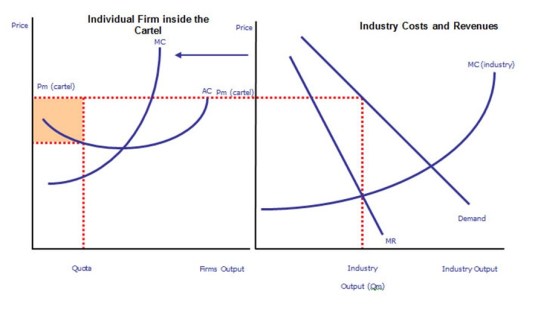
Aaron Director’s most creative suggestion of evidence of price collusion is disputes between the marketing and finance departments of a large company. The market department wants to cut prices because there would be a large increase in sales. The finance department says no because this would take the price below the monopoly or agreed cartel price.
 Utopia, you are standing in it!
Recent Comments