MPS
22 May 2024 Leave a comment
in budget deficits, business cycles, economic growth, financial economics, fiscal policy, inflation targeting, macroeconomics, monetary economics
There is still reason to hope despite the fact that more than three-quarters of Americans say the United States is headed in the wrong direction
21 May 2024 Leave a comment
in development economics, economic growth, economic history, growth disasters, growth miracles, health economics, liberalism, macroeconomics Tags: The Great Enrichment
See The Case for Hope by Nicholas Kristof of The NY Times. Excerpts:”whenever I hear that America has never been such a mess or so divided, I think not just of the Civil War but of my own childhood: the assassinations of the 1960s; the riots; the murders of civil rights workers; the curses directed at…
There is still reason to hope despite the fact that more than three-quarters of Americans say the United States is headed in the wrong direction
The Treasury and productivity
10 May 2024 Leave a comment
in applied price theory, economic growth, economic history, human capital, labour economics, labour supply, macroeconomics, politics - New Zealand

Late last week The Treasury released a new 40 page report on “The productivity slowdown: implications for the Treasury’s forecasts and projections” (productivity forecasts and projections that is, rather than any possible fiscal implications – the latter will, I guess, be articulated in the Budget documents). In short, if (as it has) productivity growth has slowed down […]
The Treasury and productivity
Dishonest Pimping for a Global Wealth-Tax Cartel
07 May 2024 Leave a comment
in applied price theory, economic growth, economic history, entrepreneurship, human capital, income redistribution, industrial organisation, labour economics, labour supply, macroeconomics, Marxist economics, politics - USA, Public Choice, public economics Tags: taxation and entrepreneurship, taxation and investment, wealth tax
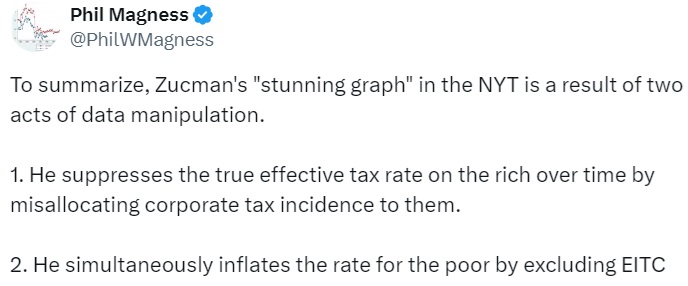
Everything you need to know about wealth taxation can be summarized in two sentences. The biggest problem with most tax systems is the pervasive tax bias against income that is saved and invested, which discourages the accumulation of capital that helps to finance future growth. Wealth taxes would dramatically increase the tax bias against saving […]
Dishonest Pimping for a Global Wealth-Tax Cartel
More Good Results from Argentina
28 Apr 2024 Leave a comment
in budget deficits, business cycles, comparative institutional analysis, development economics, economic growth, economic history, economics of bureaucracy, economics of regulation, fiscal policy, growth disasters, income redistribution, labour economics, liberalism, libertarianism, macroeconomics, Marxist economics, monetary economics, Public Choice, rentseeking, unemployment Tags: Argentina
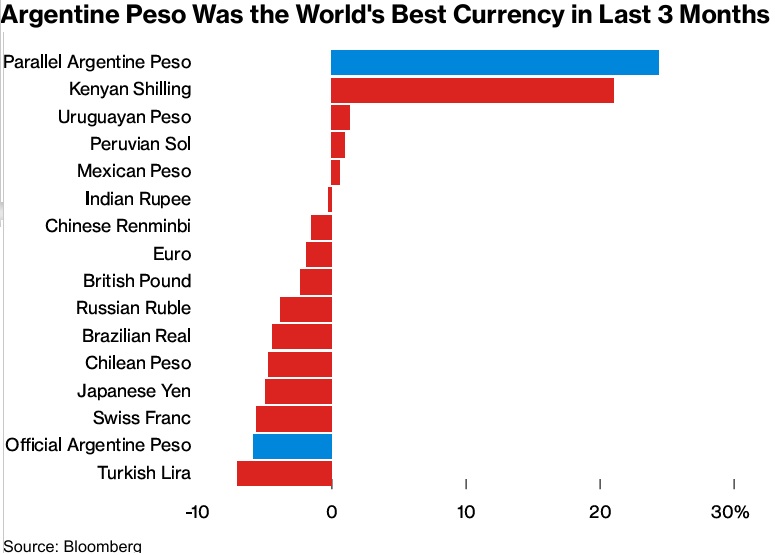
The most important election of 2023 took place in Argentina, where that nation’s voters elected the libertarian candidate, Javier Milei, as their new president. I discussed the outlook for Milei’s agenda on a recent appearance of the Schilling Show. Here’s a brief excerpt. As you can see, I’m worried that Milei faces enormous obstacles. Argentina […]
More Good Results from Argentina
Why the Global Free Market Will Save the World
23 Apr 2024 Leave a comment
in applied price theory, applied welfare economics, comparative institutional analysis, constitutional political economy, development economics, economic growth, economic history, energy economics, environmental economics, global warming, growth disasters, growth miracles, health economics, history of economic thought, income redistribution, labour economics, law and economics, liberalism, macroeconomics, Marxist economics, politics - Australia, politics - New Zealand, politics - USA, poverty and inequality, property rights, Public Choice, public economics, rentseeking Tags: anticapitalist mentality, capitalism and freedom
“The Simple Macroeconomics of AI”
21 Apr 2024 Leave a comment
in applied price theory, economic growth, entrepreneurship, human capital, industrial organisation, labour economics, labour supply, macroeconomics, poverty and inequality Tags: artificial intelligence
That is the new Daron Acemoglu paper, and he is skeptical about its overall economic effects. Here is part of the abstract: Using existing estimates on exposure to AI and productivity improvements at the task level, these macroeconomic effects appear nontrivial but modest—no more than a 0.71% increase in total factor productivity over 10 years.…
“The Simple Macroeconomics of AI”
19 Apr 2024 Leave a comment
in budget deficits, business cycles, economic growth, economic history, fiscal policy, great depression, history of economic thought, labour economics, macroeconomics, monetarism, monetary economics, unemployment
Productivity Syndrome and the Investment Prescription
30 Mar 2024 Leave a comment
in applied price theory, development economics, economic growth, economic history, growth miracles, history of economic thought, human capital, industrial organisation, labour economics, labour supply, macroeconomics

Economic productivity is about growing the size of the pie. I sometimes point out that no matter what your goal–spending increases, tax cuts, greater support for the poor, environmental protection–that goal is easier when the economic pie is growing. When the economic pie isn’t growing, after all, then all priorities have to pit potential winners…
Productivity Syndrome and the Investment Prescription
How credible is the Milei plan?
24 Mar 2024 Leave a comment
in applied price theory, budget deficits, business cycles, development economics, economic growth, financial economics, fiscal policy, growth disasters, income redistribution, international economics, macroeconomics, monetary economics, Public Choice, public economics Tags: Argentina
Here is a good Substack essay by Nicolas Cachanosky, excerpt: Inflation expectations depend on what is expected to happen to the budget in the months to come. It is natural, then, to ask whether the observed surpluses are sustainable in the months ahead. Answering this question requires looking at two things. First, how was the fiscal […]
How credible is the Milei plan?
Eat the Rich: Warren Plan Would Impose Wealth Tax, Captivity Tax, and $100 Billion for Increasing Tax Audits
23 Mar 2024 Leave a comment
in applied price theory, applied welfare economics, economic growth, fiscal policy, income redistribution, labour economics, labour supply, macroeconomics, poverty and inequality, Public Choice, public economics Tags: taxation and entrepreneurship, taxation and investment, taxation and labour supply

The wealth tax is back. We have previously discussed the constitutional and policy concerns surrounding the push by Democrats like Sen. Elizabeth Warren (D., Mass.) to introduce a wealth tax that would start with billionaires. It would not likely end there. The law would also apply the same type of California approach to wealthy families […]
Eat the Rich: Warren Plan Would Impose Wealth Tax, Captivity Tax, and $100 Billion for Increasing Tax Audits
Environmentalism Perverted by Climatism
08 Mar 2024 1 Comment
in applied price theory, comparative institutional analysis, development economics, economic growth, economic history, economics of climate change, economics of crime, energy economics, environmental economics, environmentalism, global warming, growth miracles, law and economics, liberalism, macroeconomics, Marxist economics, property rights Tags: climate alarmism, free speech, regressive left, The Great Enrichment

J. Scott Turner explains how the roots of environmental stewardship were poisoned, resulting in the perverted modern decarbonization movement. His Spectator Australia article is Environmentalism: from concern about clean air to throwing soup at the Mona Lisa. Excerpts in italics with my bolds and added images. H/T John Ray Garrett Hardin was a professor of biology […]
Environmentalism Perverted by Climatism
Labour’s legacy
01 Mar 2024 Leave a comment
in economic growth, economics of bureaucracy, fiscal policy, macroeconomics, politics - New Zealand, Public Choice, public economics
Superannuation, KiwiSaver, and New Zealand’s economic development
22 Feb 2024 Leave a comment
in economic growth, income redistribution, labour economics, labour supply, macroeconomics, politics - New Zealand, Public Choice, rentseeking Tags: ageing society
The Retirement Commissioner has released a paper on aspects of New Zealand Superannuation (NZS). Its focus includes affordability, fairness, age of eligibility, and the treatment of those over 65 who continue in the workforce whilst also receiving NZS. What the Commissioner does not discuss is the relationship between superannuation systems, domestic savings rates and capital […]
Superannuation, KiwiSaver, and New Zealand’s economic development
Global GDP
14 Feb 2024 Leave a comment
in development economics, economic growth, economic history, growth miracles, macroeconomics Tags: The Great Enrichment

Cool chart which is split up by regions so it’s easy to find nations like little old New Zealand ($US 252 billion) and Israel ($539 billion). I was a little surprised at the latter as I thought they’d be much bigger with all the high tech companies they have, as well as having a population […]
Global GDP


Recent Comments