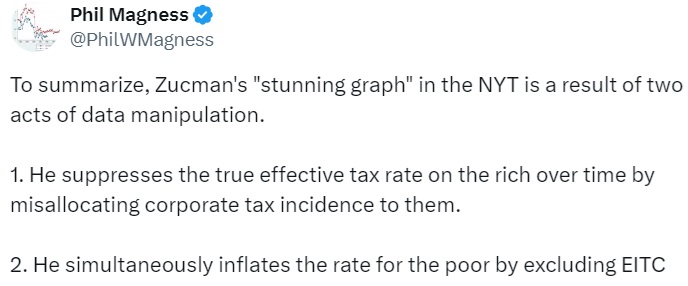
Everything you need to know about wealth taxation can be summarized in two sentences. The biggest problem with most tax systems is the pervasive tax bias against income that is saved and invested, which discourages the accumulation of capital that helps to finance future growth. Wealth taxes would dramatically increase the tax bias against saving […]
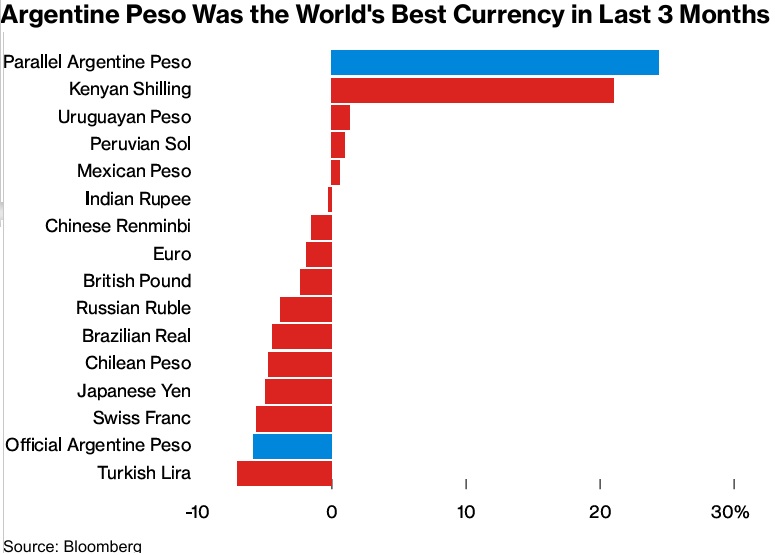
The most important election of 2023 took place in Argentina, where that nation’s voters elected the libertarian candidate, Javier Milei, as their new president. I discussed the outlook for Milei’s agenda on a recent appearance of the Schilling Show. Here’s a brief excerpt. As you can see, I’m worried that Milei faces enormous obstacles. Argentina […]
That is the new Daron Acemoglu paper, and he is skeptical about its overall economic effects. Here is part of the abstract: Using existing estimates on exposure to AI and productivity improvements at the task level, these macroeconomic effects appear nontrivial but modest—no more than a 0.71% increase in total factor productivity over 10 years.…
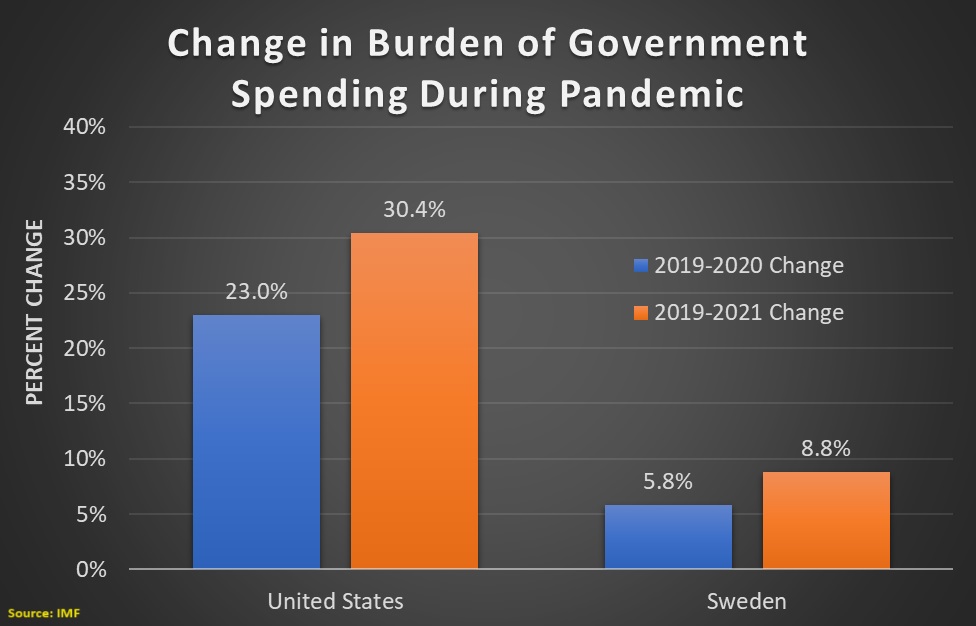
When I wrote about long-run policy lessons from the pandemic, I mostly focused on the incompetence of the bureaucrats at the FDA and CDC. I also wrote that Sweden had a very sensible approach. Politicians did not panic. They advised prudence, but kept schools open and did not mandate lockdowns. Interestingly, Sweden also had better […]
Over the last few years I’ve made a number of posts about the ever growing US government spending, deficits and debt, which has reached the point where US Debt is now rising $1 trillion every 100 days. But there are many people who look at the debt as 120% of GDP and shrug their shoulders that […]
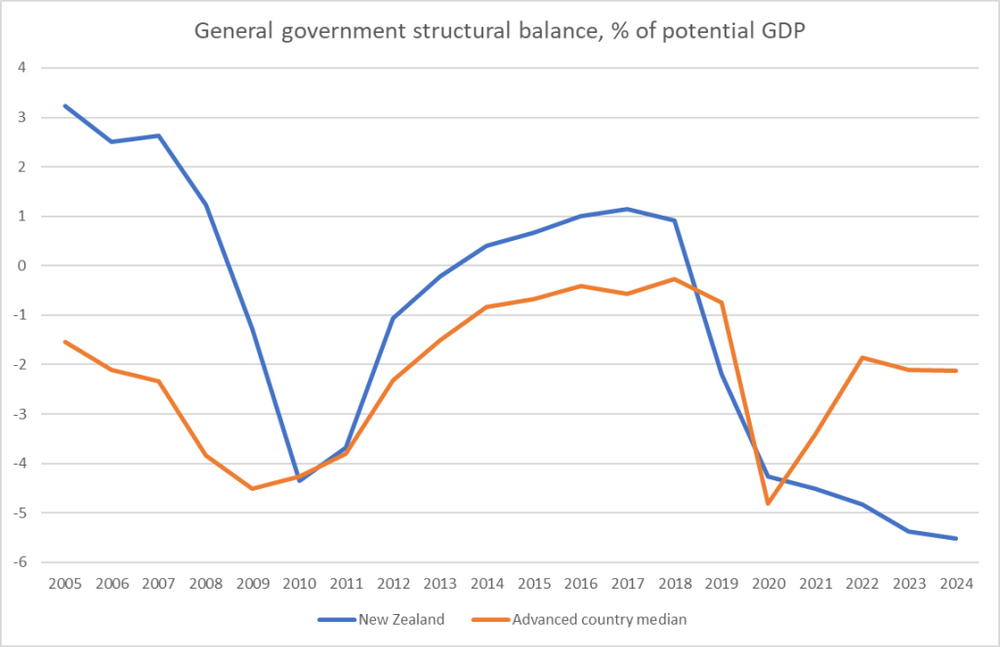
I was away last week so have been rather late in getting to the Budget Policy Statement and associated material released last Wednesday. It does not make for pleasant reading, at least if one cares at all about governments not borrowing to pay for the groceries. Once upon a time – still not that long…
Economic productivity is about growing the size of the pie. I sometimes point out that no matter what your goal–spending increases, tax cuts, greater support for the poor, environmental protection–that goal is easier when the economic pie is growing. When the economic pie isn’t growing, after all, then all priorities have to pit potential winners…
As expected, I really enjoyed the Institute for Liberal Studies’ UBI debate between myself and Chris Freiman. Chris was definitely the least enthusiastic UBI supporter I’ve debated. All the way to the point of, “Given all the truly promising ideas we have, and the downside risks of the UBI, perhaps I shouldn’t even publicly defend…
Labour and Greens in 2017 campaigned on capping core crown expenditure at no more than 30% of GDP. This was their election pledge. At one Budget I asked Grant Robertson about the policy and he (admirably) replied it was a limit, not a target. The latest forecast had expenditure at 33.4% of GDP. That 3.4% […]
Here is a good Substack essay by Nicolas Cachanosky, excerpt: Inflation expectations depend on what is expected to happen to the budget in the months to come. It is natural, then, to ask whether the observed surpluses are sustainable in the months ahead. Answering this question requires looking at two things. First, how was the fiscal […]
The wealth tax is back. We have previously discussed the constitutional and policy concerns surrounding the push by Democrats like Sen. Elizabeth Warren (D., Mass.) to introduce a wealth tax that would start with billionaires. It would not likely end there. The law would also apply the same type of California approach to wealthy families […]
Why Evolution is True is a blog written by Jerry Coyne, centered on evolution and biology but also dealing with diverse topics like politics, culture, and cats.
“We do not believe any group of men adequate enough or wise enough to operate without scrutiny or without criticism. We know that the only way to avoid error is to detect it, that the only way to detect it is to be free to inquire. We know that in secrecy error undetected will flourish and subvert”. - J Robert Oppenheimer.


 Utopia, you are standing in it!
Recent Comments