
https://www.facebook.com/share/p/NWuJxkrxYcNVweK8/?mibextid=r6DZeo
Celebrating humanity's flourishing through the spread of capitalism and the rule of law
10 Feb 2024 Leave a comment
in development economics, economic growth, economic history, gender, growth miracles, macroeconomics, poverty and inequality Tags: The Great Enrichment, The Great Fact
08 Feb 2024 Leave a comment
in business cycles, econometerics, economic growth, inflation targeting, labour economics, macroeconomics, monetary economics, unemployment Tags: monetary policy
Standard models watched by economists at the Federal Reserve and elsewhere suggest that rates should now be lowerBy Justin Lahart of The WSJ. Excerpt:”So where should rates be? There has been a lot of focus recently on the long-term neutral rate—the just-right level of rates for when inflation is at the Fed’s 2% target, and…
What’s the Right Interest Rate for the Fed Anyway?
08 Feb 2024 Leave a comment
in budget deficits, business cycles, econometerics, economic growth, economic history, economics of bureaucracy, fiscal policy, inflation targeting, labour economics, macroeconomics, monetary economics, politics - New Zealand, Public Choice, unemployment Tags: monetary policy
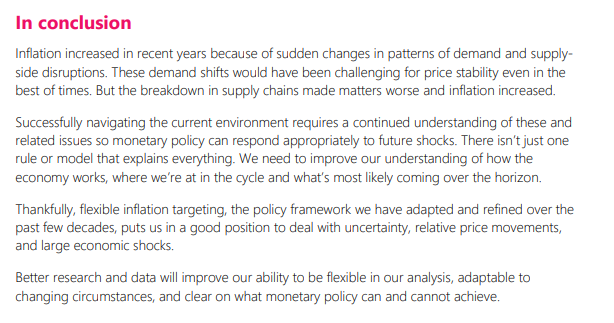
I’ve been rather tied up with other stuff for the last few weeks (including here) which is why I’ve not previously gotten round to writing about the first piece of monetary policy communications from our Reserve Bank this year. That was the “speech” by the Bank’s chief economist (and MPC) member Paul Conway given to […]
The Conway speech
07 Feb 2024 Leave a comment
in economic history, international economics, macroeconomics, politics - New Zealand
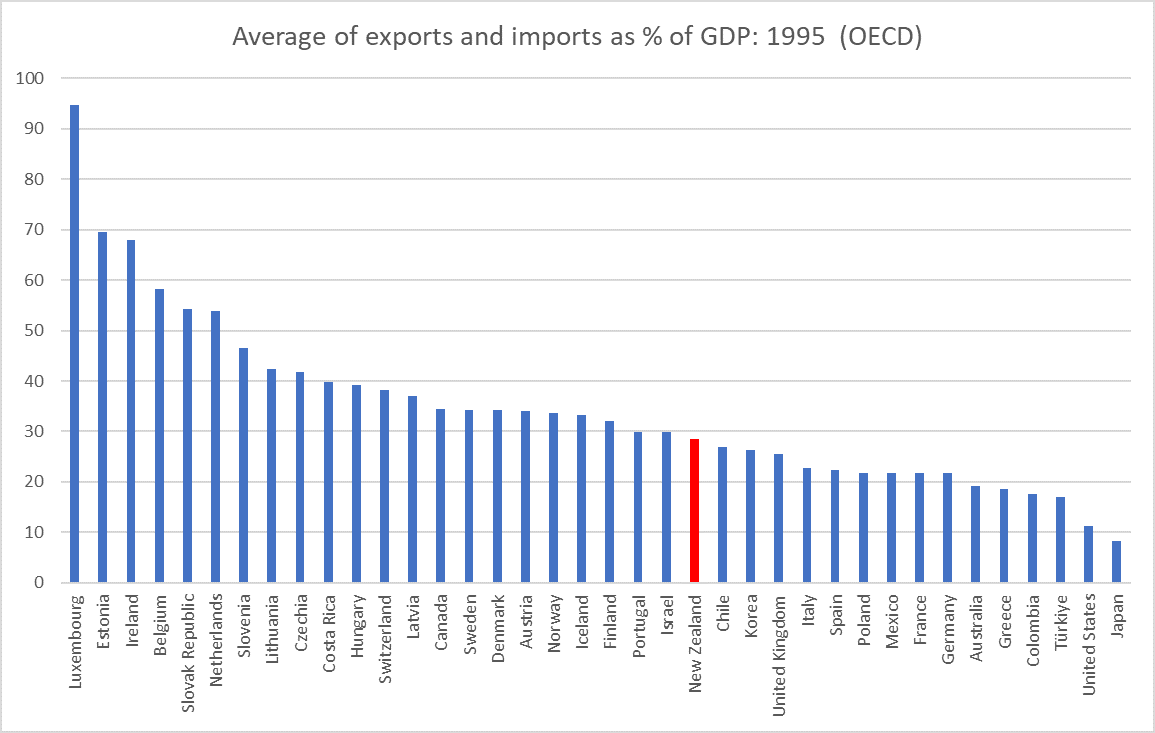
I’ve used here before the snippet from older books that in the decades before the Second World War it was generally accepted that New Zealand had the highest value of foreign trade per capita of any country. Estimates of historical GDP per capita suggest we also had among the very highest levels of real GDP […]
Once were a trading nation
06 Feb 2024 Leave a comment
in applied price theory, applied welfare economics, comparative institutional analysis, constitutional political economy, development economics, economic history, economics of regulation, health economics, history of economic thought, labour economics, law and economics, macroeconomics
TweetWriting in the Wall Street Journal, David Henderson and Charley Hooper explain why we should be thankful for high drug prices. Two slices: For Americans, paying for the discovery and development of new drugs rests on our shoulders. If we pay, we get new lifesaving medicines. If we don’t, we don’t. Almost all new drugs…
Some Links
04 Feb 2024 Leave a comment
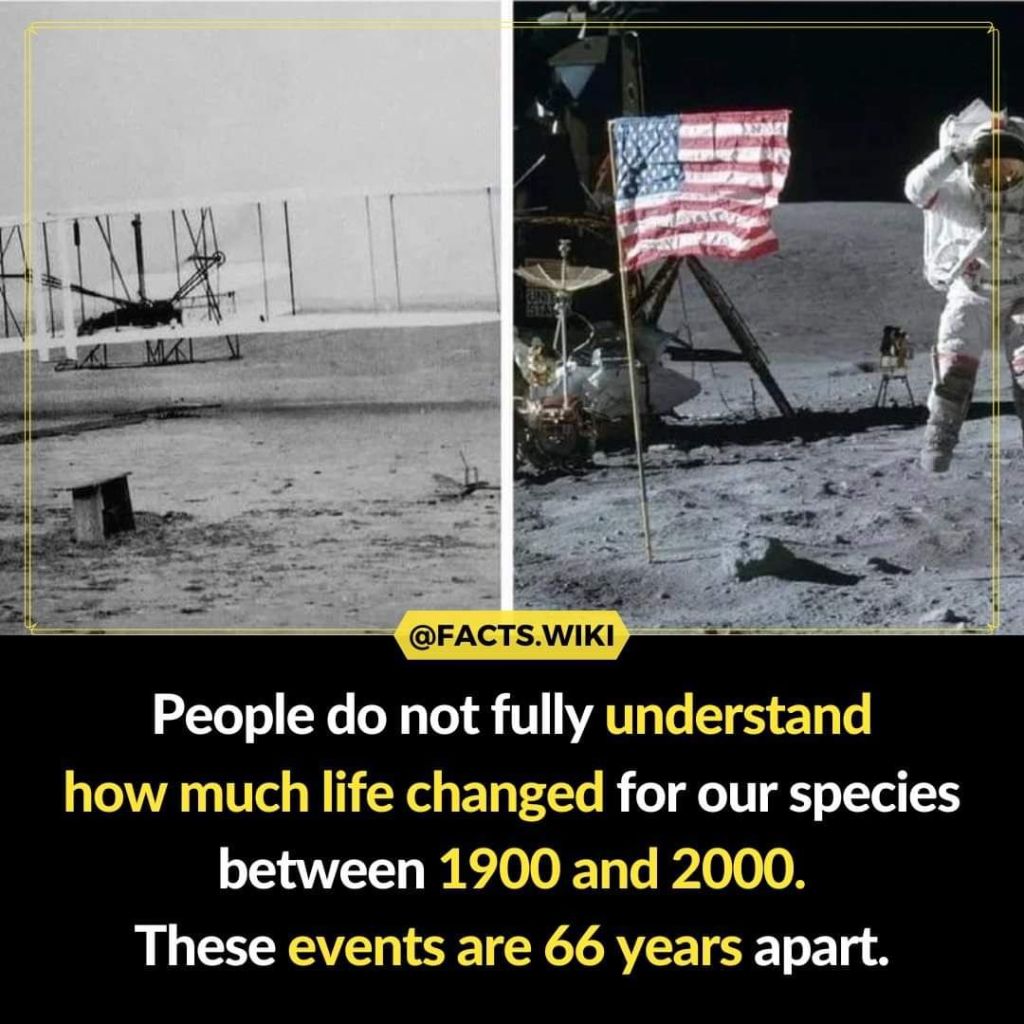
in economic growth, economic history, liberalism, macroeconomics Tags: space, The Great Enrichment
03 Feb 2024 Leave a comment
in budget deficits, currency unions, economic history, economics of bureaucracy, Euro crisis, fiscal policy, global financial crisis (GFC), great recession, inflation targeting, macroeconomics, monetary economics, Public Choice Tags: Euro

The euro technically started in 1999, when the 11 founding European members of the currency agreed to keep their exchange rates fixed and to hand over monetary policy to the European Central Bank. The euro then became the actual currency that people and firms used in 2002. I confess that, back in the early 1990s,…
The Euro at 25
22 Jan 2024 Leave a comment
in applied price theory, budget deficits, comparative institutional analysis, development economics, economic growth, economic history, economics of bureaucracy, economics of regulation, fiscal policy, growth disasters, income redistribution, labour economics, liberalism, libertarianism, macroeconomics, Marxist economics, monetary economics, Public Choice, public economics, rentseeking Tags: Argentina
I give him a 30-40% chance, which is perhaps generous because I am rooting for him. Bryan Caplan, who is more optimistic, offers some analysis and estimates that Milei needs to close a fiscal gap of about five percent of gdp. I have two major worries. First, if Milei approaches fiscal success, the opposing parties […]
Will Milei succeed in Argentina?
22 Jan 2024 1 Comment
in applied price theory, development economics, economic growth, energy economics, environmental economics, global warming, macroeconomics Tags: climate alarmism

By Paul Homewood h/t Philip Bratby Even climatologists are beginning to realise that the emperor has no clothes! Economic growth as we know it is impossible if governments shift to 100 per cent renewable energy, a renowned French climatologist has said. Jean-Marc Jancovici, the author of World Without End, the […]
Shift to renewable energy would make economic growth impossible, says expert
19 Jan 2024 Leave a comment
in applied price theory, Austrian economics, comparative institutional analysis, constitutional political economy, development economics, economic growth, economic history, entrepreneurship, growth disasters, growth miracles, history of economic thought, labour economics, law and economics, macroeconomics, property rights Tags: Argentina

Argentina’s President Javier Milei had a warning for those attending the annual WEF meeting in Davos, Switzerland; ‘the Western world is in danger’ from ‘collectivist experiments’ such as Diversity, Equity and Inclusion (DEI), and has called on the world to reject socialism and instead embrace “free enterprise capitalism” to end global poverty. H/T zerohedge “Today, […]
Milei Speaks Truth to WEF Elite Power
19 Jan 2024 Leave a comment
in business cycles, economics of bureaucracy, macroeconomics, monetary economics, politics - New Zealand, Public Choice Tags: monetary policy

Regular readers will recall that I have, intermittently, been on the trail of the approach taken to the selection (and rejection) of external MPC members when the current crop were first appointed in 2019. I have been pursuing the matter since a highly credible person who was interested in being considered for appointment told me that […]
Avoiding scrutiny
17 Jan 2024 Leave a comment
in applied price theory, discrimination, economic history, economics of information, economics of regulation, health and safety, history of economic thought, human capital, industrial organisation, international economics, labour economics, labour supply, liberalism, macroeconomics, Marxist economics, minimum wage, occupational choice, occupational regulation, poverty and inequality, unemployment, unions
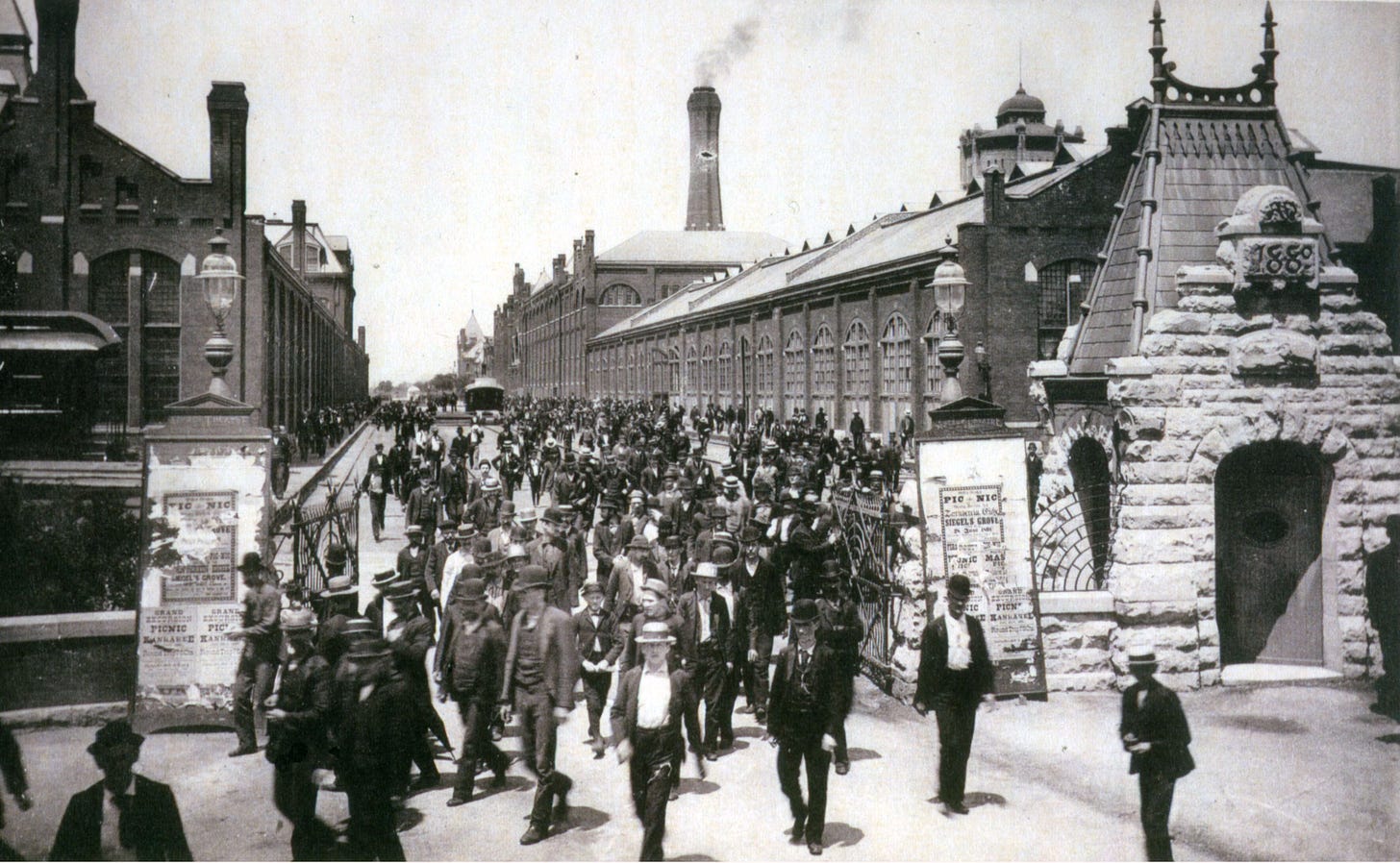
A quarter century ago, economist Price Fishback published “Operations of ‘Unfettered’ Labor Markets: Exit and Voice in American Labor Markets at the Turn of the Century” in the prestigious Journal of Economic Literature. Fishback’s article is packed with insight… and understatement. But let’s back up. Virtually every standard history textbook describes U.S. labor markets before…
Unfettered: Fishback 25 Years Later
17 Jan 2024 Leave a comment
in business cycles, econometerics, economic history, history of economic thought, job search and matching, labour economics, labour supply, macroeconomics, monetary economics, unemployment
Yusuf Mercan, Benjamin Schoefer, and Petr Sedláček, newly published in American Economic Journal: Macroeconomics. I best liked this excerpt from p.2, noting that “DMP” refers to the Nobel-winning Diamond-Mortensen-Pissarides search model of unemployment: This congestion mechanism improves the business cycle performance of the DMP model considerably. It raises the volatility of labor market tightness tenfold, […]
A congestion theory of unemployment fluctuations
15 Jan 2024 Leave a comment
in budget deficits, business cycles, economic growth, economic history, fiscal policy, great depression, history of economic thought, macroeconomics, monetary economics
Clara Mattei, associate professor of economics at the New School for Social Research, recently published a book, The Capital Order: How Economists Invented Austerity and Paved the Way to Fascism, (University of Chicago Press) in which she argues that the fiscal and monetary austerity imposed on Great Britain after World War I to restore the […]
Mattei Misjudges Hawtrey
10 Jan 2024 Leave a comment
in economic growth, economic history, entrepreneurship, labour economics, labour supply, macroeconomics, politics - New Zealand

In my post on Monday I drew attention (again) to the fact that New Zealand has made no progress at all in reversing the decline in relative economywide productivity (relative to other advanced countries) since what was hoped to be a turning point, with the inauguration of widespread economic reforms after the 1984 election. If anything, […]
Productivity woes….continued
Celebrating humanity's flourishing through the spread of capitalism and the rule of law
Scholarly commentary on law, economics, and more
Beatrice Cherrier's blog
Celebrating humanity's flourishing through the spread of capitalism and the rule of law
Celebrating humanity's flourishing through the spread of capitalism and the rule of law
Celebrating humanity's flourishing through the spread of capitalism and the rule of law
Why Evolution is True is a blog written by Jerry Coyne, centered on evolution and biology but also dealing with diverse topics like politics, culture, and cats.
Celebrating humanity's flourishing through the spread of capitalism and the rule of law
Celebrating humanity's flourishing through the spread of capitalism and the rule of law
A rural perspective with a blue tint by Ele Ludemann
DPF's Kiwiblog - Fomenting Happy Mischief since 2003
Celebrating humanity's flourishing through the spread of capitalism and the rule of law
The world's most viewed site on global warming and climate change
Tim Harding's writings on rationality, informal logic and skepticism
A window into Doc Freiberger's library
Let's examine hard decisions!
Commentary on monetary policy in the spirit of R. G. Hawtrey
Thoughts on public policy and the media
Celebrating humanity's flourishing through the spread of capitalism and the rule of law
Politics and the economy
A blog (primarily) on Canadian and Commonwealth political history and institutions
Reading between the lines, and underneath the hype.
Economics, and such stuff as dreams are made on
"The British constitution has always been puzzling, and always will be." --Queen Elizabeth II
Celebrating humanity's flourishing through the spread of capitalism and the rule of law
Celebrating humanity's flourishing through the spread of capitalism and the rule of law
WORLD WAR II, MUSIC, HISTORY, HOLOCAUST
Undisciplined scholar, recovering academic
Celebrating humanity's flourishing through the spread of capitalism and the rule of law
Res ipsa loquitur - The thing itself speaks
Celebrating humanity's flourishing through the spread of capitalism and the rule of law
Researching the House of Commons, 1832-1868
Articles and research from the History of Parliament Trust
Reflections on books and art
Posts on the History of Law, Crime, and Justice
Celebrating humanity's flourishing through the spread of capitalism and the rule of law
Exploring the Monarchs of Europe
Cutting edge science you can dice with
Small Steps Toward A Much Better World
“We do not believe any group of men adequate enough or wise enough to operate without scrutiny or without criticism. We know that the only way to avoid error is to detect it, that the only way to detect it is to be free to inquire. We know that in secrecy error undetected will flourish and subvert”. - J Robert Oppenheimer.
The truth about the great wind power fraud - we're not here to debate the wind industry, we're here to destroy it.
Celebrating humanity's flourishing through the spread of capitalism and the rule of law
Celebrating humanity's flourishing through the spread of capitalism and the rule of law
Economics, public policy, monetary policy, financial regulation, with a New Zealand perspective
Celebrating humanity's flourishing through the spread of capitalism and the rule of law
Restraining Government in America and Around the World
 Utopia, you are standing in it!
Recent Comments