I was away when Reserve Bank chief economist Paul Conway gave his recent speech, “The road back to 2% inflation”, and since I didn’t see any material commentary on it I didn’t bother going back to it when I got home. But my son – honours student researching monetary policy (anyone wanting a young economist […]
The RN intends to move ahead with a proposed law that states as its aim “to combat Islamist ideologies”. It includes measures to make it easier to close mosques and deport imams deemed to be radicalised, and a ban on clothing that “constitute in themselves an unequivocal and ostentatious affirmation” of Islamist ideology. Bardella said […]
If you are someone from a high-income country, or even just a high-income city, and you travel to other places, you are familiar with finding that, at least sometimes, many items are considerably cheaper in the low-income country: food and meals, entertainment and even health care. As a result, $100 of buying power in the…
When it comes to the question of how best to avoid a banking collapse and multi-billion dollar bailout that can drag a whole nation into depression, the best solution, according to Chicago-Stanford economist, John Cochrane, is to require banks to set aside a fraction of their own funds as reserves to cover losses they may…
By Timothy Cogley. He was then at the Federal Reserve Bank of San Francisco (1999). He is now at New York University. “In recent years, a number of economists have expressed concern that the stock market is overvalued. Some have compared the situation with the 1920s, warning that the market may be headed for a…
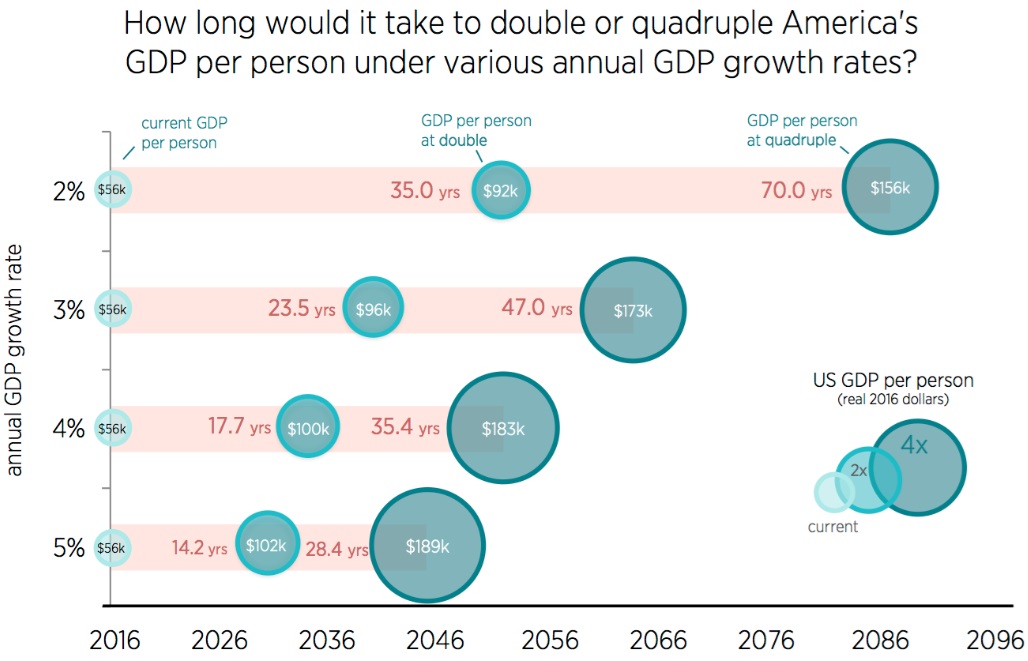
Just as trend lines are important for fiscal policy, they are perhaps even more important when looking at economic performance. Even small difference in annual growth rates, for instance, can lead to big changes in prosperity within a couple of decades. And enormous changes over longer periods of time. All of which explains why I’m […]
I put a range of charts on Twitter late last week illustrating why, from a macroeconomic perspective, I found the government’s Budget deeply underwhelming. I won’t repeat them but will just show two here. The first is the Treasury’s estimate of how the bit of the operating deficit not explained just by swings in the […]
When it comes to the question of how best to avoid a banking collapse and multi-billion dollar bailout that can drag a whole nation into depression, the best solution, according to Chicago-Stanford economist, John Cochrane, is to require banks to set aside a fraction of their own funds as reserves to cover losses they may…
When interest rates rise, the price of long-term assets falls. Consequently, when the Fed began raising interest rates in 2022, the value of bonds and mortgages dropped, causing significant accounting losses for banks heavily invested in these assets. Silicon Valley Bank went bust, for example, because depositors fled upon realizing it was holding lots of […]
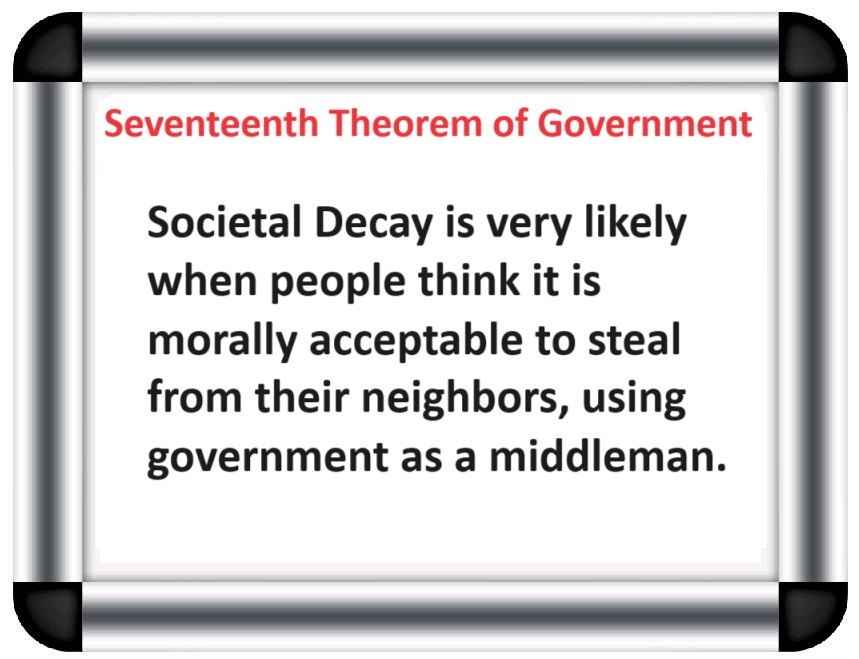
I released my First Theorem of Government in 2015 and today I’m going to unveil the 17th iteration in the series. But I’ll confess upfront that I’m doing a bit of recycling. My latest Theorem is very similar to something I shared back in 2014. I decided to upgrade my 2014 column to a Theorem […]
See The Case for Hope by Nicholas Kristof of The NY Times. Excerpts:”whenever I hear that America has never been such a mess or so divided, I think not just of the Civil War but of my own childhood: the assassinations of the 1960s; the riots; the murders of civil rights workers; the curses directed at…
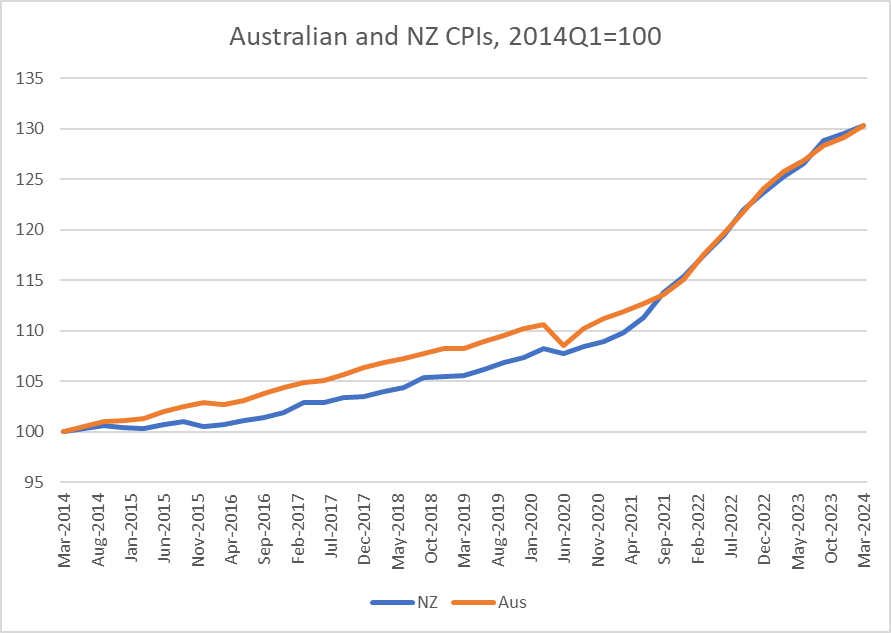
Michael Reddell writes – I got curious yesterday about how the Australia/New Zealand real exchange rate had changed over the last decade, and so dug out the data on the changes in the two countries’ CPIs. Over the 10 years from March 2014 to March 2024, New Zealand’s CPI had risen by 30.3 per cent […]
Late last week The Treasury released a new 40 page report on “The productivity slowdown: implications for the Treasury’s forecasts and projections” (productivity forecasts and projections that is, rather than any possible fiscal implications – the latter will, I guess, be articulated in the Budget documents). In short, if (as it has) productivity growth has slowed down […]
Why Evolution is True is a blog written by Jerry Coyne, centered on evolution and biology but also dealing with diverse topics like politics, culture, and cats.
In Hume’s spirit, I will attempt to serve as an ambassador from my world of economics, and help in “finding topics of conversation fit for the entertainment of rational creatures.”
“We do not believe any group of men adequate enough or wise enough to operate without scrutiny or without criticism. We know that the only way to avoid error is to detect it, that the only way to detect it is to be free to inquire. We know that in secrecy error undetected will flourish and subvert”. - J Robert Oppenheimer.





 Utopia, you are standing in it!
Recent Comments