Unconscious-bias training is crude umbrella term. My view: 1. HR-legal departments love it for virtue-signaling value; 2. Very-close-to-zero is best scientific guess of likely effect size on actual discrimination; 3. If it hasn’t arrived already, expect it in your workplace soon pic.twitter.com/kONJdbcWKu
— Philip E. Tetlock (@PTetlock) April 21, 2018
Great critique of unconscious-bias training by Tetlock
22 Apr 2018 Leave a comment
in discrimination, labour economics, law and economics, managerial economics, organisational economics, personnel economics Tags: political correctness, racial discrimination, regressive left, sex discrimination
Anti-bias training is useless except as a defence strategy
21 Apr 2018 Leave a comment
in discrimination, labour economics, law and economics, managerial economics, organisational economics, personnel economics Tags: implicit bias

Don’t do much for the value of diversity in management
20 Apr 2018 Leave a comment
in applied price theory, discrimination, gender, labour economics, managerial economics, organisational economics, personnel economics Tags: co-worker discrimination, sex discrimination
Is education worth it?
25 Mar 2018 Leave a comment
in economics of education, human capital, labour economics, managerial economics, organisational economics, personnel economics Tags: Bryan Caplan, signalling
The case against education (Part 1) – interview with Bryan Caplan
17 Mar 2018 Leave a comment
in applied price theory, economics of education, economics of information, human capital, industrial organisation, labour economics, labour supply, managerial economics, organisational economics, personnel economics Tags: Bryan Caplan, signalling
Is this the solution to implicit bias?
13 Mar 2018 Leave a comment
in discrimination, gender, labour economics, managerial economics, organisational economics, personnel economics Tags: customer discrimination, employee discrimination, employer discrimination, sex discrimination

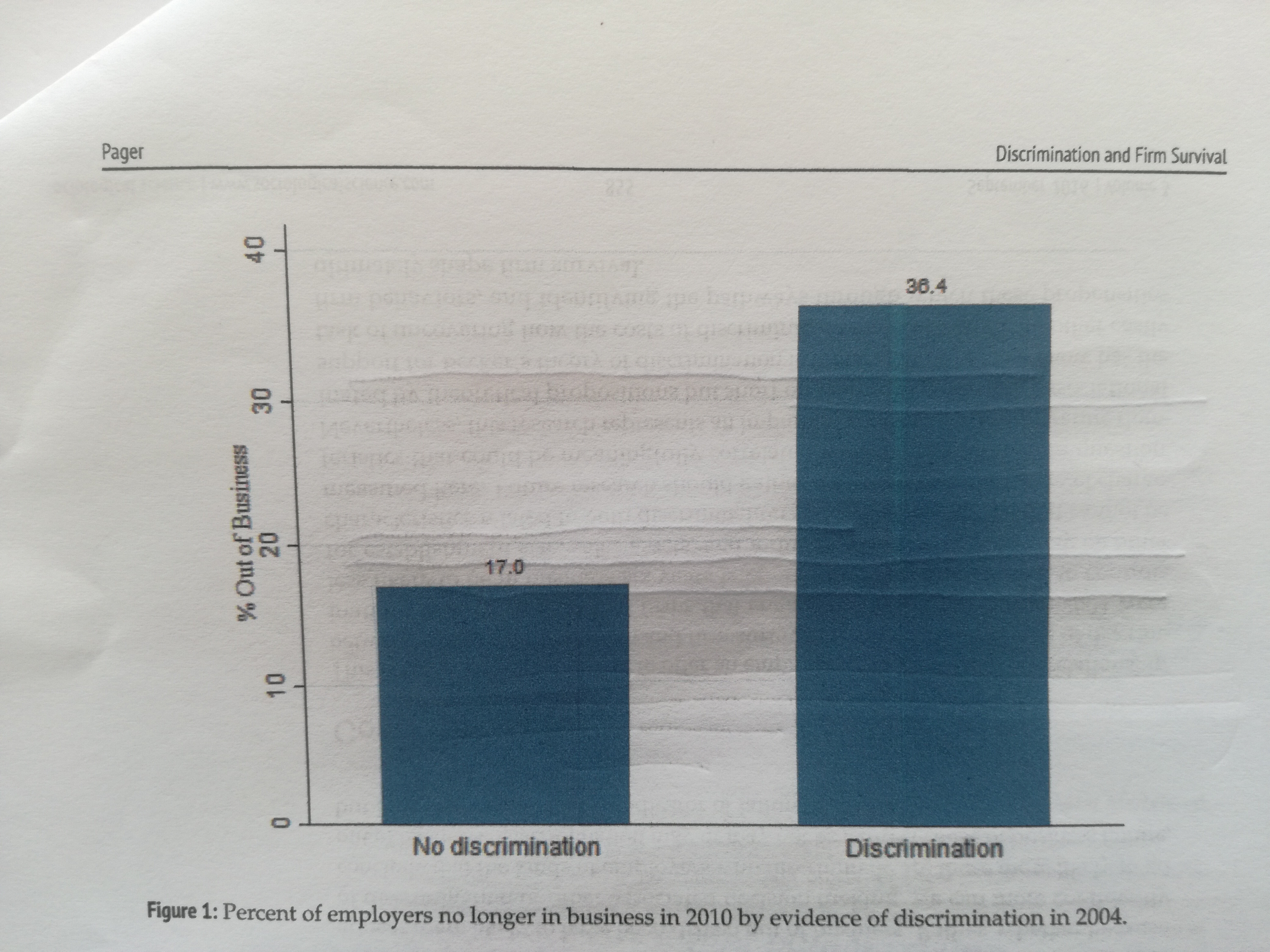
Does racial discrimination pay for employers? Evidence from an audit study follow-up
10 Mar 2018 1 Comment
in applied price theory, discrimination, industrial organisation, labour economics, law and economics, managerial economics, organisational economics, survivor principle Tags: competition and selection, racial discrimination
Why Women Prefer Male Bosses
06 Mar 2018 Leave a comment
in discrimination, gender, labour economics, managerial economics, organisational economics, personnel economics Tags: gender gap
BE BOTH THE MAN & THE BEAST | The Prince by Niccolo Machiavelli
26 Feb 2018 Leave a comment
in comparative institutional analysis, constitutional political economy, defence economics, economics of bureaucracy, law and economics, managerial economics, organisational economics, Public Choice, war and peace Tags: Machiavelli
Machiavelli’s Advice For Nice Guys
25 Feb 2018 Leave a comment
in comparative institutional analysis, constitutional political economy, defence economics, economics of bureaucracy, law and economics, managerial economics, organisational economics, Public Choice, war and peace Tags: Machiavelli
BE PRESENT | The Prince by Niccolo Machiavelli
24 Feb 2018 Leave a comment
in comparative institutional analysis, constitutional political economy, defence economics, economics of bureaucracy, law and economics, managerial economics, organisational economics, Public Choice, war and peace Tags: Machiavelli
Is education worth it?
20 Feb 2018 Leave a comment
in applied price theory, economics of education, economics of information, human capital, labour economics, managerial economics, occupational choice, organisational economics, personnel economics Tags: signalling
Will this be the workplace of the future or already today?
12 Feb 2018 Leave a comment
in discrimination, gender, managerial economics, organisational economics

 Utopia, you are standing in it!
Recent Comments