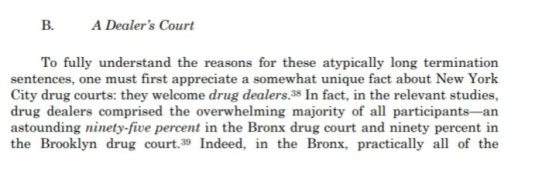
A drug courts dupes? @JustSpeakNZ @sst_nz @NZJusticeIdeas
12 Dec 2019 Leave a comment
in econometerics, economics of crime, economics of education, economics of information, human capital, labour economics, labour supply, law and economics, occupational choice, politics - New Zealand, politics - USA Tags: adverse selection, crime and punishment, criminal deterrence, law and order, moral hazard, offsetting, self-selection, The fatal conceit, unintended consequences
More on racist drug courts @JustSpeakNZ @NZJusticeIdeas @sst_nz
12 Dec 2019 Leave a comment
in econometerics, economics of crime, economics of education, economics of information, human capital, labour economics, labour supply, law and economics, occupational choice, politics - USA, unemployment Tags: adverse selection, crime and punishment, criminal deterrence, law and order, moral hazard, offsetting behaviour, self-selection, The fatal conceit, unintended consequences
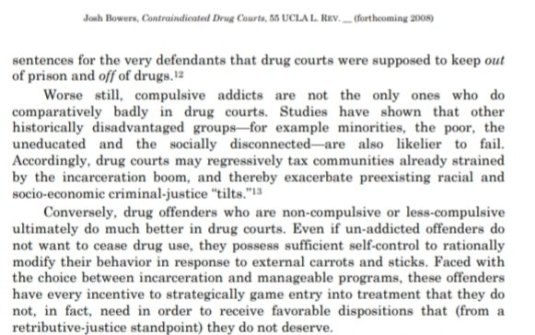
Drug courts are racist @NZJusticeIdeas @JustSpeakNZ @sst_nz
12 Dec 2019 Leave a comment
in econometerics, economics of crime, economics of education, economics of information, human capital, labour economics, labour supply, law and economics, occupational choice Tags: adverse selection, crime and punishment, criminal deterrence, drug law reform, law and order, moral hazard, self-selection, The fatal conceit, unintended consequences
Scottish Scandal: Government Squanders £600 Million on ‘Constraint Payments’ to Wind Power Outfits for Discarded Power
12 Dec 2019 Leave a comment


Electricity that can’t be delivered as and when it’s needed has no commercial value. Indeed, when the gales rip across the Scottish Highlands and there’s a surfeit of wind power generated, that electricity can’t even be given away. Instead, taxpayers become the ‘buyers’ of last resort; not that they could never be called willing purchasers, and not that any power ever gets delivered to them, or anyone else.
Euphemistically called “constraint payments”, European governments are squandering hundreds of millions of taxpayers’ dollars each year, directing it to wind power outfits, literally paying them to NOT generate electricity, simply because the (wholly weather-dependent) supply they occasionally generate is incapable of matching (wholly human-dependent) demand.
In Scotland alone, since 2010 taxpayers have transferred more than £600 million to Scottish wind power outfits, with the result that around 8.2 TWh of Scottish wind power has been discarded, a quantity that would have supplied…
View original post 688 more words
Abdication: Two Days that shook the British Monarchy. December 10-11, 1936. Part II.
12 Dec 2019 Leave a comment

The next day, after signing the Act of Abdication, the last act of his reign was the royal assent to His Majesty’s Declaration of Abdication Act 1936. As required by the Statute of Westminster, all the Dominions had already consented to the abdication.
Although Edward VIII had signed a declaration of abdication the previous day—December 10, 1936—he remained king until giving Royal Assent to His Majesty’s Declaration of Abdication Act, which he did onDecember 11, at 1.52 p.m., and the Act became immediately effective from that time. Ironically, his last act as king was giving the royal assent to his own abdication.

His brother, the Duke of York, succeeded to the throne as George VI. Instead of becoming King Albert, his given name, he selected the name George to suggest continuity with his father George V. King George VI’s elder daughter, Princess Elizabeth, became heir presumptive.

King George VI of…
View original post 203 more words


The bias of economists
11 Dec 2019 Leave a comment
in economics of education, occupational choice, Public Choice Tags: academic bias

NYAG James Exxon Case Goes Down in Flames
11 Dec 2019 Leave a comment

 Climate Litigation Watch is reporting the ruling by Judge Barry Ostrager ending the case brought by NYAG Leticia James against ExxonMobil. The loss could hardly be more complete. The full text of the ruling is here. The juicy bits are excerpted in italics below with my bolds.
Supreme Court of New York, New York County, the Honorable Barry Ostrager presiding.
Decision After Trial
Nothing in this opinion is intended to absolve ExxonMobil from responsibility for contributing to climate change through the emission of greenhouse gases in the production of its fossil fuel products. ExxonMobil does not dispute either that its operations produce greenhouse gases or that greenhouse gases contribute to climate change, But ExxonMobil is in the business of producing energy, and this is a securities fraud case, not a climate change case. Applying the applicable legal standards, the Court finds that the Office of the Attorney General failed…
View original post 1,264 more words
Animation of the Sun becoming a red giant in 5-billion years time
11 Dec 2019 1 Comment
in economics of media and culture
The vision of the anointed — with Thomas Sowell (1995) | THINK TANK @AEI
11 Dec 2019 Leave a comment
in applied price theory, applied welfare economics, discrimination, economic history, economics of crime, economics of information, human capital, labour economics, labour supply, law and economics, minimum wage, occupational choice, poverty and inequality, Thomas Sowell, unemployment, welfare reform Tags: The fatal conceit
Abdication: Two Days that shook the British Monarchy. December 10-11, 1936. Part I.
11 Dec 2019 Leave a comment
On November 16, 1936, King Edward VIII invited Prime Minister Baldwin to Buckingham Palace and expressed his desire to marry Mrs Wallis Simpson when she became free to remarry. Baldwin informed him that his subjects would deem the marriage morally unacceptable, largely because remarriage after divorce was opposed by the Church of England, and the people would not tolerate Simpson as queen. As king, Edward VIII was the titular head of the Church, and the clergy expected him to support the Church’s teachings. The Archbishop of Canterbury, Cosmo Gordon Lang, was vocal in insisting that Edward VIII must go.

Edward VIII proposed an alternative solution of a morganatic marriage, in which he would remain king but Simpson would not become queen consort. She would enjoy some lesser title instead, and any children they might have would not inherit the throne. This was supported by senior politician Winston Churchill in principle…
View original post 309 more words
Are You Tired of Rage Culture? This Sucks Way Less
11 Dec 2019 Leave a comment
in economics of media and culture, law and economics, politics - Australia, politics - New Zealand, politics - USA Tags: political correctness
Fiscal Multiplier Debate
11 Dec 2019 5 Comments

I had earlier pointed to an excellent interview of Robert Barroon Fiscal Multipliers and Paul Krugman. In a new interview he says the same things – fiscal multipliers are less than one (which means not a multiplier at all) and also lists a reading list on Great Depression.
His take on fiscal multipliers:
View original post 1,072 more words


Recent Comments