George Orwell: The Uncompromising Visionary
30 Nov 2019 Leave a comment
in economics of education, economics of information, economics of media and culture, Marxist economics, Public Choice
Creative Destruction: Technology and Trade (episode 2)
30 Nov 2019 Leave a comment
in applied price theory, applied welfare economics, Austrian economics, entrepreneurship, industrial organisation, international economics, survivor principle Tags: creative destruction
Riot Act: Cops Arrest 160 Outraged Hawaiians Fighting Against Mega-Wind Power Project
30 Nov 2019 Leave a comment


No matter where the wind industry plies its subsidy-soaked trade, rural folk soon turn hostile. The German wind industry is at a standstill, not only because subsidies have been wound down, but also as a result of furious rural residents – fed up with being driven nuts in their homes, or being driven out of them, altogether by incessant low-frequency noise and infrasound – blocking projects and taking developers to court.
As we’ve reported recently, Hawaiians are on the war path, too.
The protesters number in their hundreds, and their perfectly understandable fury has been met with heavy-handed policing, with over 160 Hawaiians being cuffed and carted away. Here’s a report from NZ’s Maori News on a battle for Hawaii’s heart and soul.
“Bad night” in Hawaii as arrests rise to 161
Te Ao Maori News
Mare Haimona-Riki
16 November 2019

More than 25 people were arrested in…
View original post 963 more words
Is Economic Growth a Moral Imperative? Lecture by Tyler Cowen
30 Nov 2019 Leave a comment
in applied welfare economics, Austrian economics, comparative institutional analysis, constitutional political economy, development economics, economic growth, economic history, growth disasters, growth miracles, law and economics, macroeconomics, property rights, Public Choice Tags: The Great Enrichment, The Great Escape
@AmnestyNZ claims claims Manus island asylum seekers “can never leave” PNG. 42% returned home so Amnesty complains about that too
30 Nov 2019 Leave a comment
in economics of crime, Economics of international refugee law, international economic law, international economics, International law, law and economics, politics - Australia, politics - New Zealand, Public Choice Tags: PNG, regressive left

Anti-Black Bias on the IAT predicts Pro-Black Bias in Behavior
30 Nov 2019 Leave a comment

Over 20 years ago, Anthony Greenwald and colleagues introduced the Implicit Association Test (IAT) as a measure of individual differences in implicit bias (Greenwald et al., 1998). The assumption underlying the IAT is that individuals can harbour unconscious, automatic, hidden, or implicit racial biases. These implicit biases are distinct from explicit bias. Somebody could be consciously unbiased, while their unconscious is prejudice. Theoretically, the opposite would also be possible, but taking IAT scores at face value, the unconscious is more prejudice than conscious reports of attitudes imply. It is also assumed that these implicit attitudes can influence behavior in ways that bypass conscious control of behavior. As a result, implicit bias in attitudes leads to implicit bias in behavior.
The problem with this simple model of implicit bias is that it lacks scientific support. In a recent review of validation studies, I found no scientific evidence that the IAT measures…
View original post 1,521 more words
Former Secret Service Agent Explains How to Protect a President | Tradecraft | @WIRED
30 Nov 2019 Leave a comment
in economics of crime, law and economics Tags: law and order
Why Apocalyptic Claims About Climate Change Are Wrong
30 Nov 2019 1 Comment
“I looked through IPCC reports and see no reference to billions of people going to die, or children in 20 years. How would they die?”
Zingales: … would you be in favor of breaking up Standard Oil? Cowen: If Standard Oil were giving away the oil for free, no.
30 Nov 2019 Leave a comment
in applied price theory, applied welfare economics, economic history, economics of information, economics of regulation, entrepreneurship, industrial organisation, law and economics, politics - USA, Public Choice, survivor principle Tags: competition law, creative destruction
Why the British Royal Family Changed Their Name During WWI
30 Nov 2019 Leave a comment
in constitutional political economy, economic history Tags: World War I
This Unpleasant Royal Job Came with a Fancy Title
30 Nov 2019 Leave a comment
in economic history, economics of bureaucracy, labour economics, labour supply, occupational choice, Public Choice, rentseeking
How Populism Works: Charles J Haughey and the Perils of Walking on Water- Part one: Rise and Fall, and Rise
29 Nov 2019 Leave a comment

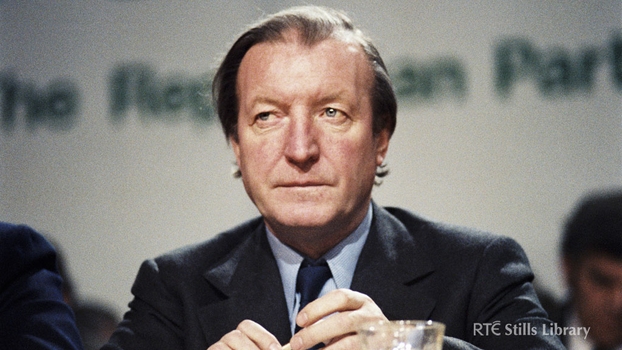
I want to write about a politician who made himself the central political figure in his lifetime. He had charisma, the popular touch, and his ambition knew no bounds; he even had a splendid mane of sometimes unruly hair. He was the darling of his party, who knew exactly how to tickle exactly the right place on the membership’s funny bone. He was the chancer’s chancer, playing fast and loose throughout his career with fact, policy, law, the public finances and his personal life. More than once his career, rocked by scandal, seemed over, but he bounced back.
And he became prime minister.
Nothing ever stuck. Back in September 1985, whilst leader of the opposition, whilst sailing to his privately owned island off the coast of Co Kerry, his private yacht came close to the rocks and he had to be saved by the local lifeboat crew. Later, standing the…
View original post 1,348 more words


Recent Comments