
November 19, 1600: Birth of King Charles I of England, Scotland and Ireland. Part I.
20 Nov 2019 Leave a comment

Today I will begin a series on the life of King Charles I of England. In the coming weeks I will include entries on his marriage his accession to the throne, his reign and the English Civil War, culminating in his trial which I will cover on its anniversary this January.
Charles I of England was the second son of King James VI of Scotland and Anne of Denmark, Charles was born in Dunfermline Palace, Fife, on November 19, 1600. At a Protestant ceremony in the Chapel Royal of Holyrood Palace in Edinburghon 23 December 1600, he was baptised by David Lindsay, Bishop of Ross, and created Duke of Albany, the traditional title of the second son of the King of Scotland, with the subsidiary titles of Marquess of Ormond, Earl of Ross and Lord Ardmannoch.
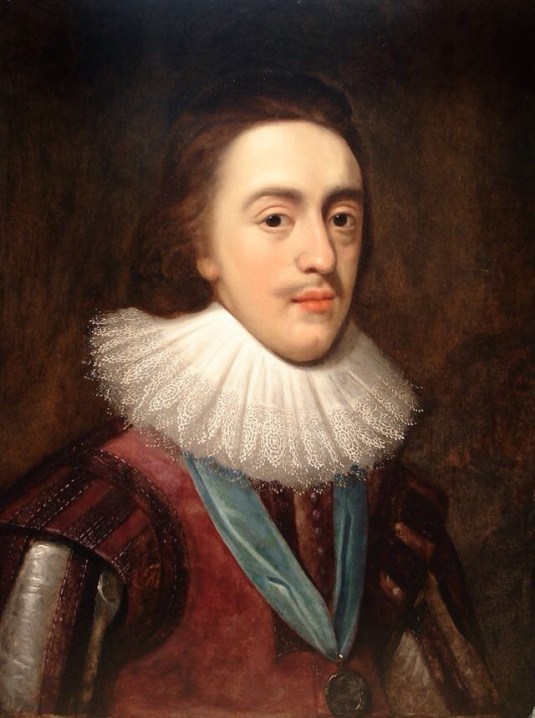
James VI was the first cousin twice removed of Queen Elizabeth I of England…
View original post 243 more words
Let Science Students Handle Doubt and Diversity
20 Nov 2019 Leave a comment


Jerry Ravetz writes at Nature Stop the science training that demands ‘don’t ask’.Jerry Ravetz is an associate fellow at the Institute for Science, Innovation and Society, University of Oxford, UK.Excerpts In italics with my bolds and images.
It’s time to trust students to handle doubt and diversity in science.
As a child, I realized that my parents spoke in Yiddish when they didn’t want me to know what they were talking about, so I became aware that some knowledge was intended only for grown-ups — don’t ask. In college, I was taught an elegant theory of chemical combination based on excess electrons going into holes in the orbital shell of a neighbouring atom. But what about diatomic compounds like oxygen gas? Don’t ask; students aren’t ready to know. In physics, I learnt that Newton’s second law of motion is not an empirical, approximate relation such as Boyle’s…
View original post 947 more words
What kind of government for Israel, or third election?
20 Nov 2019 Leave a comment

(Some questions at the end about comparative context. Help, please!)
This Wednesday night, Benny Gantz’s period as designated formateur expires. His odds of successfully forming a government look bleak. Nothing has changed to make it any easier than when I last wrote on the topic of government-formation options. And at least one thing has changed to make it harder. It is important to understand that a third election (April 2019, Sept. 2019, and potentially March 2020) is the default if no agreement is reached. There is actually a 21-day period after Gantz’s mandate expires before the election becomes automatic, but there’s scant reason to believe the next 21 days would result in an agreement. (During this 21-day period, it requires 61 Knesset members’ signatures to nominate a PM. Fat chance.)
The change that makes forming a government harder than it was in April or even immediately after the September election…
View original post 933 more words

What It Was Like To Live In Ancient Rome During Its Golden Age
20 Nov 2019 Leave a comment
in economic history, urban economics Tags: Roman empire
Creeping Barrage (Military Tactic)
20 Nov 2019 Leave a comment
in defence economics, war and peace Tags: World War I
Game Over: German Wind Industry In Freefall: Turbine Makers Sack Thousands in Mass Layoffs
19 Nov 2019 Leave a comment
How can this be happening if Wind power is cost competitive without subsidies

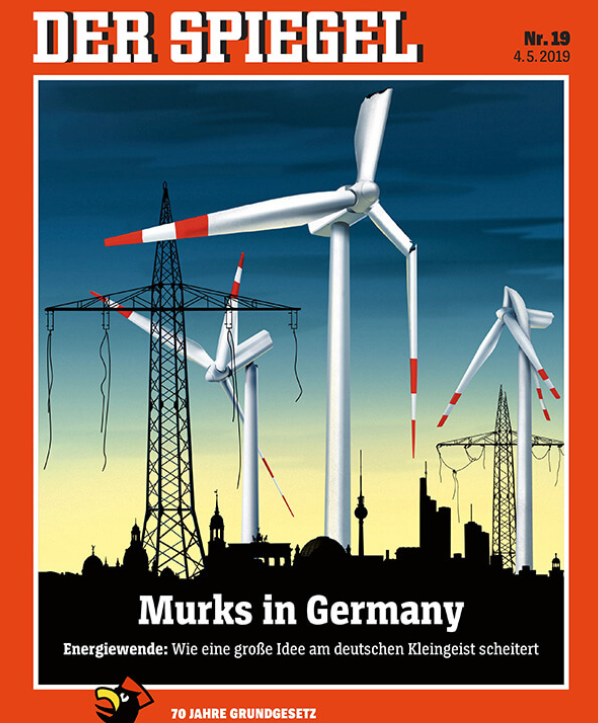
The manufacturers of turbines and solar panels are dropping like flies, as subsidies are rolled back across Europe.
So-called ‘green’ jobs are a case of easy come, easy go. The wind and solar ‘industries’ that gave birth to those jobs simply can’t survive without massive and endless subsidies, which means their days are numbered.
With the axe being taken to subsidies across the globe, their ultimate demise is a matter of when, not if.
The wind back in subsidies across Europe has all but destroyed the wind industry: in Germany this year a trifling 35 onshore wind turbines have been erected, so far.
Twelve countries in the European Union (EU) failed to install “a single wind turbine” last year.
Danish turbine maker, Vestas is on the brink and was recently forced to axe 600 of its groovy ‘green’ jobs. Its rival Siemens Gamesa, has also been forced…
View original post 542 more words
How modern families increase social inequality | The Economist
19 Nov 2019 Leave a comment
in economics of education, economics of love and marriage, human capital, labour economics, labour supply, law and economics, occupational choice, poverty and inequality Tags: assortative mating, dating market, marriage and divorce
John Cleese on Creativity
19 Nov 2019 Leave a comment
in economics of education Tags: cognitive psychology
Understanding Human Nature with Steven Pinker – Conversations with History
19 Nov 2019 Leave a comment


Labour abandons climate change plan for net zero carbon emissions by 2030
18 Nov 2019 Leave a comment

So the plan was only virtue signalling to try and impress gullible voters, not an actual belief that the climate needs saving any time soon. Does the UK really want inadequate, unreliable and expensive electricity in perpetuity?
Labour has dropped a radical plan to end the UK’s contributions to climate change by 2030 and will stick to a target of achieving it “well before 2050”, reports The Independent via Yahoo News.
Activists passed a motion at the party’s conference in September to dramatically speed up the date for net zero carbon emissions – pushing for inclusion in the general election manifesto.
View original post 107 more words


Recent Comments