Debunking the myths of “buying local” food policies”
15 Oct 2019 1 Comment
in economics of information, economics of media and culture, energy economics, entrepreneurship, environmental economics, health economics, international economics Tags: food snobs, pessimism bias
Richard Epstein | Simple Rules for Open Markets
15 Oct 2019 Leave a comment
in comparative institutional analysis, constitutional political economy, law and economics, Richard Epstein Tags: The fatal conceit
Göring, the Stoned Nazi Nut – Doped WW2 Leaders Part 1
14 Oct 2019 Leave a comment
in defence economics, laws of war, war and peace Tags: World War II
What is free will, really? Steven Pinker explains.
14 Oct 2019 Leave a comment
in economics of education, health economics Tags: evolutionary psychology
THE WRONG ENEMY: AMERICA IN AFGHANISTAN 2001-2014 by Carlotta Gall
14 Oct 2019 Leave a comment


As presidential election results in Afghanistan are being counted one must ask the question; how much better off is Afghanistan today, as compared to the period before the American invasion following 9/11? Further one must ask; what is the future outlook for Afghanistan as the United States and its NATO allies are about to withdraw by the end of the year? Carlotta Gall, a New York Times reporter who has worked in Afghanistan and Pakistan for more than ten years attempts to answer these questions and many others in her new book, THE WRONG ENEMY, AMERICA IN AFGHANISTAN 2001-2014. A number of books have been written about America’s role in Afghanistan and its relationship with Pakistan the best of which are Steven Coll’s GHOST WARS, Ahmed Rashid’s DESCENT INTO CHAOS, and Barnet R. Rubin’s AFGHANISTAN FROM THE COLD WAR THROUGH THE WAR ON TERROR, but what sets Gall’s apart is…
View original post 1,927 more words

Top 7 Red Army Myths – World War 2
14 Oct 2019 Leave a comment
in defence economics, war and peace Tags: World War II
Dr. Ross McKitrick
13 Oct 2019 Leave a comment
in applied welfare economics, development economics, econometerics, economic history, economics of bureaucracy, economics of education, energy economics, environmental economics, global warming, politics - Australia, politics - New Zealand, politics - USA, Public Choice, rentseeking Tags: climate alarmism
Australian Daily Wind Power Generation Data – Saturday 12th October 2019
13 Oct 2019 Leave a comment

 By Anton Lang ~
This Post details the daily wind power generation data for the AEMO coverage area in Australia. For the background information, refer to the Introductory Post at this link.
Each image is shown here at a smaller size to fit on the page alongside the data for that day. If you click on each image, it will open on a new page and at a larger size so you can better see the detail.
Note also that on some days, there will be a scale change for the main wind power image, and that even though images may look similar in shape for the power generation black line on the graph when compared to other days, that scale (the total power shown on the left hand vertical axis) has been changed to show the graph at a larger size to better fit the image for that…
View original post 619 more words
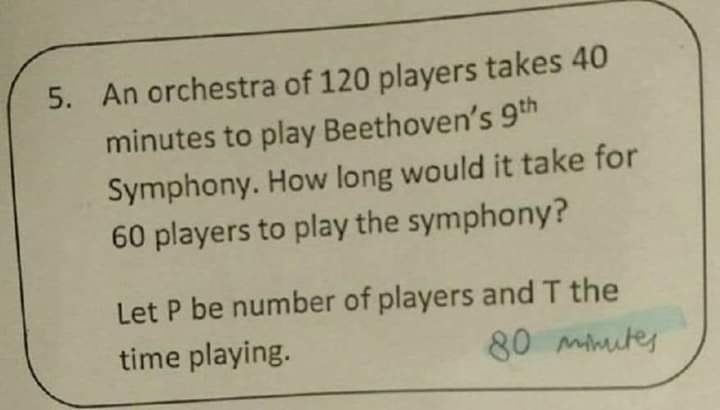
The mathematics of Baumol’s cost disease
13 Oct 2019 Leave a comment
in applied price theory, labour economics, labour supply, Music
Which is the most feminist religion?
13 Oct 2019 Leave a comment
in discrimination, economics of religion, gender Tags: Age of Enlightenment, political correctness, regressive left

Inane crude economic nationalism
13 Oct 2019 Leave a comment

I picked up the Dominion-Post newspaper from the front step this morning to find this blaring back at me.

The second page was entirely green, with a little Kiwibank logo and the twee marketing line “Kiwis backing Kiwis”. (I guess advertising must have been more expensive in the Herald, where it is “just” wrapped round the sports section).
Rarely had I ever been more glad that I’d never been tempted to shift my banking business to the state-owned Kiwibank. The crude nationalism on display today was at possibly an even more inane level than the last such NZ-owned bank’s advertising campaign I wrote about

That one was on display at the heart of New Zealand’s “globalist-central” (if there were such a place), just over the road from the New Zealand Initiative, and a few hundred metres from places like MFAT, MBIE and The Treasury. If it had any merit…
View original post 598 more words
How to Harvest – Plant – Cook CASSAVA. a potentially lethal plant became the third most important crop in the tropics. The plant is very resilient, surviving where many other crops fail, and involves less human investment per calorie than potatoes. It is often poorer communities that rely on cassava for their survival.
13 Oct 2019 Leave a comment
in health economics Tags: agricultural economics


Recent Comments