Clarkson explains why cycling is bad for the environment
05 Oct 2019 Leave a comment
in economics of information, energy economics, environmental economics, global warming, politics - Australia, politics - New Zealand, politics - USA, Public Choice, rentseeking, transport economics, urban economics Tags: climate alarmists
Encryption and HUGE numbers – Numberphile
05 Oct 2019 Leave a comment
in defence economics, economics of education, law and economics, property rights
A conundrum for libertarian theories of property rights and restitution
05 Oct 2019 Leave a comment
in comparative institutional analysis, defence economics, economic history, economics of crime, economics of education, law and economics, laws of war, politics - New Zealand, property rights, war and peace Tags: economics of colonialism

Was It Good Fortune to be Enslaved by the British Empire?
05 Oct 2019 Leave a comment
in comparative institutional analysis, constitutional political economy, development economics, economic history, economics of bureaucracy, economics of crime, growth disasters, income redistribution, law and economics, property rights, Public Choice, rentseeking, war and peace Tags: Age of Discovery, age of empires, Age of Enlightenment, British empire, economics of colonialism
Pinker on free speech and academic freedom
05 Oct 2019 Leave a comment

Here’s a short Big Think talk by Steve Pinker, much demonized by the success-hating Pharyngula crowd as well as those who make their living by prognosticating the demise and degradation of humanity or our lack of social progress. Here Steve advances the well-known arguments for both free speech and academic freedom, which is simply free speech (as well as freedom of inquiry, the right to pursue what interests you) in a university setting. The arguments may not be new, but in this generation need to be repeated endlessly, for many young people and Leftists are beginning to mutter darkly that free speech is overrated.
And so Steve’s rationael for free speech is worth hearing again:
“We just don’t know any route to knowledge other than what Karl Popper called ‘conjecture and refutation’: throwing an idea out there and seeing if it withstands attempts to falsify it.”
This of course refers…
View original post 240 more words
Renewables alone by 2030 will not mean zero emissions but blackouts
05 Oct 2019 Leave a comment
in energy economics, environmental economics, global warming, Public Choice Tags: British politics, solar power, The fatal conceit, wind power

It is only cheating if you get caught – Creative accounting at the Bank of England in the 1960s
05 Oct 2019 Leave a comment
Fascination of fraud by a central bank

by Alain Naef (Postdoctoral fellow at the University of California, Berkeley)
This research was presented at the EHS conference in Keele in 2018 and is available as a working paper here. It is also available as an updated 2019 version here.
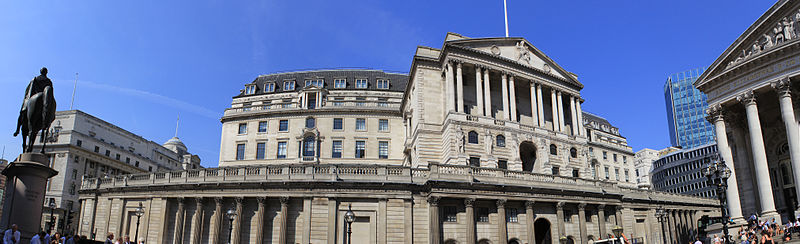 The Bank of England. Available at Wikimedia Commons.
The 1960s were a period of crisis for the pound. Britain was on a fixed exchange rate system and needed to defend its currency with intervention on the foreign exchange market. To avoid a crisis, the Bank of England resorted to ‘window dressing’ the published reserve figures.
In the 1960s, the Bank came under pressure from two sides: first, publication of the Radcliffe report (https://en.wikipedia.org/wiki/Radcliffe_report) forced publication of more transparent accounts. Second, with removal of capital controls in 1958, the Bank came under attack from international speculators (Schenk 2010). These contradictory pressures put the Bank in an awkward…
View original post 858 more words
What lies behind Corbyn’s difficulties with “left-wing antisemitism”?
05 Oct 2019 Leave a comment

 Above: ‘that’ mural
Jeremy Corbyn has apologised for “pockets of antisemitism” in the Labour party as he attempts to deal with renewed claims discrimination against Jewish people in the party. The accusations flared up again at the weekend when it emerged that he had supported the retention of an antisemitic mural in the East End of London six years ago (for which he has now apologised, saying he “should have looked more closely” at the mural). But Jewish leaders have issued an unprecedented open letter accusing Corbyn of “siding with antisemites” and being “ideologically fixed within a far-left worldview that is instinctively hostile to mainstream Jewish communities”. They also asked supporters to stage a show of solidarity outside parliament today as Labour MPs hold their weekly meeting. In his own statement on Sunday night, Corbyn said he was “sincerely sorry for the pain which has been caused” and said Labour was campaigning “to increase support and confidence among Jewish…
View original post 2,672 more words
Labour conference motion on Israel-Palestine: both unachievable and reactionary
05 Oct 2019 1 Comment

Labour Party conference passed a motion on Israel-Palestine, but shoehorned into the same session as Brexit, with no debate, and even less understanding of the issues.
The motion supports a majority-Palestinian state within the territory of Israel-Palestine, but in a fashion suffused with political dishonesty, written to hide rather than explain the issues.
The motion is premised on an “internationalist Labour Party” having particular responsibility “because of the role Britain played as a colonial power during the 1948 Nabka when Palestinians were forcibly displaced from their homes.”
That is nonsense. From the end of World War 2, Britain refused entry for Jewish refugees into Palestine, already heavily restricted during the war and the Holocaust. An increasingly violent Jewish insurgency in Palestine fought the British.
In 1947 Britain handed the problem to the UN, which proposed the partition of Palestine into…
View original post 807 more words
You do wonder why @mfe_news @jamespeshaw are so aggressively ignorant of Nordhaus and climate clubs?
05 Oct 2019 Leave a comment


Exaggeration About Global Warming Is Greater Than Ever
04 Oct 2019 Leave a comment
in climate change, development economics, economics of information, energy economics, entrepreneurship, environmental economics, global warming, politics - Australia, politics - New Zealand, politics - USA, Public Choice Tags: climate alarmism


Recent Comments