How pilots found out about the World Trade Center crash | 9/11: Cleared for Chaos
22 Sep 2019 Leave a comment
in defence economics, politics - USA, transport economics, war and peace Tags: 9/11, war against terror
To Help the Poor, Focus on Poverty Reduction Rather than Inequality
22 Sep 2019 Leave a comment

Here’s a simple quiz to determine whether you should support a candidate like Bernie Sanders or Elizabeth Warren: Would you embrace a policy that increased income for poor Americans by 10 percent if it also happened to increase income for rich Americans by 15 percent?
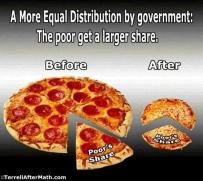 Normal people automatically say yes. After all, they don’t resent rich people and they want lower-income people to enjoy better living standards.
Some of our left-leaning friends (including at the IMF!), however, are so fixated on inequality that they are willing to deprive the poor so long as higher-income people have even larger losses (Margaret Thatcher nailed them on this issue).
Let’s look at some analysis of this issue.
The Wall Street Journal has an editorial that starts by highlighting some good economic news.
…low- and middle-income folks are reaping more economic benefits than during the Obama years. …Worker earnings increased…
View original post 512 more words
BBC News coverage of terrorism in Israel – August 2019
22 Sep 2019 Leave a comment

The Israel Security Agency’s report on terror attacks (Hebrew) during August 2019 shows that throughout the month a total of 149 incidents took place including 97 in Judea & Samaria, 25 in Jerusalem and inside the ‘green line’ and 26 in the Gaza Strip sector.
In Judea & Samaria and Jerusalem the agency recorded 95 attacks with petrol bombs, 14 attacks using pipe bombs, five arson attacks, two shooting attacks, two stabbing attacks, one attack using a grenade and one vehicular attack.
Incidents recorded in the Gaza Strip sector included nine attacks with petrol bombs, three attacks using pipe bombs, one attack using a grenade, three shooting attacks and seven incidents of rocket fire.
Two people were murdered and eight wounded in attacks during the month of August.
The BBC News website reported the August 7th murder of Dvir Sorek the following day but no follow-up reporting was seen…
View original post 220 more words
Most feminists have lost their way
22 Sep 2019 Leave a comment
in discrimination, economics of religion, gender, law and economics, politics - Australia, politics - New Zealand, politics - USA Tags: political correctness, regressive left, women's liberation

The woke left would not understand this at all
22 Sep 2019 Leave a comment
in law and economics, politics - Australia, politics - New Zealand, politics - USA Tags: free speech, political correctness, regressive left

Deborah Lipstadt Explains Why Holocaust Denial Shouldn’t Be a Crime
22 Sep 2019 Leave a comment
in economic history, economics of crime, law and economics Tags: free speech, The Holocaust
WHY PEOPLE ALWAYS REGRET NOT TAKING RISKS – William von Hippel
22 Sep 2019 Leave a comment
in economic history, economics of education, gender, human capital Tags: evolutionary psychology
Richard Posner Politics in the Supreme Court
22 Sep 2019 Leave a comment
in comparative institutional analysis, constitutional political economy, economics of bureaucracy, law and economics, politics - USA, Public Choice, Richard Posner Tags: constitutional law
Energy Savings from Building Codes are Only Symbolic
22 Sep 2019 Leave a comment


Richard Tol posted at Climate Economics: How much energy do building code save?
Not nearly as much as expected, according to this paper by Arik Levinsohn. California has had building codes for energy since 1978, and they are tightened every so often. Levinsohn compares the energy use of buildings build before and after a code change, compares Californian houses to houses elsewhere in the USA, and compares the weather sensitivity of houses with different building codes. He finds that codes save energy, but the ex post estimates are lower than the ex ante ones on which the regulation was based.

Arik Levinsohn wrote at American Economic Review How Much Energy Do Building Energy Codes Save? Evidence from California Houses
Abstract
Regulations governing the energy efficiency of new buildings have become a cornerstone of US environmental policy. California enacted the first such codes in 1978 and has tightened them every…
View original post 120 more words

Watch Bill Maher’s show while you can
22 Sep 2019 Leave a comment
Hunt is New Zealand’s human rights commissioner

This, sent by reader Michael, is a video of Bill Maher’s show last night, featuring Andrew Sullivan and Sarah Haider, as well as Samantha Power, Timothy Naftali and Heather McGhee Watch it while you can, because these things are taken down soon. I haven’t even watched it in my rush to make it available here.
Haider is the special guest, and appears at 31:32.
I’ve now watched it. It’s a good show overall: there’s discussion of Justin Trudeau’s blackface, NZ prime minister Jacinda Arden’s unwise donning of a hijab after the Christchurch mosque massacre, Trump Derangement Syndrome, and much more.
M4 Sherman – The Workhorse of D-Day
22 Sep 2019 Leave a comment
in defence economics, war and peace Tags: World War II
German Wind Lobby Demands Endangered Species Protection To Be Watered Down
22 Sep 2019 Leave a comment

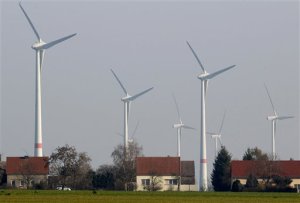 Feldheim village near Berlin, Germany.
H/T The GWPF
Consider the uproar that greets most kinds of environment-related proposals that even might have a negative impact on any sort of wildlife. Then wonder at what the wind industry has so far been allowed to get away with. Does the pushback stand a chance in the face of current climate change mythology?
The ban on killing endangered species is turning into an ‘absolute obstacle to planning’ new wind farms in Germany, says Die Welt.
Now, the wind lobby wants to water down conservation laws protecting endangered species. The wind power industry can hardly erect any new turbines because of a flood of complaints.
– – –
The ban on killing endangered wildlife is turning into an ‘absolute obstacle to planning’ – extrapolated death figures show that tens of thousands of birds are affected.
When the wind power industry presented its interim results…
View original post 333 more words
Project Nettie: scientists supporting biological sex
22 Sep 2019 Leave a comment

Sexual reproduction, the generation of offspring by fusion of genetic material from two different individuals, evolved over 1 billion years ago. It is the reproductive strategy of all higher animals and plants, including the mammalian class to which humans belong.
Humans can be differentiated into two categories by their reproductive roles. Females make eggs and gestate live young. Males generate sperm to fertilise the female egg. In accordance with their respective roles, females and males have different reproductive anatomies (“biological sex”).
No other reproductive mechanism exists in humans.
In contradiction of evolutionary history and millennia of human observations, highly-esteemed scientific periodicals are running articles undermining the observable reality of biological sex.
“Biologists now think there is a larger spectrum than just binary female and male.”
Scientific American, Oct 22 2018
“The research and medical community now sees sex as more complex than male and female.”
Nature, Oct 30…
View original post 1,020 more words
Bureaucrats a heterodox economist trusts big time to pick winners are too witless to phone to confirm her credit card details
21 Sep 2019 Leave a comment
in comparative institutional analysis, constitutional political economy, economics of bureaucracy, economics of information, Public Choice Tags: picking winners
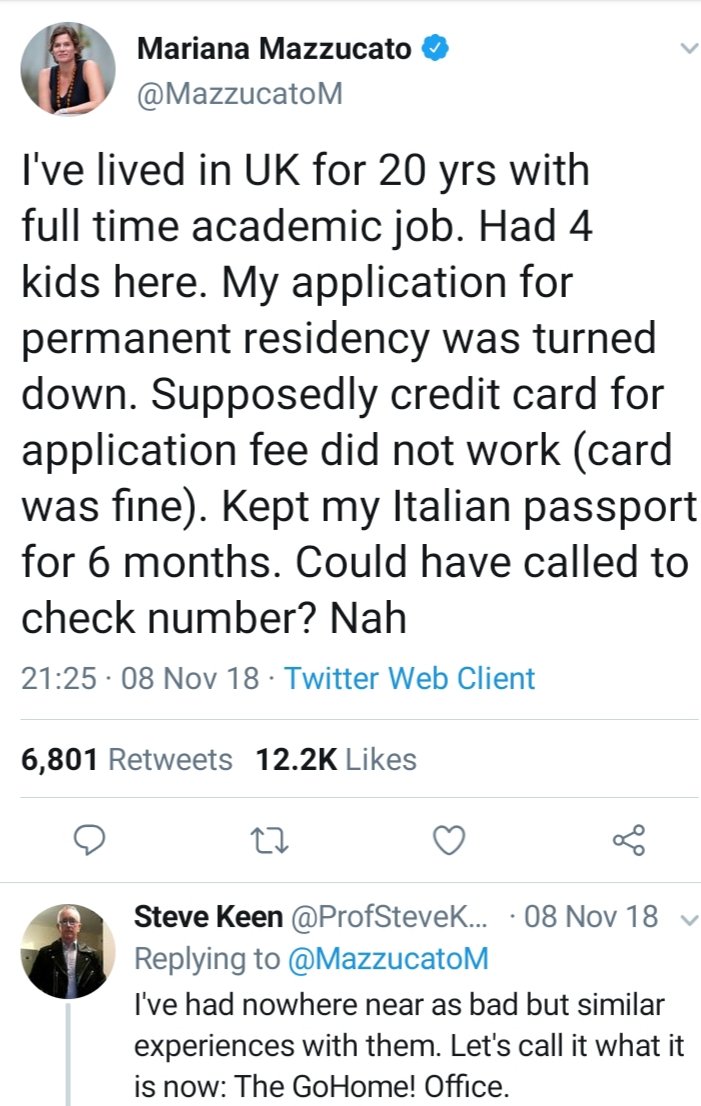
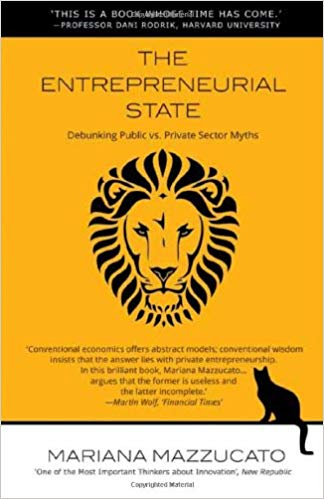
Table of Contents
- Introduction: Thinking Big Again
- From Crisis Ideology to the Division of Innovative Labour
- Technology, Innovation and Growth
- Risk-Taking State: From ‘De-risking’ to ‘Bring It On!’
- The US Entrepreneurial State
- The State behind the iPhone
- Pushing vs. Nudging the Green Industrial Revolution
- Wind and Solar Power: Government Success Stories and Technology in Crisis
- Risks and rewards: From Rotten Apples to Symbiotic Ecosystems
- Socialization of Risk and Privatization of Rewards: Can the Entrepreneurial State Eat Its Cake Too?
- Conclusion
MARIANA MAZZUCATO is a Professor in Economics at the University of Sussex, where she holds the RM Phillips Chair in Science and Technology Policy. She is interested in the interactions between technological change, economic growth, and the ways that industries are structured. Her recent work has looked at the leading role of the State in fostering innovation, and hence the implications of ‘austerity’ for Europe’s ability to be an ‘Innovation Union’. In her last book The Entrepreneurial State she argues that active State investment has been the secret behind most radical innovations, and that this requires economists to analyse the State as market ‘maker’ and market ‘shaper’ not just market ‘fixer’.


Recent Comments