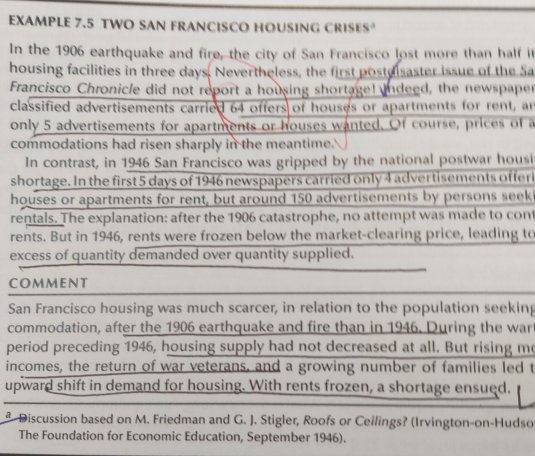
India and Sri Lanka’s violent fight over fish
11 Sep 2019 Leave a comment
in development economics, economic history, growth disasters, growth miracles, international economic law, International law, law and economics, property rights, Public Choice Tags: economics of borders
Timur Kuran on “The Portal”, “The Economics of Revolution and Mass Deception.”
11 Sep 2019 Leave a comment
in comparative institutional analysis, constitutional political economy, defence economics, development economics, economic history, economics of bureaucracy, economics of information, law and economics, Public Choice, public economics, rentseeking Tags: preference falsification
Paul Craig: Prorogation: Three Assumptions
10 Sep 2019 Leave a comment

 Litigation is often predicated on certain assumptions. These may be the result of argumentation of the parties, the reasoning of the courts or an admixture of the two. The assumptions can take on an axiomatic character, and become ‘unchallengeable’. They may be regarded as expressive of uncontroversial facts, or perceived as inherent in the nature of adjudication. Such matters may be unpacked after the event, in academic discourse or subsequent litigation. Reflection after the event may be rewarding, but it does not change the prior decision. The importance of the present case therefore warrants some brief thoughts about three assumptions that are related but distinct, which have characterized the litigation thus far.
Assumption 1: Prorogation entails high policy
It is unsurprising that characterization of the case as involving high policy has featured prominently in the present litigation. It is a natural argument for government to make, the consequential contention being…
View original post 1,339 more words
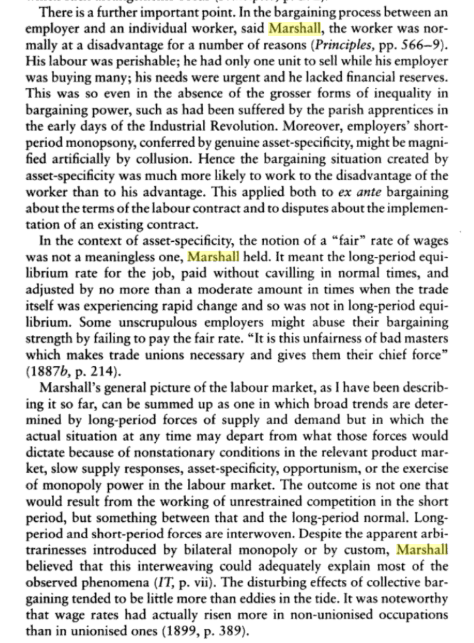
Alfred Marshall on worker’s bargaining power and the union wage premium
10 Sep 2019 1 Comment
in Alfred Marshall, applied price theory, history of economic thought, labour economics, labour supply, unions
Closest @TheAusInstitute got to asking if the carbon tax should be unrepealed
10 Sep 2019 Leave a comment
in energy economics, environmental economics, global warming, politics - Australia, Public Choice, public economics

Barely Legal: Victorian Wind Industry Furious As Noise Affected Neighbours Finally Get Justice
10 Sep 2019 Leave a comment

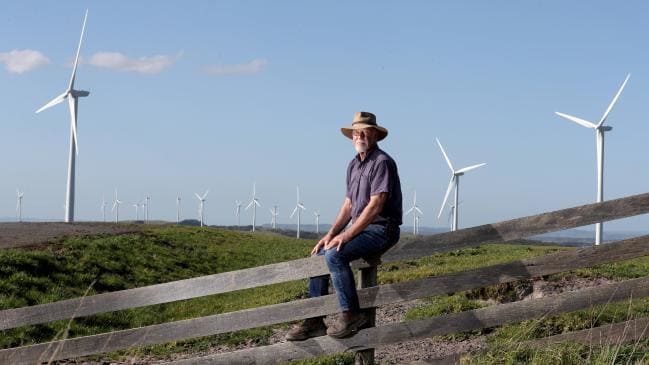
The wind industry’s Victorian onslaught has hit the wall, as lawyered up neighbours pursue noise nuisance cases against their tormentors.
It all started at a place called Bald Hills with a lawyer named Dominica Tannock – and her firm, DST Legal: Litigation Breakout: Victorian Wind Farm Neighbours Pursuing $Millions from Wind Developers for Noise Nuisance
Dominica’s clients at Bald Hills pursued the wind power outfit responsible for their thumping, grinding misery under the Public Health and Wellbeing Act, that prohibits noise “which is, or is liable to be, dangerous to health or offensive”. In “determining whether a nuisance arising from [noise] is, or is liable to be, dangerous to health or offensive regard must not be had to the number of persons affected or that may be affected; and regard may be had to the degree of offensiveness.” Where “offensive” means “noxious or injurious to personal comfort”. For more on…
View original post 1,344 more words
Kids Aren’t As Gullible As You Think
10 Sep 2019 Leave a comment
in economics of education, economics of information, economics of media and culture, health economics Tags: child development
From pecan pralines to ‘dots’ as currency: how the prison economy works
10 Sep 2019 Leave a comment

Superb piece by Richard Davies (HT: JP Koning blog).
Davies tracks the economies and currency markets in prisons in Louisiana (also called as Angola):
In many ways, a prison’s official economy is like that of a regular town. In Angola there is a world of work, with jobs and pay, promotions and demotions. And there is a world of shopping, with consumer goods and stores. But prisons are economic systems in which the cost of goods bears no relation to wages or the buying power of the workforce. The most important connections of a market economy – the prices that link work and pay, demand and supply – have been severed, intentionally, by the authorities. The official prison economy exists, but it may as well not, leaving the prisoners to build their own underground markets.
In the underground prison economy, things that might seem simple are hard, and things…
View original post 278 more words
Scientists Just Figured Out How Washing Machines Work?!
10 Sep 2019 Leave a comment
in economics of information, economics of media and culture
John Cleese: Political Correctness Can Lead to an Orwellian Nightmare
10 Sep 2019 Leave a comment
in economics of education, economics of information, economics of media and culture, law and economics, politics - Australia, politics - New Zealand, politics - USA Tags: political correctness
UK Vegan Activist Kills 100 Rabbits In Order to Save 15
10 Sep 2019 Leave a comment

A vegan activist named Mythical Mia attempted to steal rabbits from a Spanish farm was attacked by angry farmers last week while trying to rescue the animals. It has now been reported that more rabbits died resulting from her effort than were saved. Then again, that may be what she intended. While there is no way to verify any of Mia’s allegations in the below video, her tears shouldn’t gain much sympathy since she took the risk of trespassing on private property and stealing the animals that resulted in their deaths. No doubt she and her colleagues carefully planned what they were going to do including targeting the animals in question to result in the most deaths. Hopefully Spanish authorities will arrest and prosecute her and her accomplices.
“Vegan activist who ‘rescued’ 16 rabbits killed nearly 100 in the process,” By Chris Perez, September 9, 2019 | New York Post
View original post 167 more words


Recent Comments