Alexandra Sinclair and Joe Tomlinson: Eliminating Effective Scrutiny: Prorogation, No Deal Brexit, and Statutory Instruments
05 Sep 2019 Leave a comment

 The decision to prorogue Parliament does not only have implications for whether Parliament can prevent a no deal Brexit, it also has important consequences for the making of primary and secondary legislation prior to exit day. We are particularly concerned with statutory instruments (SIs). There is already a strained position vis-à-vis the lack of scrutiny of secondary legislation, to such an extent that Parliament scrutiny is effectively incapacitated. It is clear that prorogation will exacerbate this incapacitation. In this post, we explain why this is the case.
Primary Legislation
When Parliament is prorogued all Bills fall unless expressly carried over to the next session. This means they need to start the legislative process again in a new session, if they are to be revived. At present, there are five Brexit Bills progressing through Parliament. Two of these, the Trade Bill and the Financial Services Bill are ineligible to be carried…
View original post 758 more words
Superfluous article of the month
05 Sep 2019 Leave a comment

Do we really need another article that telling us that evolution isn’t always “progressive”, going in a straight line towards traits that we consider “advanced”? (These are nearly always traits that humans have, like intelligence, high consciousness, and big brains.)
This form of evolution, often represented by the “straight line” diagram of human evolution shown in the new The Conversation article below, also called “orthogenesis,” is said to misrepresent evolution in several ways. It implies, for instance, that there’s an inherent directionality to evolution, which isn’t true (though in some cases, like arms races, it can approximate truth). It could be taken to imply that the directionality isn’t conferred by natural selection, but by some teleological force, like the “drive to consciousness” broached by computer scientist David Gelernter in a recent, dreadful, and grossly misleading critique of evolution. And it implies a scala naturae—a “scale of nature”—that could…
View original post 767 more words
Note for @NZGreens
05 Sep 2019 Leave a comment
in economics of education, economics of information, economics of media and culture, economics of regulation, environmental economics, health economics, politics - New Zealand Tags: anti-GMO movement, Anti-Science left, anti-vaccination movement, climate alarmism, vaccines
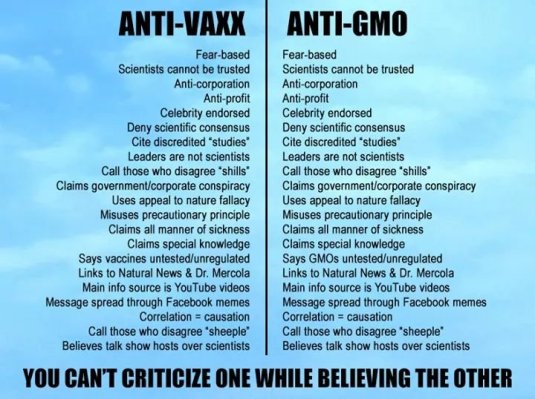
Note for the anti-science left
05 Sep 2019 Leave a comment
in economics of education, economics of information, economics of regulation, environmental economics, health economics, politics - Australia, politics - New Zealand, politics - USA Tags: anti-GMO movement, cranks
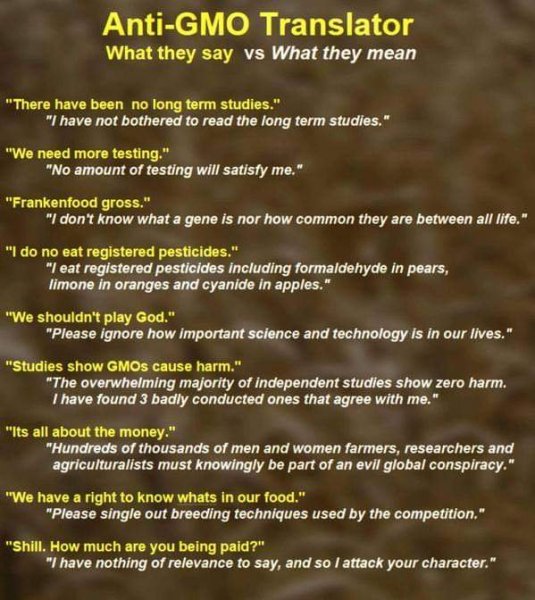
You Don’t Know Yourself as Well as You Think
05 Sep 2019 Leave a comment
in economics of education Tags: personality psychology
Political Epidemiology, History, and the Evolutionary Psychology of Outrage
05 Sep 2019 Leave a comment
in comparative institutional analysis, economics of crime, economics of education, law and economics, property rights, Public Choice
LBJ was equally strict with Mexican students who spoke Spanish because learning English was vital to their futures
05 Sep 2019 Leave a comment
in discrimination, economic history, economics of education, human capital, politics - New Zealand, poverty and inequality Tags: economics of languages

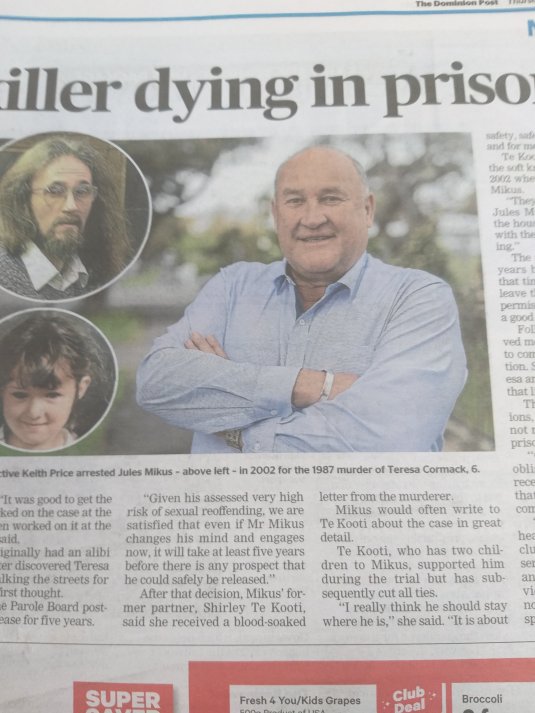
Why is @NZCorrections allowing child killers to post blood soaked letters? @sst_nz
05 Sep 2019 Leave a comment
in economics of crime, law and economics, politics - New Zealand Tags: law and order
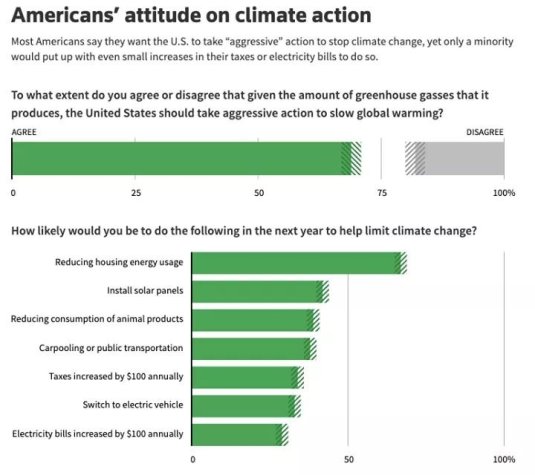
Ramped up #ClimateEmergency rhetoric hasn’t increased voter willingness to #feelthebern in the hip pocket
05 Sep 2019 Leave a comment
in economics of information, energy economics, environmental economics, global warming Tags: climate alarmism
Biggest Fast Food Chains in the World 1970 – 2019: creative destruction explained for benefit of @NZComCom
05 Sep 2019 Leave a comment
in economic history, entrepreneurship, industrial organisation, survivor principle Tags: creative destruction
Should Hitler have waited?
05 Sep 2019 Leave a comment
in defence economics, war and peace Tags: World War II
Lest we forget
04 Sep 2019 Leave a comment

On September 3, at 9.30pm 80 years ago, New Zealand declared war on Germany. International tensions had steadily risen from mid-year as Germany became more bellicose. On August 24 the Government declared an Alert State. The Government offered the 30 Vickers Wellington bombers ordered for the new RNZAF to the British Government and this was accepted with alacrity.
View original post 351 more words
The Man Who Would Be Queen: Michael Bailey: {Part Two}
04 Sep 2019 Leave a comment

Part 2: The Man Who Would Be Queen: A reading.
Having seen many references to this book I have finally got around to tackling it. The full text is available free on line here: The Man Who Would Be Queen
The author is sympathetic to gay and trans rights, a lot of his research has a focus on evolutionary theory and adaptive, or maladaptive, responses to the environment. So expect some evolutionary biology & some interrogation of nature v nurture. There is plenty to challenge long cherished beliefs, both for TransActivists & radical feminists. Since it needs saying in 2019, I don’t agree with every single word!

My reading is motivated by a concern for women’s, sex based, rights and the premature medicalisation of Gay males. The book doesn’t cover females who transition or theories of the origins of Lesbianism. He does, briefly, touch on Androphilia (Women who identify as…
View original post 965 more words


Recent Comments