Why You Swear in Anglo-Saxon and Order Fancy Food in French: Registers
15 Aug 2019 Leave a comment
in economics of media and culture Tags: economics of languages

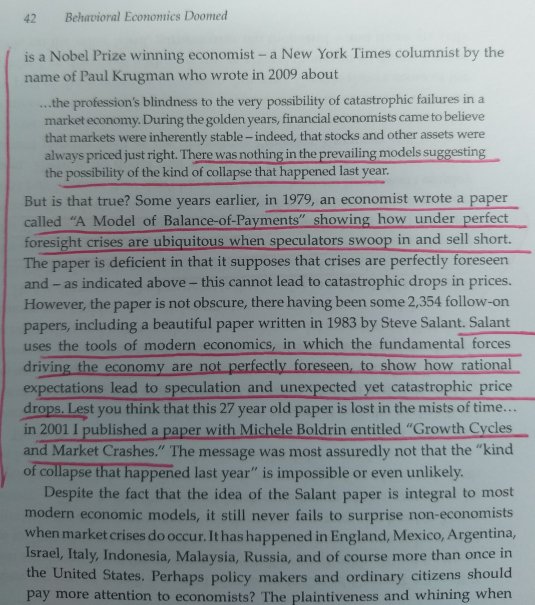
David Levine on @paulkrugman forgetting his own paper on financial crises despite rational expectations and efficient markets
15 Aug 2019 Leave a comment
Wage Subsidies
14 Aug 2019 Leave a comment
in labour economics, labour supply, poverty and inequality, welfare reform
Subsidy Farming: Wind Power Could Never Make a Profit Without Massive Subsidies
14 Aug 2019 Leave a comment


Squandering other people’s money is what the wind and solar industries do best. Let’s face it, they wouldn’t exist without massive and endless subsidies.
The chaotic power they occasionally produce has no commercial value and as Warren Buffett put it “We get a tax credit if we build a lot of wind farms. That’s the only reason to build them. They don’t make sense without the tax credit.” Buffett might have continued, that it’s the only reason anyone invests in them.
In the detailed analysis below, Larry Brown goes further to reach the conclusion that, with or without subsidies, these things make no sense at all.
Wind Farm Back-of-the-Envelope Economic Analysis
Larry F. Brown
Watts Up With That?
21 July 2019
We visited a wind farm in southern Utah recently. I’ve always been curious about the costs, profitability, and physical size of these things as well as the footprint and…
View original post 3,156 more words
£ for lb – The 1940s Ration Book Diet.
14 Aug 2019 Leave a comment


Did anyone watch “Save Money, Lose Weight” on ITV recently? Was anyone else SHOCKED how much money they spent in 28 days? Watch the episode HERE!
Six overweight Brits were put through six off-the-shelf diets for 28 days. All of them successfully lost weight trying 6 different popular plans and were pleased with the results BUT HOLEY HELL – REALLY? How can someone afford a food bill for one person for one month of £400 – £500? Get real! In the real world many of us struggle and carefully budget so it did indeed seemed quite shocking to me the amount of money spent. Surely ongoing over a long period of time this wouldn’t be sustainable?

And then like a terrier down a rabbit hole I decided to break down my food budget based on rationing, and worked out how much it would cost to lose weight ration book style…
View original post 173 more words
Can dogs tell the time? | Inside the Animal Mind – BBC
14 Aug 2019 Leave a comment
in economics of media and culture Tags: dogs
The Legality of Exclusion Zones around abortion clinics in the US and Australia- Guest blog
14 Aug 2019 Leave a comment


I am very pleased to be able to welcome my first “guest blogger” in the person of Professor Michael Quinlan, Dean of the University of Notre Dame’s Sydney-based Law School. Michael’s note on this important issue, which is now becoming more relevant in Australia in recent years, was originally published in “On the Case”, a series of notes on legal issues produced by the UND Sydney Law School. He has kindly agreed to me re-publishing it here.
Issue 9 of On the Case discussed the recent decision of the Supreme Court of the United States (the US Supreme Court) in relation to same sex marriage in Obergefell [1] and the implications for Australia of that decision.[2] The Obergefell decision received substantial media attention in Australia [3] although the legal position in the two countries is quite different. [4]
In this edition of On the Case Professor Michael Quinlan, the Dean of The…
View original post 2,926 more words
Excellent example of a random productivity shock behind real business cycles
14 Aug 2019 Leave a comment

David Friedman | Will Strong Encryption Protect Privacy and Make Government Obsolete?
14 Aug 2019 Leave a comment
in applied price theory, comparative institutional analysis, David Friedman, economics of crime, economics of information, law and economics, property rights
Why Al Gore Keeps Yelling “Fire!”
14 Aug 2019 Leave a comment


Some years ago I attended seminars regarding efforts to achieve operational changes in organizations. The notion was presented that people only change their habits, ie. leave their comfort zone, when they fear something else more than changing their behavior. The analogy was drawn comparing to workers leaping from a burning oil platform, or tenants from a burning building.
Al Gore is fronting an agenda to unplug modern societies, and thereby the end of life as we know it. Thus they claim the world is on fire, and only if we abandon our ways of living can we be saved.

The big lie is saying that the world is burning up when in fact nothing out of the ordinary is happening. The scare is produced by extrapolating dangerous, fearful outcomes from events that come and go in the normal flow of natural and seasonal climate change. They can not admit that…
View original post 930 more words
A conundrum for the anti-science left on GMOs too
14 Aug 2019 Leave a comment
in economics of education, economics of information, economics of regulation, environmental economics Tags: anti-vaccination movement, conspiracy theorists, GMOs, vaccines

Defensive Strategies of the Roman Empire
14 Aug 2019 Leave a comment
in defence economics, economic history Tags: Roman empire


Recent Comments