The Kaiser’s Birthday – Hypocrisy in Greece I THE GREAT WAR – Week 79
28 Jan 2023 Leave a comment
in defence economics, war and peace Tags: World War I
Why Didn’t the Allies Get Rid of Franco After the Second World War?
28 Jan 2023 Leave a comment
in defence economics, International law, war and peace Tags: Spain, World War II
Why did Japan refuse Poland’s declaration of war in WW2?
28 Jan 2023 Leave a comment
in defence economics, economic history, International law, war and peace Tags: Japan, Poland, World War II
Reviewing the MPC’s Remit
27 Jan 2023 Leave a comment
Once upon a time the Reserve Bank’s monetary policy was guided by a Policy Targets Agreement reached between the Governor and the Minister of Finance. These days things are different. As one of the more sensible aspects of the 2018 legislative overhaul, the new Monetary Policy Committee now works to a Remit (current one here) determined ultimately solely by the Minister of Finance. That is the way things should be: if officials are free to implement policy, the policy goals should be set by those whom we elect, in this case the Minister of Finance. At times, the Minister may put daft things in the Remit – as the current one did a couple of years back with the house price references – but that is how our system of government works (as it should).
Another sensible aspect of those reforms was a requirement that every five years or…
View original post 648 more words
Power Grab: Struggling British Households Forced to Install Pre-Paid Smart Meters
27 Jan 2023 Leave a comment
With power prices soaring out of control, it’s little wonder that thousands of British families can’t afford electricity. Every time Britain is hit with a bout of calm weather, wholesale power prices go through the roof.
In response to soaring wholesale power prices, the retail price cap that kept a lid on power bills over the last few years has been lifted (see above), such that power has now become a luxury item and forever out of reach for thousands of low-income households.
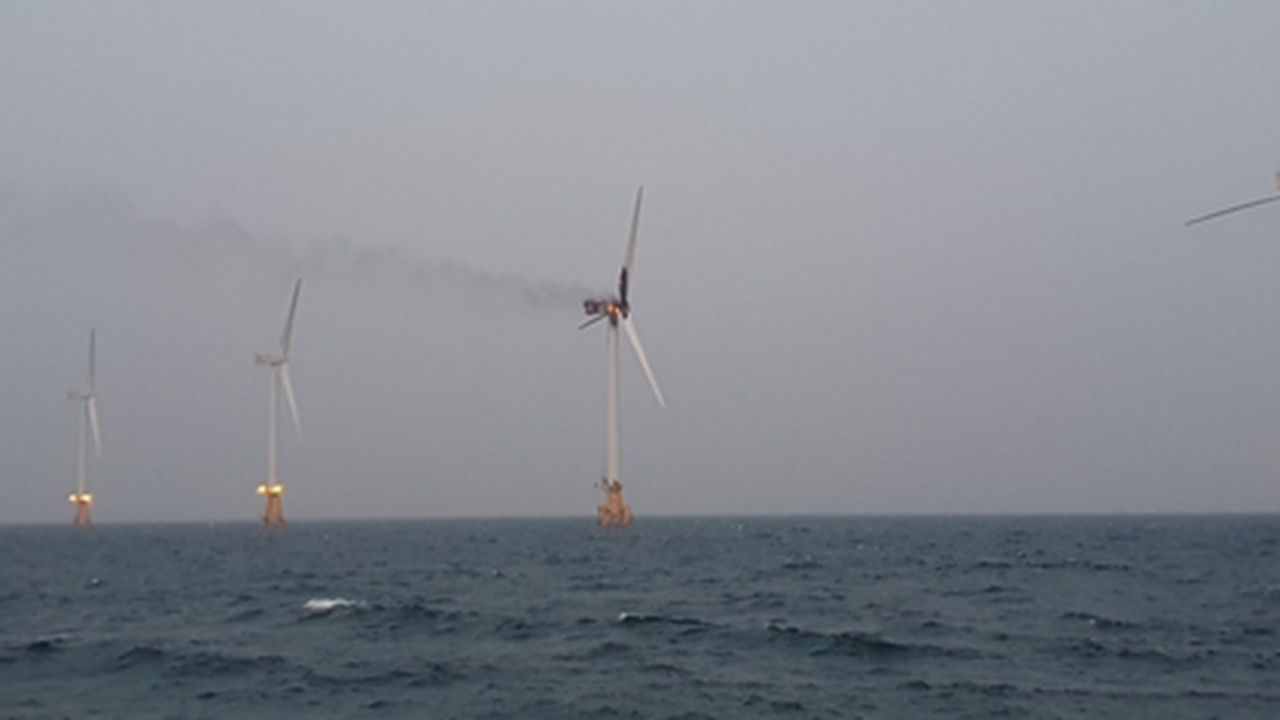
Add to that to the cost of the hundreds of £millions doled out in subsidies to wind power outfits to produce no power at all, and the tens of £billions they pocket, when they do, and Britain’s subsidised wind power-fixated energy policy looks positively obscene.
In the postwar period, British governments targeted policies that ensured that even the poorest households had access to reliable electricity, which came…
View original post 1,315 more words
The 2023 Election will be a Race Relations Election
27 Jan 2023 Leave a comment
Just in case anyone has been living in a cave for the last 5 years, with their fingers in their ears and a blindfold on – race relations in New Zealand are somewhat strained right now.
Co-governance, having been initiated by National and taken to an unexpected extreme by Labour, is (to put it mildly) polarising poor old New Zealand right now. I don’t see the polarisation diminishing any time soon, nor do I see any type of sustainable consensus coming about.
Relevant to this is the following announcement: Rurawhe will not contest Te Tai Hauāuru, moves to Labour list:
Te Tai Hauāuru MP and Speaker of the House Adrian Rurawhe will not stand for the Māori electorate in October’s general election and will instead move to the Labour Party list.
Rurawhe contested and won Te Tai Hauāuru three times. He was elected as Speaker mid-term in August last…
View original post 527 more words
Why WW1 British soldiers were NOT ‘Lions led by donkeys’
27 Jan 2023 Leave a comment
in defence economics, war and peace Tags: World War I
Everything Jacinda Ardern ‘tried’ had been a failure : David Seymour
27 Jan 2023 Leave a comment
in constitutional political economy, economics of crime, law and economics, macroeconomics, monetary economics, politics - New Zealand Tags: law and order, racial discrimination
Aaronson on Feminism: My Reply
26 Jan 2023 Leave a comment
in applied price theory, applied welfare economics, comparative institutional analysis, discrimination, economics of education, gender, health and safety, human capital, labour economics, labour supply, minimum wage, occupational choice, occupational regulation, poverty and inequality, welfare reform Tags: gender wage gap
Here’s my point-by-point reply to Scott Aaronson’s thoughts on Don’t Be a Feminist. He’s in blockquotes, I’m not. Hi Bryan, Sorry for the delay! I just finished reading your book. 1,251 more words
Aaronson on Feminism: My Reply
Proximity Fuse: The Little Device that Helped Win World War II
26 Jan 2023 Leave a comment
in defence economics, war and peace Tags: World War II
Snowed Under: Solar Power Output Collapses Under Blanket of Snow & Ice
25 Jan 2023 Leave a comment
It’s not just sunset that sends solar power output to the floor; dust, ice and snow do an equally good job, demonstrating that solar power is, and will always be, utterly useless as a meaningful power source for businesses and households that require power as and when they need it.
Solar is simply incapable of increasing output to meet rising demand and perfectly capable of collapsing in a heap when demand hits the roof (think breathless 42°C evenings when air conditioners are running flat out and the sun sets; or bitter freezing weather when panels are carpeted in snow and ice, and householders are scrambling to add light, power and heat to their homes).
And even when the going is good, solar panels produce power a tiny fraction of the time, especially in higher latitudes, as John Hinderaker explains below.
Solar Energy is Useless
Powerline
John Hinderaker
10 January 2023
View original post 232 more words
Modernity feeding Tribalism
25 Jan 2023 Leave a comment
Primitive economics, with its pattern of reciprocities, its enmeshment in the wider social structure, its hostility to accumulation, its rigidly regulated rules of distribution, its come-one, come-all dispersal of domestic resources, is largely what he says it is. Primitive attitudes toward nature, which emotionally fuse the secular and the divine, are just that.
To me that passage very much strikes a chord here in New Zealand.
It’s from a fascinating lecture that was delivered in the far-off days of 1997 by a New Zealand born Australian anthropoplogist, Roger Sandall, and it’s the subject of a post over at the Bassett, Brash & Hide blog site.
Mr Sandall was deeply worried about modern government attempts to protect and revive tribal life among the Australian aborigines. He argued that although it had been done with the best intentions it was actually a bad thing because it had prevented them from moving into…
View original post 1,148 more words
Energy Transition and Impossible Dreams
25 Jan 2023 Leave a comment
Daniel Yergin writes at Project Syndicate The Energy Transition Confronts Reality. Excerpts in italics with my bolds and added images.
Given the scale and complexity of the transition away from hydrocarbons, some worry that economic analysis has been given short shrift in the policy planning process. A clear-eyed assessment of the transition’s prospects requires a deeper understanding of at least four major challenges.
Overview
The “energy transition” from hydrocarbons to renewables and electrification is at the forefront of policy debates nowadays. But the last 18 months have shown this undertaking to be more challenging and complex than one would think just from studying the graphs that appear in many scenarios. Even in the United States and Europe, which have adopted massive initiatives (such as the Inflation Reduction Act and RePowerEU) to move things along, the development, deployment, and scaling up of the new technologies on which the transition ultimately depends…
View original post 1,134 more words


Recent Comments