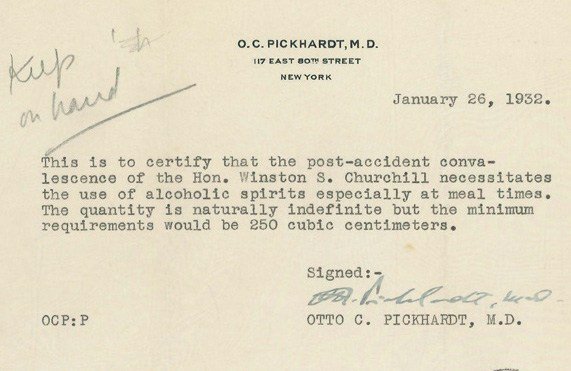
The most feminist religion?
21 Aug 2022 Leave a comment
in discrimination, economics of religion, gender Tags: sex discrimination

Jordan B Peterson on Femsplainers
21 Aug 2022 Leave a comment
in applied price theory, discrimination, economic history, economics of education, economics of love and marriage, gender, health and safety, human capital, labour economics, law and economics, occupational choice, poverty and inequality Tags: evolutionary biology, evolutionary psychology, gender wage gap
Bell Labs – The Company that Invented the Future
21 Aug 2022 Leave a comment
in economic history, economics of education, human capital, industrial organisation, labour economics, occupational choice, survivor principle Tags: creative destruction
Utopian Fantasyland: Wind & Solar ‘Transition’ Total Delusion Being Sold By Total Fools
20 Aug 2022 Leave a comment
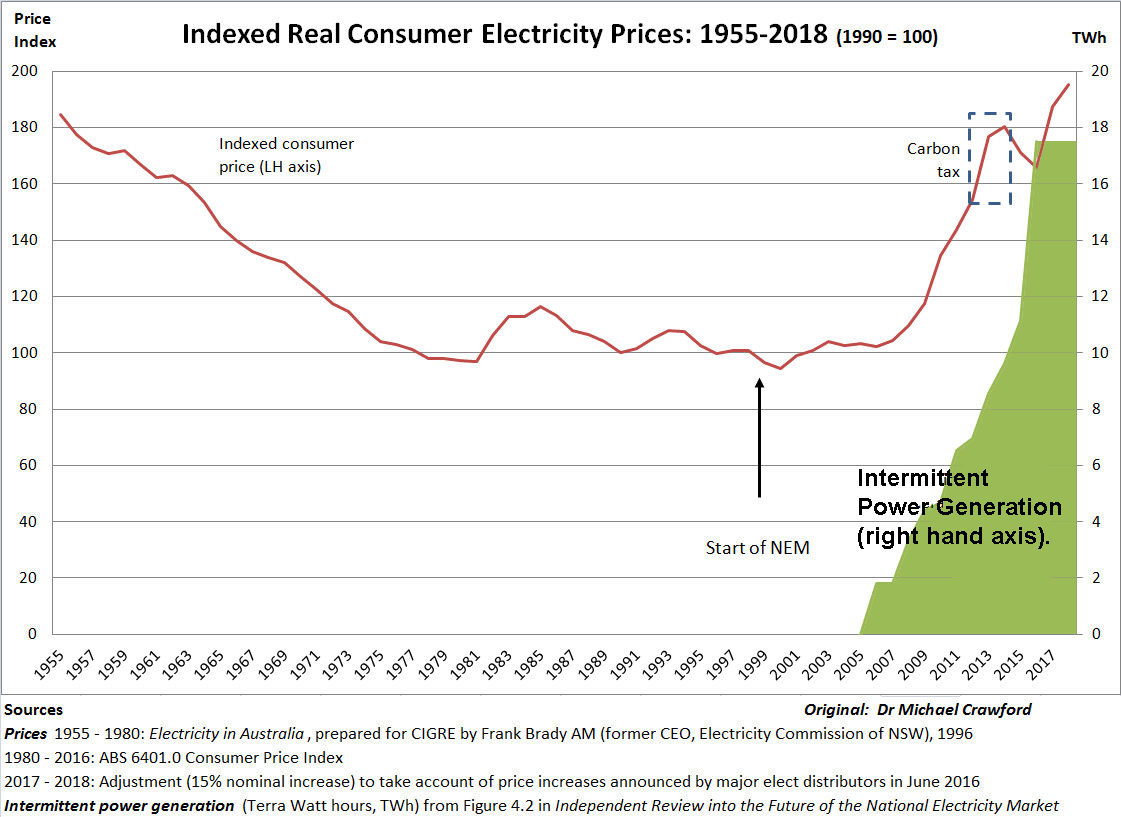
The West’s obsession with the unreliables, wind and solar was guaranteed to end in tears – the weather-driven power rationing and rocketing power prices were as perfectly predictable, as they were perfectly avoidable.
Every country that has hitched its energy future to sunshine and breezes is facing both a powr pricing and supply calamity.
Wind and solar ‘powered’ Germans are being softened up for major energy rationing and further price hikes – bureaucrats are working overtime to come up with new ways of depriving their compatriots of the electricity they once enjoyed like running water. With winter approaching, one cunning plan is to get energy-starved Germans to bunch up in commonly heated exhibition halls to prevent them from freezing to death when temperatures plummet.
In Britain, equally obsessed with subsidised and intermittent wind and solar, power prices are rising at astronomical rates. Last October, the average annual energy bill was…
View original post 1,898 more words
The Anglo-Irish Treaty negotiations under the magnifying glass – Michael Portillo & Dr Marie Coleman
20 Aug 2022 Leave a comment
November 04,2021
The National Archives is delighted to announce ‘The Anglo-Irish Treaty negotiations under the magnifying glass with Michael Portillo in conversation with Professor Marie Coleman’, the second talk in our commemorative lecture series for autumn–winter 2021. The talk will see Michael Portillo (broadcaster and former British cabinet minister) discuss with Professor Marie Coleman (Professor in Modern Irish History, Queen’s University, Belfast) the Anglo-Irish Treaty negotiations held in London from 11 October–6 December 1921. Michael Portillo and Marie Coleman will debate what was at stake for both delegations and their respective governments and will consider the wider implications the Treaty had, not just for future Anglo-Irish relations but also for Britain’s allies and empire.
Summarizing the Mentality of Government in One Sentence
20 Aug 2022 Leave a comment
Back in 2014, I shared a meme with a motto that was perfect for Washington, DC.
Today, let’s do something similar. But instead of a motto specifically for America’s unsavory capital, how about one sentence that summarizes the mentality of all governments.
I used a fill-in-the-blank format because there are so many possible answers.
After all, people in government value taxes more than growth, jobs, competitiveness, and all sorts of other factors.
And one of those other factors is public health, as we can see in this report by Rachel Pannett and Julia Mio Inuma in the Washington Post.
Japanese officials, worried about shifting demographics and a sharp decline in sintax revenue, have come up with an unusual fix for their fiscal woes: encouraging young people to drink more. …Liquor tax revenue in the fiscal 2020 year
was about $8.4 billion, a plunge of…
View original post 148 more words
Goldilocks Power: Why Solar Output Plummets During Heatwaves
20 Aug 2022 Leave a comment
Goldilocks was evidently the brains behind the ‘engineering’ of wind and solar power, which only operate when conditions are “just right”.
When the weather turns nasty, giant industrial wind turbines simply turn off. When there’s no wind, they produce nothing; when winds hit gale force, they produce nothing.
Solar panels aren’t any more resilient.
A few fluffy clouds give them grief.
Hailstones make short work of them; a blanket of snow and ice cuts their production to nothing, even when the sun is shining.
A hurricane or tornado soon tears them to worthless shreds.
Shredded panels after a storm in Puerto Rico.
But, counterintuitively, it’s when solar energy is at its zenith that the output they occasionally produce starts to drop off, very dramatically.
In Australia, summertime temperatures are routinely 35° C and above with heatwaves of 40° C and above, that can last for a week at a stretch…
View original post 442 more words
White Guy Orders in Chinese at Drive Thru, But When He Pulls Up…
20 Aug 2022 Leave a comment
in economics of education, economics of media and culture Tags: China, economics of languages
Milton Friedman – Understanding Inflation
20 Aug 2022 Leave a comment
in budget deficits, business cycles, economic history, fiscal policy, history of economic thought, macroeconomics, Milton Friedman, monetarism, monetary economics Tags: inflation, monetary policy
CRAZY ANCIENT THAI MASSAGE THAT BENT ME LIKE A PRETZEL!
20 Aug 2022 Leave a comment
in economics of media and culture
The Dissolution of the Holy Roman Empire. Part IX: The Confederation of the Rhine.
20 Aug 2022 Leave a comment
From the Emperor’s Desk: although I dealt with the Confederation of the Rhine in yesterday’s post, I thought today I would dig a little deeper.
After the Battle of Austerlitz, Napoleon established the Confederation of the Rhine in 1806. A collection of German states intended to serve as a buffer zone between France and Central Europe, the creation of the Confederation spelled the end of the Holy Roman Empire and significantly alarmed the Prussians.
The brazen reorganization of German territory by the French risked threatening Prussian influence in the region, if not eliminating it outright. War fever in Berlin rose steadily throughout the summer of 1806. At the insistence of his court, especially his wife Queen Louise, Friedrich Wilhelm III decided to challenge the French domination of Central Europe by going to war.
The founding members of the confederation were German princes of the Holy Roman Empire. They were…
View original post 498 more words
The Dissolution of the Holy Roman Empire. Part VIII: Peace of Pressburg
19 Aug 2022 Leave a comment
Peace of Pressburg
The War of the Third Coalition came too soon for Austria, which moved against France in September 1805. Defeated at the Battle of Austerlitz on December 2, 1805, Austria had to accept terms dictated by Napoleon in the Peace of Pressburg (December 26).
These created deliberate ambiguities in the imperial constitution. Bavaria, Baden and Württemberg were granted plénitude de la souveraineté (full sovereignty) while remaining a part of the Conféderation Germanique (Germanic Confederation), a novel name for the Holy Roman Empire.
Likewise, it was left deliberately unclear whether the Duchy of Cleves, the Duchy of Berg and the County of Mark—imperial territories transferred to Joachim Murat—were to remain imperial fiefs or become part of the French Empire. As late as March 1806, Napoleon was uncertain whether they should remain nominally within the Empire.
The Free Imperial Knights, who had survived the attack on their rights in the…
View original post 378 more words


Recent Comments