The Ruse at Gallipoli and the Siege of Kovno I THE GREAT WAR – Week 55
13 Aug 2022 Leave a comment
in defence economics, war and peace Tags: World War I
Milton Friedman on Hayek’s “Road to Serfdom” 1994 Interview 1 of 2
13 Aug 2022 Leave a comment
in Austrian economics, comparative institutional analysis, constitutional political economy, economics of bureaucracy, F.A. Hayek, law and economics, Milton Friedman, Public Choice Tags: The fatal conceit
Charles Plosser (1990) on real business cycles and A Monetary History…
12 Aug 2022 Leave a comment
in business cycles, economic history, financial economics, great depression, macroeconomics, Milton Friedman, monetarism, monetary economics


Inside Money, Output, and Causality
12 Aug 2022 Leave a comment
in business cycles, econometerics, history of economic thought, macroeconomics, Milton Friedman, monetarism, monetary economics
Robert Kee: Ireland – A Television History – Part 7 of 13 – ‘Ulster Will Fight’
12 Aug 2022 Leave a comment
Robert Kee (1919-2013) was already a veteran British broadcaster, writer, historian and journalist when his 1980 thirteen part series ‘Ireland: A Television History’ was first broadcast in Ireland and Britain.
The series was highly acclaimed as Kee followed Ireland’s complex history through the island’s development from pre-Christian times, to various uprisings down the centuries, explains the famine of 1845, the 1916 Rising, Independence and up to the late 1970s, with a specific emphasis on the creation of the modern independent republic and the roots of the Troubles. More importantly, the series presented many British viewers with their first detailed insight into the history of Irish politics, especially the issues surrounding sovereignty and identity in Northern Ireland. It could also be argued that the series did much the same for many Irish viewers too.
The series proved unexpectedly timely, since its broadcast coincided with increased tensions in Northern Ireland…
View original post 110 more words
CFTC Orders PredictIt Shut Down- Can Political Betting Survive?
12 Aug 2022 Leave a comment
Political betting has long been in a legal grey area. It seems that the Commodities Futures Trading Commission wants to make everything black and white, but at least for now it has simply made everything murkier.
PredictIt is the largest political betting site in the US; if you want to know who is likely to win an upcoming election, its the best place to find a quick answer. Prediction markets have two great virtues- they are usually right about what’s going to happen, and if they aren’t you can bet, making money and improving their accuracy at the same time.
PredictIt has operated since 2014 under a “no-action letter” from the CFTC. Effectively, the regulators told them “we’re not saying what you’re doing is definitely legal, but we know about it and have no plans to shut you down as long as you stick to the limits described…
View original post 541 more words
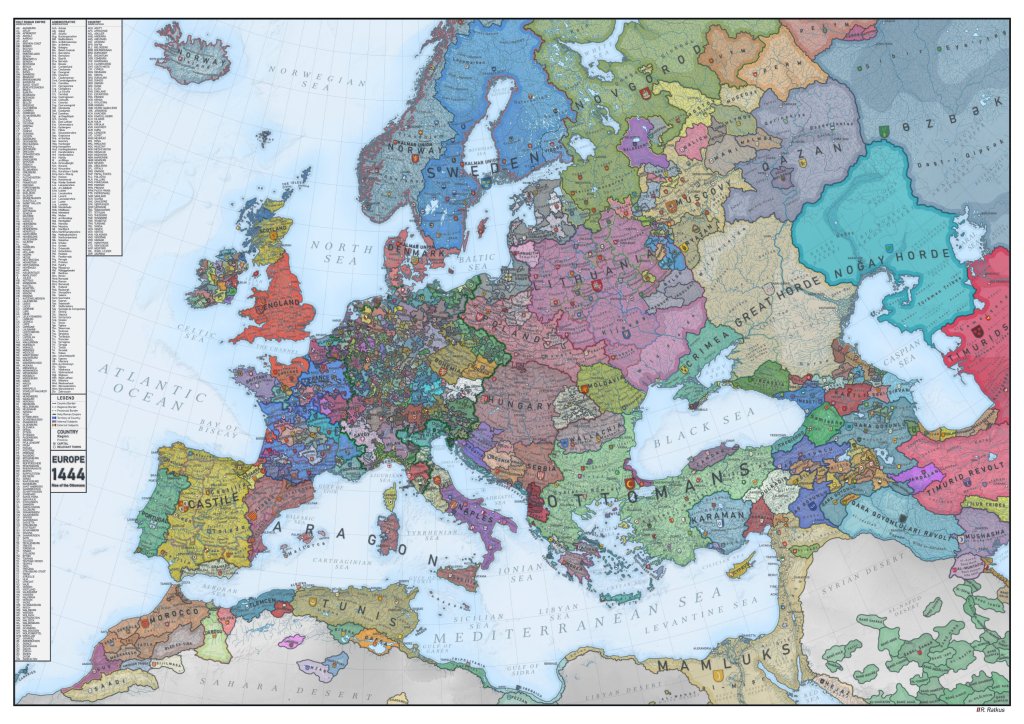
The Dissolution of the Holy Roman Empire. Part IV. The Rise of Brandenburg-Prussia.
12 Aug 2022 Leave a comment
After the Peace of Westphalia and the states within the Empire had greater autonomy we saw the rise of Brandenburg-Prussia which came to rival Austria for supremacy within the Empire.
The Hohenzollern state was then known as Brandenburg-Prussia. Brandenburg-Prussia is the historiographic denomination for the Early Modern realm of the Brandenburgian Hohenzollerns between 1618 and 1701.
The family’s main possessions were the Margraviate of Brandenburg within the Holy Roman Empire and the Duchy of Prussia outside of the Empire, ruled as a personal union.
Based in the Electorate of Brandenburg, the main branch of the Hohenzollern family intermarried with the branch ruling the Duchy of Prussia, and secured succession upon the latter’s extinction in the male line in 1618.
Another consequence of the intermarriage was the incorporation of the lower Rhenish principalities of Cleves, Mark and Ravensberg after the Treaty of Xanten in 1614.
The Thirty Years’ War (1618–1648) was…
View original post 869 more words
Why Are Scam Emails Obviously Scams? A Game Theory 101 Investigation
12 Aug 2022 Leave a comment
in applied price theory, economics of crime, economics of information, law and economics Tags: adverse selection, asymmetric information, game theory, screening, self-selection
Thomas Sowell – The Real World Effects of Preferential Policies
12 Aug 2022 Leave a comment
in applied price theory, comparative institutional analysis, discrimination, economic history, economics of education, human capital, income redistribution, labour economics, labour supply, law and economics, occupational choice, poverty and inequality, Public Choice, rentseeking, Thomas Sowell Tags: affirmative action, offsetting behaviour, racial discrimination, unintended consequences
Renewables Rejected: World’s Poorest Crave Reliable & Affordable Coal-Fired Power
11 Aug 2022 Leave a comment
Eco-zealots ram wind and solar power down the throats of Third World governments, purporting to save the planet and drag millions out of poverty. But it never takes their targets long to work out that wind and solar power are both insanely expensive and hopelessly unreliable; sitting in the dark, night after night, generally does the trick.
The wind and solar obsessed in the first world are quite prepared to ensure the World’s poorest stay that way. With economic development agencies peddling ridiculously expensive solar panels – seen as ‘fake electricity’ by those lumbered with it – and forcing tinpot governments to sign up to costly and pointless wind and/or solar power schemes, the ratio of haves to have-nots is likely to stay that way for the foreseeable future.
One who doesn’t subscribe to the ‘keep them poor at all costs’ model is Bjorn Lomborg.
Why we can’t afford…
View original post 902 more words
The “Textbook Definition” of a Recession
11 Aug 2022 Leave a comment
Three weeks I wrote a blog post about how economists define a recession. I pretty quickly brushed aside the “two consecutive quarters of declining GDP,” since this is not the definition that NBER uses. But since that post (and thanks to a similar blog post from the White House the day after mine), there has been an ongoing debate among economists on social media about how we define recessions. And some economists and others in the media have insisted that the “two quarters” rule is a useful rule of thumb that is often used in textbooks.
It is absolutely true that you can find this “two quarters” rule mentioned in some economics textbooks. Occasionally, it is even part of the definition of a recession. But to try and move this debate forward, I collected as many examples as I could find from recent introductory economics textbooks. I tried to…
View original post 1,702 more words
The Stupidity Of Apologizing To Japan
11 Aug 2022 Leave a comment
in defence economics, laws of war, war and peace Tags: atomic bombings, Japan, World War II


Recent Comments