Germany Resumes Unrestricted Submarine Warfare I THE GREAT WAR Week 132
14 May 2022 Leave a comment
in defence economics, International law, laws of war, war and peace Tags: World War I
The German Phalanx Chases Russia I THE GREAT WAR – Week 42
14 May 2022 Leave a comment
in defence economics, war and peace Tags: World War I
Small Modular Reactors Advance In The Nuclear World
13 May 2022 Leave a comment
By Dr. Kelvin Kemm ~
The first two decades of the 21st Century will go down in history as a time of amazing world confusion about energy supplies, particularly electricity.
This is all due to electricity planning being done too much at a political policy level, and not by engineers and scientists. This in turn was linked to an inordinate fear of supposed man-induced climate change linked to fossil fuels, primarily driven by extreme green activist groups. Sadly, much scientific logic was trampled under the feet of street demonstrators, clamoring for Mother Nature’s natural energy: wind and solar.
The result has been soaring electricity prices in many countries, and power shortages leading to blackouts, resulting in major economic and social upheaval.
There has also been significant interference from European countries in the affairs of African and other countries around the world, insisting that developing countries adapt their energy usage…
View original post 1,732 more words
Total Failure: Britain’s Grand ‘Cheap’ Wind Power Plan Faces Total Collapse
13 May 2022 Leave a comment
If wind power is so ‘cheap’, then why is it that retail power prices continue to rocket in every country attempting to run on breezes?
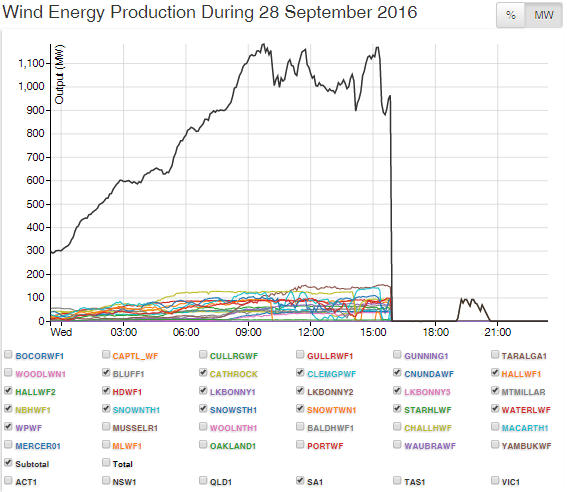
There are, as this site has pointed out over the last decade, myriad reasons, starting with the fact that wind power can only be delivered as and when Mother Nature feels obliged. Britain, as with much of Western Europe, was the victim of the Big Calm that struck in September last year and lasted for months.
Add in the exorbitant cost of using gas and diesel to generate power whenever calm weather sets in; the additional transmission and network costs of bringing power produced occasionally from remote locations; and the billions in subsidies paid to wind power generators all paid for by power consumers and/or taxpayers, and you’re well on your way to an explanation as to why wind power is so punishingly expensive.
Andrew…
View original post 370 more words
The govt knocks down old state houses and builds new ones – but the net result is a waiting list that cries out for demolition
13 May 2022 Leave a comment
It was a simple question about housing and Point of Order listened closely to Housing Minister Megan Woods’ response.
Alas, we are none the wiser on one part of the question, about advice on how long it will take to get the waiting list down to around 5844. But – if we have done our sums correctly – we can tell readers there has been a hefty increase in the numbers of people on the state housing waiting list over the past five years.
We took a crack at working this out after Parliamentary questions were put by National MP Chris Bishop to the Associate Minister of Housing (Public Housing), who presumably was not in Parliament at the time. Megan Woods did the answering.
Bishop asked:
“How many people are on the State housing waitlist now compared to September 2017, and has she received advice on when that number will…
View original post 942 more words
THOSE DAMNED POLLS CAN BE A CAREER THREAT AYE
13 May 2022 Leave a comment
A week is a long time in politics, so said Harold Wilson.
One week ago the police were saying they were sufficiently resourced and in control.
One week ago the Police Minister Potato Williams, was, on her own assessment, on top of her game.
One week ago New Zealand was a nation at peace with crime under good management of Commissione Coster so any talk of Labour Being “soft on Crime” only mere baseless denigration by misogynistic dog whistling of males unable to accept a “Female Minister”
Forward seven days and suddenly there is a need for an additional six hundred million dollars to be spent over four years?
The Government will spend an extra $562m on police over the next four years – promising to keep a ratio of one cop for every 480 people.
It comes as ramraids have gained significant national media attention, despite an overall drop…
View original post 573 more words
If the Pro-VAT Cheering Section Succeeds, America Will Be Saddled with a Bigger Welfare State
13 May 2022 Leave a comment
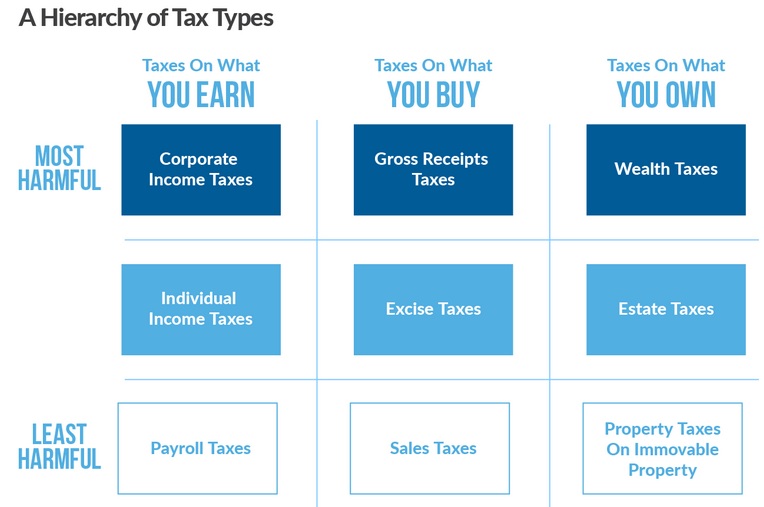
As I’ve written before, our fight to restrain the size and scope of government will be severely hamstrung – perhaps even mortally wounded – if the crowd in Washington ever succeeds in getting a value-added tax as a new source of revenue.
This is why many statists are pushing so hard for the VAT. It’s a money machine for big government.
But what makes this battle especially frustrating is that there are some otherwise sensible people who are on the wrong side of the issue. I was stunned, for instance, when Rand Paul and Ted Cruz included VATs as part of their presidential tax plans.
And I’ve been less surprised, but still disappointed, to find support for a VAT from people such as Tom Dolan, Greg Mankiw, and Paul Ryan, as well as Kevin Williamson, Josh Barro, and Andrew Stuttaford. And I wrote…
View original post 1,311 more words
The Value-Added Tax Leads to Higher Income Tax Burdens
13 May 2022 Leave a comment
As part of my (reality-based) opposition to a value-added tax, I testified to the Ways & Means Committee back in 2011.
My primary argument against the VAT is that it would enable a bigger burden of government spending.
I frequently share this chart, for instance, that shows that the nations in Western Europe were quite similar to the United States back in the 1960s,
with government budgets that consumed about 30 percent of economic output.
That was before they enacted VATs.
But once European politicians got that new source of revenue, the spending burden diverged, with the welfare state becoming a much larger burden in Western Europe than in the United States.
In other words, the VAT was a money machine for big government.
That argument is just as accurate today as it was back in 2011.
For today’s column, however, I want to…
View original post 519 more words
Why SpaceX is Making Starlink
13 May 2022 Leave a comment
in economics of information, entrepreneurship Tags: space
Scalia and Thomas on a federal abortion ban
13 May 2022 Leave a comment
in comparative institutional analysis, constitutional political economy, discrimination, gender, law and economics Tags: abortion rights, constitutional law, federalism


Richard Epstein on The Unfulfilled Promise of the Anti Discrimination Laws
13 May 2022 Leave a comment
in comparative institutional analysis, constitutional political economy, discrimination, gender, human capital, labour economics, law and economics, liberalism, libertarianism, poverty and inequality, Richard Epstein Tags: racial discrimination, sex discrimination
Deathly Silence: Green Groups Complicit in Wind Industry’s Endangered Eagle Slaughter
12 May 2022 Leave a comment
So-called green groups that help cover up the wind industry’s rampant slaughter of birds and bats are just as guilty as those who directly profit from the carnage.
A fair proportion of their practised acquiescence is explained by bags of cash – aka helpful “donations” from outfits such as NextEra to the likes of the Sierra Club. But not all. Running silent is one thing, running interference is something altogether more sinister.
Robert Bryce lists the lid on a particularly toxic brand of virtue signalling hypocrisy.
America’s Biggest ‘Green’ Groups Love Wind Turbines, Not Eagles
Real Clear Energy
Robert Bryce
20 April 2022
I’m old enough to remember when environmentalists cared about protecting our birds, bats, and whales. Alas, concern about protecting our wildlife has been lost amid the headlong rush to cover the countryside with oceans of solar panels and forests of wind turbines in the hope that they…
View original post 1,323 more words
Switzerland, Decentralization, and Tax Competition
12 May 2022 Leave a comment
There are many reasons to admireSwitzerland.
The nation’s very effectivespending cap.- The nation’s libertarian-leaninggovernance.
- The nation’s system of private pensions.
- The nation’s genuine decentralization.
- The nation’s support for gun rights.
- The nation’s high public sector efficiency.
For today, let’s focus on how tax competition is one of the benefits of Swiss decentralization.
More specifically, most fiscal policy (both taxes and spending) takes place at the cantonal and municipal level. And this means that the Swiss can vote with their feet if they want more government or less government.
Not surprisingly, they tend to move to lower-tax areas. In a summary for VoxEU, Isabel Martínez shares some of her research on the impact of tax cuts and tax competition in the canton of Obwalden.
…economic research has made important contributions, showing that top earners indeed relocate across borders for…
View original post 616 more words
Inflation Has Wiped Out Average Wage Gains During the Pandemic (maybe)
12 May 2022 Leave a comment
The latest CPI inflation report didn’t have a huge surprise in the headline number, with 8.3% being very similar to last month. But with the two most recent months of data, we can now see something very unfortunate in the data: cumulative inflation during the pandemic as measured by the CPI-U (11.6%) has now almost matched average wage growth (12.0%), as measured by the average wage for all private workers. I start in January 2020 for the pre-pandemic baseline.
What this means is that inflation-adjusted wages in the US are no greater than they were before the pandemic. They are almost identical to what they were in February 2020 (just 2 cents greater). But as regular readers will know, the CPI-U isn’t the only measure of inflation, and there’s good reason to believe it’s not the best. One alternative is the Personal Consumption Expenditures price index. Cumulative inflation…
View original post 403 more words


Recent Comments