David Levine | Address and Q&A on patents and copyright| Oxford Union Web Series
11 May 2022 Leave a comment
in applied price theory, applied welfare economics, comparative institutional analysis, economic history, entrepreneurship, history of economic thought, income redistribution, industrial organisation, law and economics, property rights, Public Choice Tags: patents and copyright
The Battle of Verdun – They Shall Not Pass I THE GREAT WAR – Week 83
10 May 2022 Leave a comment
in defence economics, war and peace Tags: World War I
Net-Zero ‘Green’ Reset Designed to Destroy Our Reliable & Affordable Power Supplies
10 May 2022 Leave a comment
Net-zero carbon dioxide gas emissions targets are designed to destroy the reliable and affordable power supplies that have brought prosperity to billions around the globe. Dressed up in marketing blurb, net-zero targets sound cheap, but with energy supplies there is no such thing as a free lunch. Plenty of household and businesses have already worked out that the great wind and solar scam brings with it rocketing power prices and routine power rationing.
But that is precisely what punitive mandated renewable energy targets and massive subsidies to wind and solar were designed to do.
On 21 May, Australians will line up to vote for candidates who might form a Federal government later this month. However, what’s on offer is like choosing between swallowing a string of razorblades and jumping into a pool filled with starving saltwater crocs.
Both main parties, the once conservative Liberals, and the once worker’s champion, Labor…
View original post 998 more words
Scalia and abortion rights
10 May 2022 Leave a comment
in discrimination, gender, law and economics, politics - USA Tags: abortion rights

Problems with Libertarianism (David D. Friedman) – The Turney Collection 1981
10 May 2022 Leave a comment
in David Friedman, economics of crime, law and economics, libertarianism, property rights
Renewable Energy Rip-Off: How Price Gougers Profit From Sunset & Calm Weather
09 May 2022 Leave a comment
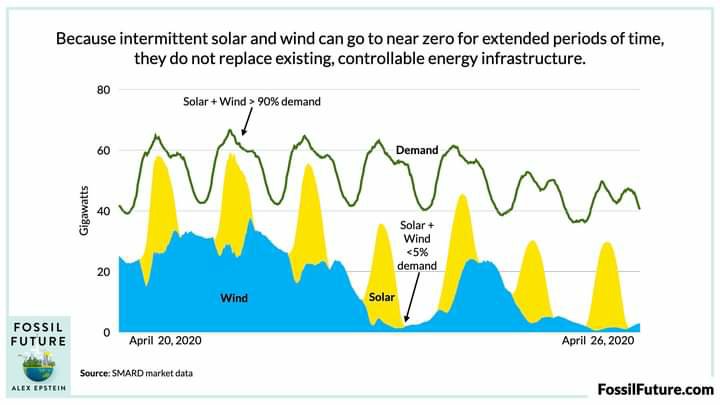
Intermittent wind and solar are a natural guarantee of grid chaos and rocketing power prices. every single country that’s chased the wind and solar pipe dream has watched their power prices go through the roof, with no exception.
Don’t say we didn’t warn you. STT has been banging on about this since December 2012. The graphic above from Dr Michael Crawford spells it out: add massively subsidised and chaotically intermittent wind and solar to your power grid and watch power prices spiral out of control.
As STT has pointed out a number of times, the gaming that’s the subject of the ACCC’s interest is a natural consequence of a very natural set of phenomena: wind and solar power output collapses, that occur whenever the sun sets and/or calm weather sets in:
Wind Power Output Collapses Send Power Prices into Orbit: The World’s Biggest Joke Just Got Serious
and
View original post 711 more words
How Farmers Accidentally Killed Off North America’s Locusts
09 May 2022 Leave a comment
in economic history, economics of education
Extreme Weather during the Maunder Minimum
08 May 2022 Leave a comment
By Paul Homewood
Extreme Weather during the Maunder Minimum (1645–1715 A.D.)
The region around the eastern Mediterranean (the Ottoman Empire) was severely affected by adverse climate during the Maunder Minimum.
Most areas suffered drought and plague in the 1640’s, the 1650’s and again in the 1670’s, while the winter of 1684 was the wettest recorded in the eastern Mediterranean during the past five centuries, and the winters of the later 1680’s were at least 3° C cooler than today.
In 1687 a chronicler in Istanbul, Turkey reported ‘This winter was severe to a degree that had not been seen in a very long time. For fifty days the roads were closed and people could not go outside. In cities and villages, the snow buried many houses. In the Golden Horn [major urban waterway and the primary inlet of the Bosphorus in Istanbul], the…
View original post 10,463 more words
Brexit is not to blame for the surge in UK inflation
08 May 2022 Leave a comment
(Written on 2 May) Ouch! It looks increasingly likely that the headline measure of consumer price inflation is going to start with a ‘9’ in April (official data will be released on 18 May).
Most economists had expected a jump from 7pc in March to around 8.5pc. This assumed that the price increases we already know about – notably the 54pc hike in the Ofgem cap on domestic energy bills – would be at least partly offset by slower inflation elsewhere.
Unfortunately, this doesn’t appear to have happened. In particular, petrol and diesel prices have edged up further, despite the 5p cut in fuel duty, and food price inflation is continuing to rise. These pressures have been compounded by the geopolitical risks that Liam Halligan explained well in the Sunday Telegraph.
I have therefore upped my own forecast to 9pc for consumer price index (CPI) inflation in April, with the…
View original post 981 more words
Robert Hetzel – “New Keynesianism in central banking: friend or foe?”
08 May 2022 Leave a comment
in business cycles, economic growth, great recession, history of economic thought, inflation targeting, macroeconomics, monetarism, monetary economics
Baldrick’s ‘cunning plan’: A health restructuring transition unit without a transition plan
07 May 2022 Leave a comment
On 21April 2021 Minister of Health Andrew Little announced a major restructuring of Aotearoa New Zealand’s health system involving three main changes to take effect on 1July 2022. Better understanding the third of these changes is helped by drawing upon Baldrick of the Blackadder television comedy.
The first two changes are commendable; the establishment of the Maori Health Authority (MHA) and the new crown public health agency (located within the Ministry of Health). They both have the potential to sharpen the effectiveness of addressing the impact of external social determinants of health, wellbeing, and access to quality patient care treatment.
Establishing these two new entities does not of themselves disrupt or destabilise the health system. Both new entities could established without any other restructuring, aside from transferring some functions to them presently performed by the health ministry.
Removing the ‘point of connection’
But the third change does disrupt and destabilise…
View original post 1,423 more words


Recent Comments