Veteran lefty conceded over two decades of real wages growth in @Dompost
23 Apr 2022 Leave a comment
in applied welfare economics, economic growth, economic history, labour economics, politics - New Zealand, poverty and inequality, welfare reform Tags: pessimism bias, regressive left

Anti-Economics from the Economist
23 Apr 2022 Leave a comment
Since I just landed in London, it appropriate that today’s column will be based on an article in the U.K.-based Economist.
A recent issue of the magazine included an article lauding the Internal Revenue Service.
Why?
What could the bureaucrats have done to earn praise?
You’ll be amazed to learn that the Economist believes the IRS helped the economy by becoming a vehicle for income redistribution.
I’m not joking. Here are some excerpts from the article.
Despite its awful backlog, the irs has, from another perspective, had a very good pandemic. It has played a critical role in delivering support to Americans. And it has been surprisingly efficient at it. For each of the three rounds of stimulus payments, the irs was the conduit.
Within two weeks of Mr Biden’s signing of the stimulus bill in March 2021, for instance, it sent out $325bn via 127m separate…
View original post 430 more words
Gas On The Western Front – Baptism of Fire for Canada I THE GREAT WAR Week 39
23 Apr 2022 Leave a comment
in defence economics, laws of war, war and peace Tags: World War I
Democracy Watch Wishes that It Could Quit the Fixed-Date Election Law
23 Apr 2022 Leave a comment
Introduction
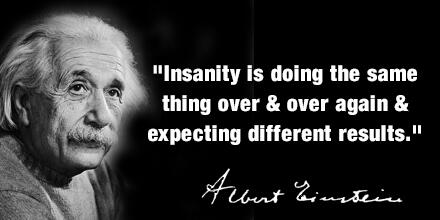
Democracy Watch touts itself as “the most effective and successful national citizen advocacy group in Canada at winning systemic changes to key laws since […] 1993.”[1] But it has certainly not met with success in its quixotic crusade against the true nature of Canada’s fixed-date election laws. On the contrary, Democracy Watch, the dissolution-chasing advocacy group undaunted by a series of judicial defeats, has now suffered its sixth rout since 2009 and has come one step closer to proving the colloquial definition of insanity as trying the same thing over and over and expecting different results. Justice Russel W. Zinn’s ruling in Democracy Watch et al. v Prime Minister of Canada et al. follows closely on the heels of Democracy Watch v New Brunswick (the Attorney General), where Justice E. Thomas Christie delivered Democracy Watch another embarrassing defeat on 29 October 2021.[2] The…
View original post 4,660 more words
Boris Johnson accused of misleading the public on the rising cost of green energy levies
22 Apr 2022 Leave a comment

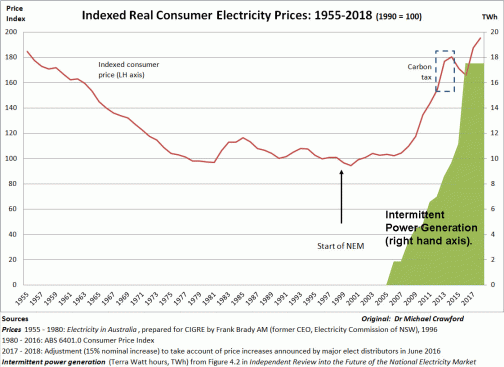
Our Boris misleading? Where have we heard that one before? The government likes to pretend ‘green’ subsidies are doing people a favour and somehow saving the climate, but they aren’t.
– – –
Net Zero Watch has accused the Prime Minister of being economical with the truth about the cost of renewable energy levies.
Speaking during his visit to India, Mr Johnson rejected growing calls for scrapping green levies on energy bills, claiming that renewable energy “has helped to reduce bills”.
View original post 151 more words
Wind Farms Keep Being Wiped Out By Wild Weather: Tornadoes and Turbines Don’t Mix
22 Apr 2022 Leave a comment
These things are meant to save us from a changing climate but, when the weather turns wild, they can barely save themselves. 50-60m long blades, weighing in at 20 tonnes each, are usually the first item to be shredded and thrown in all directions (the wind industry uses the neutral term “component liberation”).
Then, if serious breezes persist, the whole kit and caboodle hits the dirt; which means all three of those 20-tonne blades join the 90-tonne nacelle (which houses the gearbox and generator) in an exhilarating 100m freefall.
When the wind goes beyond gale force, you can forget about receiving any meaningful electricity. Indeed, wind speeds barely need to reach gale force and these things go into automatic shutdown, as appears on German turbine maker, Siemen’s website – which has this to say about the automatic shutdown of wind turbines when wind speeds hit 25m/s (90km/h):
Nature presents us with…
View original post 388 more words
Some derivations from the uses of the terms “knowledge” and “information” in F. A. Hayek’s works.
22 Apr 2022 Leave a comment
In 1945, Friedrich A. Hayek published under the title “The Use of Knowledge in Society,” in The American Economic Review, one of his most celebrated essays -both at the time of its appearance and today- and probably, together with other studies also later compiled in the volume Individualism and Economic Order(1948), one of those that have earned him the award of the Nobel Prize in Economics, in 1974.
His interpretation generates certain perplexities about the meaning of the term “knowledge”, which the author himself would clear up years later, in the prologue to the third volume of Law, Legislation and Liberty (1979). Being his native language German, Hayek explains there that it would have been more appropriate to have used the term “information”, since such was the prevailing meaning of “knowledge” in the years in which such essays had been written. Incidentally, a similar clarification is…
View original post 1,566 more words
The Lucas critique summarised by Freeman and Champ
22 Apr 2022 Leave a comment
in budget deficits, business cycles, economic growth, labour economics, labour supply, macroeconomics, monetarism, monetary economics, Robert E. Lucas


More Than 600 Brands Have Withdrawn From Russia. How Are Russians Coping? | @WSJ
21 Apr 2022 Leave a comment
in defence economics, international economics, International law, war and peace
Edward Prescott doesn’t hold back on macroeconomics and central banks
21 Apr 2022 Leave a comment
in business cycles, Edward Prescott, global financial crisis (GFC), great recession, history of economic thought, macroeconomics, monetary economics
Powering Down: Wind & Solar ‘Transition’ Mean End of Reliable & Affordable Power
21 Apr 2022 Leave a comment
Once upon a time, governments strived to ensure their citizens had access to reliable and affordable electricity. That was then. This is now.
A cabal of wind and solar rent-seekers and their political enablers are determined to control every aspect of your daily life, by preventing you from having electricity, as and when you need it.
If you think that the Great Green Reset is not a work in progress, we suggest you read on.
Examining California’s Renewable Energy Plan
California Globe
Edward Ring
8 March 2022
If you live in California, by now you’ve probably seen the ads, either on prime time television or online, exhorting you to “Power Down 4 to 9PM.” These ads are produced by “Energy Upgrade California,” paid for by “investor-owned energy utility customers under the auspices of the California Public Utilities Commission and the California Energy Commission.”
According to the mission of Energy Upgrade…
View original post 1,879 more words
Thomas Piketty on the Politics of Equality | Conversations with Tyler
21 Apr 2022 Leave a comment
in applied price theory, economic history, economics of education, history of economic thought, human capital, income redistribution, labour economics, labour supply, occupational choice, poverty and inequality, Public Choice, public economics Tags: envy, top 1%
Corporate Taxes and the Laffer Curve
21 Apr 2022 Leave a comment
During the debate about the Trump tax plan, proponents made three main arguments in favor of reducing the federal corporate tax rate from 35 percent to 21 percent.
- A lower rate would be good for workers, consumers, and shareholders.
- A lower rate would boost American competitiveness.
- A lower rate would produce some revenue feedback for the IRS.
The last item involves the “Laffer Curve,” which is a graphical representation of the non-linear relationship between tax rates and tax revenue.
Put in simple terms, entrepreneurs, investors, and business owners have more incentive to earn money when tax rates are modest.
High tax rates, by contrast, discourage productive behavior while also giving people a bigger incentive to find loopholes and other ways of avoiding tax.
This does not mean that lower tax rates produce more revenue, though that sometimes happens.
The main takeaway is the most…
View original post 598 more words


Recent Comments