Critical Power Grab: How Putin Profits From The West’s Wind & Solar Obsession

stopthesethings's avatarSTOP THESE THINGS

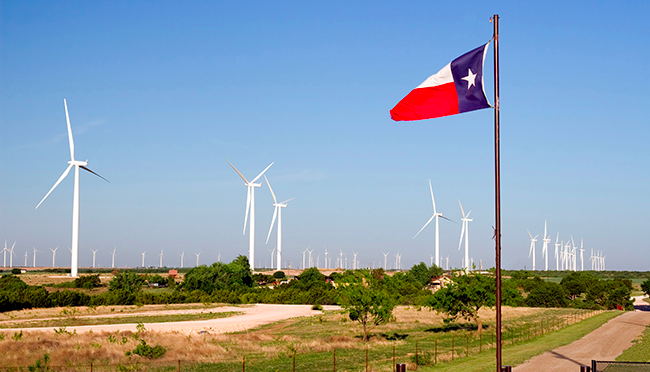
Europe’s ‘inevitable’ transition to wind and solar is in tatters, as Vlad Putin rips up Ukraine and delivers an energy pricing and supply calamity to shellshocked Europeans.

The idea that got them there was fairly simple: carpet Europe with millions of solar panels and wind turbines and use Russian oil and gas to keep the lights on whenever the sun sets and/or calm weather sets in.

So confident were Europe’s energy intelligentsia on the merits of the plan, that the Germans mandated an ignominious end for not only their coal-fired power plants, but their perfectly functional nuclear plants, as well.

It’s almost as if Vlad and his gang of KGB thugs had free rein to set the ground rules, with an eye on a very lucrative and steady income stream.

As Queensland Nationals Senator, Matt Canavan points out below, the events in Europe have caused a dramatic shift in thinking…

View original post 837 more words

Should ‘Witches’ Receive Posthumous Pardons?

Krista Kesselring's avatarLegal History Miscellany

Recent reports suggest that the Scottish government plans to pardon people convicted under the terms of the Witchcraft Act of 1563—mostly women—in response to a petition organized by Claire Mitchell, Queen’s Counsel.[1] The proposal prompts questions about the histories of both witchcraft and posthumous pardoning. What are such pardons for in the present and what might they do to popular understandings of the past?

Despite some news reports’ references to pardons for British ‘witches’, and arguments that people condemned for the crime in England ought to be pardoned, too, the current proposal relates to those convicted in Scotland alone. Both Scottish and English parliaments passed measures against witchcraft in 1563; in 1735/6, the post-union British parliament abolished the death penalty for ‘any kind of witchcraft, sorcery, inchantment or conjuration’ both north and south of the border. But the histories differed in the two jurisdictions in the years in between…

View original post 2,397 more words

Giant impact crater in Greenland occurred a few million years after dinosaurs went extinct

oldbrew's avatarTallbloke's Talkshop

Credit: Uwe Dedering @ Wikipedia
Another crater controversy ends as two different dating methods produced the same result.
– – –
Danish and Swedish researchers have dated the enormous Hiawatha impact crater, a 31 km-wide asteroid crater buried under a kilometer of Greenlandic ice, says the University of Copenhagen.

The dating ends speculation that the asteroid impacted after the appearance of humans and opens up a new understanding of Earth’s evolution in the post-dinosaur era.

Ever since 2015, when researchers at the University of Copenhagen’s GLOBE Institute discovered the Hiawatha impact crater in northwestern Greenland, uncertainty about the crater’s age has been the subject of considerable speculation.

Could the asteroid have slammed into Earth as recently as 13,000 years ago, when humans had long populated the planet? Could its impact have catalyzed a nearly 1,000-year period of global cooling known as the Younger Dryas?

View original post 268 more words

Gaol and Gaol-breaking in Early Modern Ireland

legalhistorymiscellany's avatarLegal History Miscellany

Posted by Coleman A. Dennehy, 13 March 2022

Whilst many aspects of the state as we would understand it today were more likely under-developed if they existed at all, the gaol was actually a reasonably prominent and regular feature of the medieval English state in Ireland. Places of strength, designed to hold an individual before their trial or after their trial whilst they awaited punishment, are likely to have been a feature of most English towns, cities, and counties in Ireland since the earliest decades of the development of English law in the early years of the thirteenth century, if not earlier.[1]

However, it is noteworthy that places of incarceration or detention were not a prominent feature of medieval Gaelic law in Ireland. The brehon legal system dealing with what we might today consider crime was one which was primarily a system of torts, whereby those wronged (or their…

View original post 3,279 more words

Whither US Oil Production?

Now Boris maps his way OUT of Net Zero agenda: PM sets up oil and gas taskforce to plot a way out of the energy crisis

The House of Windsor: George VI (1936-1952)

Great Books Guy's avatarGreat Books Guy

Stuttering and shy, Prince Albert Frederick Arthur George “Bertie” was named after his great-grandfather, Prince Albert. As a child, he was nervous and sickly, facing numerous physical limitations. The one thing he longed for was affection from his stoic, and emotionally distant parents. In 1913, Bertie began serving in Royal Navy, even serving at the Battle of Jutland (the largest naval engagement in World War I), but chronic gastric troubles and a painful ulcer sent Bertie home where he became bedridden in Buckingham Palace. Despite the pain, the on-call doctor was dismayed to find minimal affection from Bertie’s parents toward their suffering son.

After the war, Bertie spent a year studying at Cambridge University. He then fell into an affair with a married Australian socialite, Lady Loughborough, but his father persuaded him against pursuing marriage with this mistress (any more affairs with married women would surely bring scandal upon the…

View original post 947 more words

Bizarre Ways People From Victorian England Mourned The Dead

Trade creation and trade diversion for NZ lamb imports into the UK

Submission on international treaty select committee examination of the UK trade agreement

I am submitting in my personal capacity opposing the agreement. To quote John Cochrane on how long free trade agreements should be:

Nafta and the like are often called “free trade agreements.” Economists like me wonder, why does that take tens of thousands of pages? “We do not charge border taxes (tariffs), nor restrict quantities, nor will government purchases favor American companies.” “We do the same.” Done. That’s free trade. This little snippet reminds us what trade pacts really are.

Free trade agreements (longer than a few sentences) are at best suspect. That is not me saying this. That is Paul Krugman, his generation’s leading trade theorist. Krugman argues that you should start as a mild opponent of any free trade agreement. Closely inspect the baggage they carry; environment and labour chapters, intellectual property, investor state dispute settlement (ISDS) and government procurement such as Pharmac. Start with a sceptical eye.

These add-on chapters are the costs of free trade agreements that are relatively obvious to the untrained eye. No technical economics is yet required to suspect that any trade agreement will be an opportunity for special interests on the right and the left, both unions and big corporations, to feather their own nest. Longer patent lives, more stringent enforcement of overseas copyrights, Pharmac buying more expensive drugs, and so on in return for tariff cuts in export markets.

But let us start with what is claimed as the benefits by the government. In about 20-years’ time, the agreement will boost New Zealand’s annual real GDP by between NZ$710 million and NZ$811 million (0.10% – 0.12%) relative to the 2040 modelled baseline. A tiny amount.

The gains from behind the border changes are never easy to quantify because even the most impartial spectators can disagree amongst themselves on whether these regulations are a plus or minus to begin with, so they cannot agree on whether reducing or increasing them are a plus or not.

The only time tariff cuts are suspect is when they are part of a free trade agreement. The reason is trade diversion. A technical concept which MFAT does not know about because I received a nil response to an Official Information Act request about their TPPA advice to ministers about the costs and benefits including any reference to trade diversion. Trade diversion in not mentioned in the national interests analysis of the UK agreement.

We have been of the rough end of trade diversion in the two biggest trade agreements to affect us. When Britain entered the Common Market in 1973, they stop buying cheap New Zealand lamb in favour of expensive French lamb. The tariff revenue collected by the British on our lamb exports was converted into payments to prop up hopelessly inefficient French farmers. British consumers paid the same or more for lamb and there was no tariff revenue to collect.

New Zealand car buyers then got screwed by Closer Economic Relations. Instead of buying cheap Japanese imports and collecting a tariff, Holdens and Fords became cheap because they did not pay this tariff. Cars were not cheaper for New Zealand buyers; the tariff revenue went off to Australian car manufacturers as higher import prices to keep their hopelessly inefficient car plants open.

Thankfully, there is no investor-state dispute settlement chapter in the agreement. Investor-state dispute settlement has no place in trade agreements between democracies. They have the rule of law where investors can take their chances in domestic politics just like the rest of us. Yes, there will be breathless populism from the left or right from time to time, such as recently over foreign land sales, but by and large foreign investment is welcome and gets a fair deal.

Developing countries offered to sign on to investor state dispute settlement because their own courts are corrupt. Maybe investor state dispute settlement worked 50 years ago when investment in developing countries was tiny and handled by a few big players who might get picked on by politicians looking for a few cheap votes or more likely, a backhander to the Swiss bank account.

Now there is broad-based trade and investment in developing countries despite their corrupt courts and dodgy politicians. Many exporters and investors are willing to take their chances. When the local politicians and bureaucrats get rough, investors have already factored that in by backing investments with high enough returns to compensate for these risks. Tourists buy travel insurance and keep their eyes open; investors know the rules abroad are different and must be just as watchful.

Japan, Singapore, South Korea, Hong Kong, Taiwan and the other Asian Tigers and now India too managed to have development miracles without investor state dispute settlement. Extreme poverty dropped by about 1/3rd around the globe over the decade or so course of the TPPA negotiations and far more than that in China so I think they are getting on pretty well without it.

Most of these points are lost in the debate on the TPPA because too many of its opponents are motivated by anti-capitalist or anti-foreign sentiments rather than cost benefit analysis. They would oppose a trade agreement solely about tariffs that lowered prices to New Zealand consumers.

Not every trade negotiation is successful. For some, you reach the point where you must walk away. More so because of all the baggage loaded up into trade agreements in the last few decades.

Speaking of the anti-science left

The Original Climate Crisis: How the Little Ice Age Devastated Early Modern Europe

oldbrew's avatarTallbloke's Talkshop

Frost fair
The key phrases in this article could be: ‘Whatever its causes’ and ‘Average temperatures in the British Isles cooled by 2°C’. Climate science is unable to offer a specific explanation, although theories abound, but natural variation for whatever reasons is built-in and always will be. Quantifying it remains out of reach, but computer models are still supposed to be the answer to everything climate.
– – –
Just as the UK was recovering from storms Eunice and Franklin, scientists of UN’s Intergovernmental Panel on Climate Change (IPCC) released a landmark report warning of a future with spiraling weather extremes, fiercer storms, flash flooding, and wildfires, says The Conversation (via Singularity Hub).

This isn’t the first time that Britain has experienced drastic climate change, however. By the 16th and 17th centuries, northern Europe had left its medieval warm period and was languishing in what is sometimes called the…

View original post 283 more words

David K. Backus Memorial Lecture 2019: Timothy J. Kehoe

Why the V1 Flying Bomb couldn’t turn the tide of WW2

Another feather in the cap of Real business cycle theory

Image

Previous Older Entries Next Newer Entries

Thoughts from the North

Celebrating humanity's flourishing through the spread of capitalism and the rule of law

Fardels Bear

A History of the Alt-Right

Vincent Geloso

Econ Prof at George Mason University, Economic Historian, Québécois

Bassett, Brash & Hide

Celebrating humanity's flourishing through the spread of capitalism and the rule of law

Truth on the Market

Scholarly commentary on law, economics, and more

The Undercover Historian

Beatrice Cherrier's blog

Matua Kahurangi

Celebrating humanity's flourishing through the spread of capitalism and the rule of law

Temple of Sociology

Celebrating humanity's flourishing through the spread of capitalism and the rule of law

Velvet Glove, Iron Fist

Celebrating humanity's flourishing through the spread of capitalism and the rule of law

Why Evolution Is True

Why Evolution is True is a blog written by Jerry Coyne, centered on evolution and biology but also dealing with diverse topics like politics, culture, and cats.

NoTricksZone

Celebrating humanity's flourishing through the spread of capitalism and the rule of law

Homepaddock

A rural perspective with a blue tint by Ele Ludemann

Kiwiblog

DPF's Kiwiblog - Fomenting Happy Mischief since 2003

The Dangerous Economist

Celebrating humanity's flourishing through the spread of capitalism and the rule of law

Watts Up With That?

The world's most viewed site on global warming and climate change

The Logical Place

Tim Harding's writings on rationality, informal logic and skepticism

Doc's Books

A window into Doc Freiberger's library

The Risk-Monger

Let's examine hard decisions!

Uneasy Money

Commentary on monetary policy in the spirit of R. G. Hawtrey

Barrie Saunders

Thoughts on public policy and the media

Liberty Scott

Celebrating humanity's flourishing through the spread of capitalism and the rule of law

Point of Order

Politics and the economy

James Bowden's Blog

A blog (primarily) on Canadian and Commonwealth political history and institutions

Science Matters

Reading between the lines, and underneath the hype.

Peter Winsley

Economics, and such stuff as dreams are made on

A Venerable Puzzle

"The British constitution has always been puzzling, and always will be." --Queen Elizabeth II

The Antiplanner

Celebrating humanity's flourishing through the spread of capitalism and the rule of law

Bet On It

Celebrating humanity's flourishing through the spread of capitalism and the rule of law

History of Sorts

WORLD WAR II, MUSIC, HISTORY, HOLOCAUST

Roger Pielke Jr.

Undisciplined scholar, recovering academic

Offsetting Behaviour

Celebrating humanity's flourishing through the spread of capitalism and the rule of law

JONATHAN TURLEY

Res ipsa loquitur - The thing itself speaks

Conversable Economist

In Hume’s spirit, I will attempt to serve as an ambassador from my world of economics, and help in “finding topics of conversation fit for the entertainment of rational creatures.”

The Victorian Commons

Researching the House of Commons, 1832-1868

The History of Parliament

Articles and research from the History of Parliament Trust

Books & Boots

Reflections on books and art

Legal History Miscellany

Posts on the History of Law, Crime, and Justice

Sex, Drugs and Economics

Celebrating humanity's flourishing through the spread of capitalism and the rule of law

European Royal History

Exploring the Monarchs of Europe

Tallbloke's Talkshop

Cutting edge science you can dice with

Marginal REVOLUTION

Small Steps Toward A Much Better World

NOT A LOT OF PEOPLE KNOW THAT

“We do not believe any group of men adequate enough or wise enough to operate without scrutiny or without criticism. We know that the only way to avoid error is to detect it, that the only way to detect it is to be free to inquire. We know that in secrecy error undetected will flourish and subvert”. - J Robert Oppenheimer.

STOP THESE THINGS

The truth about the great wind power fraud - we're not here to debate the wind industry, we're here to destroy it.

Lindsay Mitchell

Celebrating humanity's flourishing through the spread of capitalism and the rule of law

Alt-M

Celebrating humanity's flourishing through the spread of capitalism and the rule of law