
From https://supreme.justia.com/cases/federal/us/576/14-7955/#tab-opinion-3428058
Celebrating humanity's flourishing through the spread of capitalism and the rule of law
01 Feb 2022 Leave a comment
in economics of crime, law and economics, politics - USA
01 Feb 2022 Leave a comment
01 Feb 2022 Leave a comment

Topping the list of things that seemed like a good idea at the time sits wind and solar power.
What, with the energy sources that drive them free and natural; with no visible emissions of spent gas or fumes; with their shiny panels harvesting the sun’s rays and delivering electricity for five or six hours a day (rain and cloud cover permitting); with their majestic 50-60m blades lovingly caressing benevolent breezes and thereby ‘powering’ hundreds of thousands of homes (around-the-clock, according to wind industry marketing blurb), why wouldn’t the gullible masses be sucked into the belief that sunshine and breezes will soon deliver all of our energy needs, forevermore?
That was then. This is now.
The increasing reliance on the unreliables has been revealed for what it is: sheer lunacy.
But this is stupidity with a kicker: the blackouts caused by sudden and unpredictable collapses in wind and solar output…
View original post 571 more words
31 Jan 2022 Leave a comment
in economics of crime, law and economics, politics - USA
31 Jan 2022 Leave a comment
Born in 1819, Victoria was the only child of Prince Edward, Duke of Kent and Strathearn, and Princess Victoria of Saxe-Coburg-Saalfeld, Duchess of Kent. Tragically, her father died shortly after Victoria was born and her mother then fell under the alluring spell of John Conroy, her comptroller and personal secretary, a man upon whom the eyes of history have not looked favorably. He was considerably ambitious, apparently plotting with Victoria’s mother to keep the young princess locked away in Kensington Palace under the strict tutelage of her governess, Baroness Lehzen. Young Victoria had a secluded and lonely life. She was reared to be neither weak nor submissive, as in the tradition of the Whigs, but her freedom and joy was very much repressed under what became known as the “Kensington System,” a rigid series of rules intended to keep Victoria a puppet when she eventually became queen, as well as…
View original post 2,571 more words
31 Jan 2022 Leave a comment
My home province of Quebec in Canada has been under lockdown since the Holidays (again). At 393 days of lockdown since March 11th 2020, Quebec has been in lockdown longer than Italy, Australia and California (areas that come as examples of strong lockdown measures). Public health scientists admit that the Omicron variant is less dangerous. But the issue is not the health danger, but rather the concern that rising hospitalizations will cause an overwhelming of an exhausted health sector.
And to be sure, when one looks at the data on hospital bed capacity and use-rates, you find that the intensity of lockdowns is well-related to hospital capacity. Indeed, Quebec is a strong illustration of this as its public health care system has one of the lowest levels of hospital capacity in the group of countries with similar income-levels. The question then that pops to my mind is “how elastic is…
View original post 415 more words
31 Jan 2022 Leave a comment
A key insight of international economics is that there should be “convergence” between rich countries and poor countries, which is just another way of saying that low-income nations – all other things being equal – should grow faster than high-income nations and eventually attain the same level of prosperity.
The theory is sound, but it’s very important to focus on the caveat about “all other things being equal.” As I explain in this interview from my last trip to Australia, countries with bad policy will grow slower than nations that follow the right policies.
When I discuss convergence, I often share the data on Hong Kong and Singapore because those jurisdictions have caught up to the United States. But I make sure to explain that the convergence was only possible because of good policy.
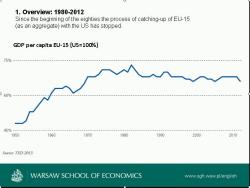 I also share the data showing that Europe was catching up to…
View original post 1,691 more words
31 Jan 2022 Leave a comment
“In 1991, it took two years for anyone to get a telephone landline connection. N. R. Narayana Murthy, head of top software company Infosys, recalls that in the 1980s, it took him three years to get permission to import a computer and over one year to get a telephone connection. “
I only share long videos when they satisfy key criteria, such as being very informative and very educational.
This video from Arthur Brooks is both.
What I like most is that he does a very good job of showing that concern for the disadvantaged is the most important reason to support free markets and limited government.
And he does this by exploring some very interesting and challenging topics, such as Denmark’s unusual mix of free markets and a welfare state (I’ve referred to that country’s public policy as a combination of Dr. Jekyll and Mr. Hyde).
But I want to focus on his discussion of India’s partial economic liberalization. We’ll start by perusing the most-recent edition of Economic Freedom of the World to confirm that there was a significant increase in economic liberty during the 1990s.
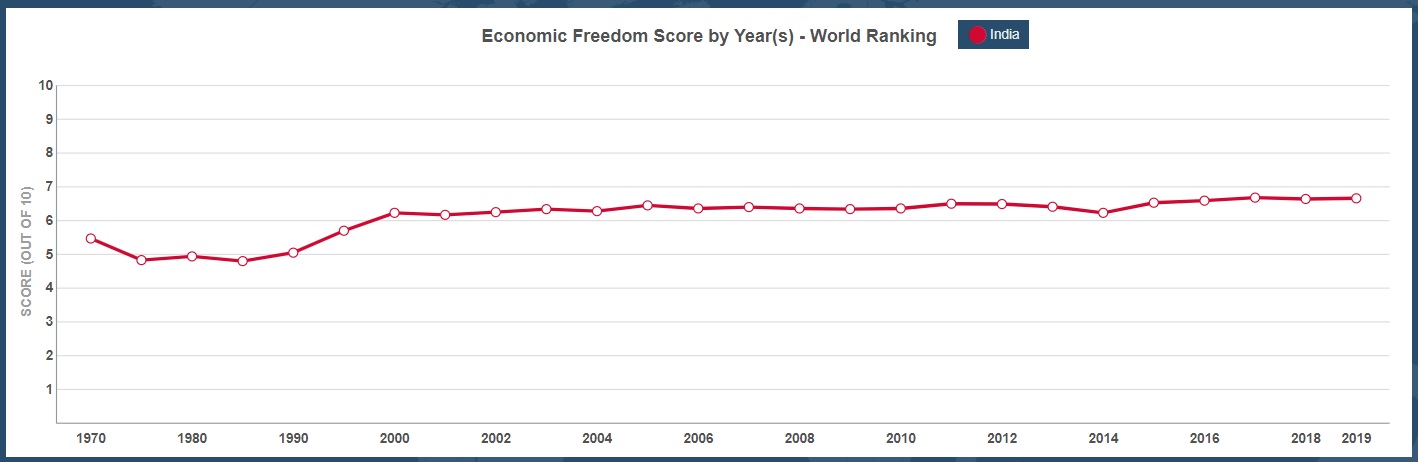
But it’s also important to stress that India’s partial economic liberalization was…well…
View original post 745 more words
31 Jan 2022 Leave a comment
Charles’s beheading was scheduled for Tuesday, January 30, 1649. Two of his children remained in England under the control of the Parliamentarians: Elizabeth and Henry. They were permitted to visit him on January 29, and he bade them a tearful farewell. The following morning, he called for two shirts to prevent the cold weather causing any noticeable shivers that the crowd could have mistaken for fear: “the season is so sharp as probably may make me shake, which some observers may imagine proceeds from fear. I would have no such imputation.”
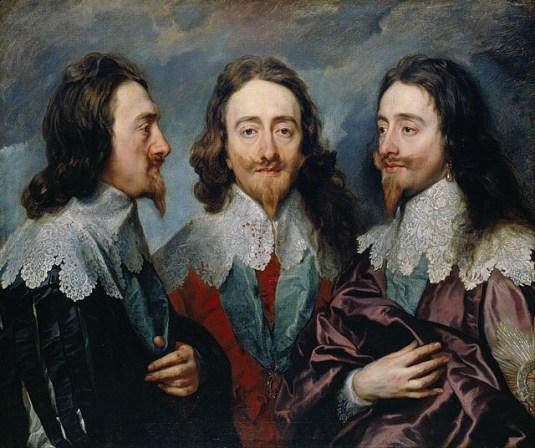 He walked under guard from St James’s Palace, where he had been confined, to the Palace of Whitehall, where an execution scaffold had been erected in front of the Banqueting House. Charles was separated from spectators by large ranks of soldiers, and his last speech reached only those with him on the scaffold. He blamed his fate on his…
View original post 426 more words
30 Jan 2022 Leave a comment
in economics of crime, law and economics, politics - USA
30 Jan 2022 Leave a comment
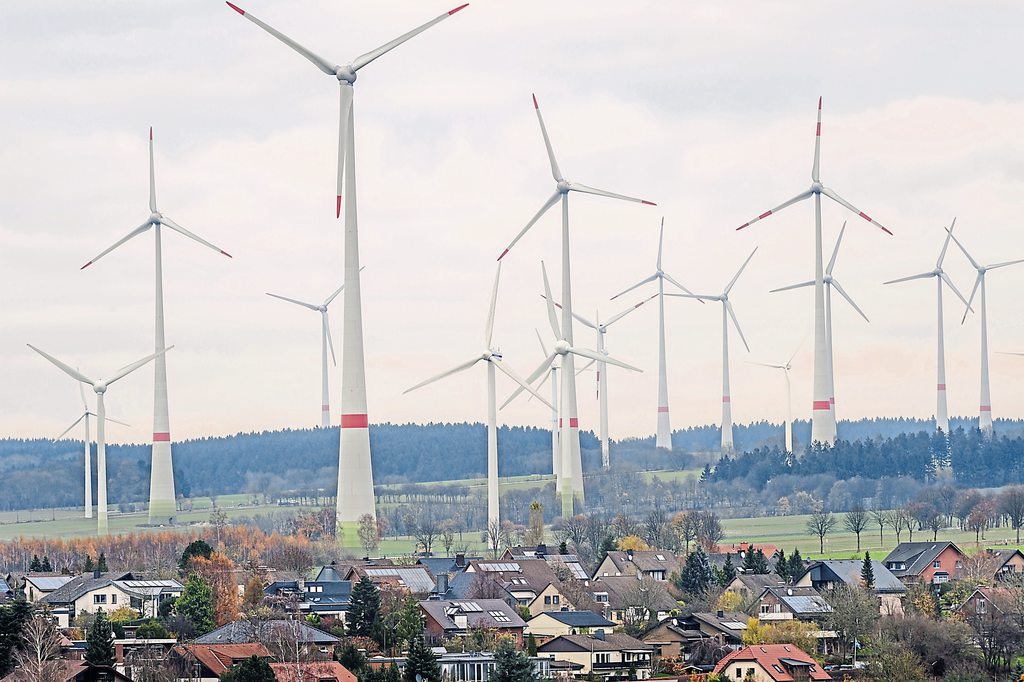
Wind power never adds up: it doesn’t matter how many turbines carpet your horizons, in calm weather total output always amounts to nothing.
For sheer density, the Germans win hands down, with more than 30,000 of these things carpeted across Deutschland’s rural landscapes and, once pristine, forests.
And yet, from late September, through October and well into November last year, wind power output in Germany often ranged between dismal and a doughnut.
Demonstrating that their delusional obsession with wind and solar runs deep, the Germans are determined to axe all of their nuclear and coal-fired power plants, and ‘replace’ the lost output with thousands more wind turbines and solar panels.
As to the former, as this little analysis by Professor Fritz Vahrenholt demonstrates, it simply doesn’t matter how many wind turbines Germany might eventually manage to squeeze into its landscape; when the wind stops blowing, the power stops flowing.
Germany’s…
View original post 702 more words
Celebrating humanity's flourishing through the spread of capitalism and the rule of law
Celebrating humanity's flourishing through the spread of capitalism and the rule of law
Celebrating humanity's flourishing through the spread of capitalism and the rule of law
Celebrating humanity's flourishing through the spread of capitalism and the rule of law
Celebrating humanity's flourishing through the spread of capitalism and the rule of law
Celebrating humanity's flourishing through the spread of capitalism and the rule of law
Celebrating humanity's flourishing through the spread of capitalism and the rule of law
A History of the Alt-Right
Econ Prof at George Mason University, Economic Historian, Québécois
Celebrating humanity's flourishing through the spread of capitalism and the rule of law
Scholarly commentary on law, economics, and more
Beatrice Cherrier's blog
Celebrating humanity's flourishing through the spread of capitalism and the rule of law
Celebrating humanity's flourishing through the spread of capitalism and the rule of law
Celebrating humanity's flourishing through the spread of capitalism and the rule of law
Why Evolution is True is a blog written by Jerry Coyne, centered on evolution and biology but also dealing with diverse topics like politics, culture, and cats.
Celebrating humanity's flourishing through the spread of capitalism and the rule of law
A rural perspective with a blue tint by Ele Ludemann
DPF's Kiwiblog - Fomenting Happy Mischief since 2003
Celebrating humanity's flourishing through the spread of capitalism and the rule of law
The world's most viewed site on global warming and climate change
Tim Harding's writings on rationality, informal logic and skepticism
A window into Doc Freiberger's library
Let's examine hard decisions!
Commentary on monetary policy in the spirit of R. G. Hawtrey
Thoughts on public policy and the media
Celebrating humanity's flourishing through the spread of capitalism and the rule of law
Politics and the economy
A blog (primarily) on Canadian and Commonwealth political history and institutions
Reading between the lines, and underneath the hype.
Economics, and such stuff as dreams are made on
"The British constitution has always been puzzling, and always will be." --Queen Elizabeth II
Celebrating humanity's flourishing through the spread of capitalism and the rule of law
Celebrating humanity's flourishing through the spread of capitalism and the rule of law
WORLD WAR II, MUSIC, HISTORY, HOLOCAUST
Undisciplined scholar, recovering academic
Celebrating humanity's flourishing through the spread of capitalism and the rule of law
Res ipsa loquitur - The thing itself speaks
In Hume’s spirit, I will attempt to serve as an ambassador from my world of economics, and help in “finding topics of conversation fit for the entertainment of rational creatures.”
Researching the House of Commons, 1832-1868
Articles and research from the History of Parliament Trust
Reflections on books and art
Posts on the History of Law, Crime, and Justice
Celebrating humanity's flourishing through the spread of capitalism and the rule of law
Exploring the Monarchs of Europe
Cutting edge science you can dice with








Recent Comments