Richard Dimbleby and Dirk Bogarde’s accounts on what they saw in Bergen Belsen
12 Nov 2021 Leave a comment



It absolutely amazes me that in this day and age there are still people who deny that the Holocaust ever happened. In fact there appears to be an increase of Holocaust deniers.
Some use the picture above, of liberated women in Bergen Belsen as their ‘evidence’ that the Holocaust was a myth. They say of you look at the picture you can see that the women are healthy and seem to be happy. Well of course they were happy, they had just been liberated and they may appear to be healthy, but they are fully covered up and you can’t see the scars and bruises. Additionally some were ‘healthy’ because the human soul and mind is a powerful thing, they just kept going no matter what.
From late 1944, food rations throughout Bergen-Belsen continued to shrink. By early 1945, prisoners would sometimes go without food for days; fresh water was…
View original post 2,541 more words
Glenn Loury, Michael Eric Dyson and Bill Maher talk CRT in schools
12 Nov 2021 Leave a comment
in discrimination, economics of crime, economics of education, gender, law and economics, politics - USA, poverty and inequality, Public Choice Tags: Age of Enlightenment, free speech, political correctness, regressive left
Abdication of the German Monarchies. Part I
12 Nov 2021 Leave a comment

The Armistice ending World War I was agreed upon at 5:00 a.m. on November 11, 1918, to come into effect at 11:00 a.m. Paris time (noon German time), for which reason the occasion is sometimes referred to as “the eleventh hour of the eleventh day of the eleventh month”.
The German Empire consisted of 26 states, each with their own nobility, four constituent kingdoms, six grand duchies, five duchies (six before 1876), seven principalities, three free Hanseatic cities, and one imperial territory. While Prussia was one of four kingdoms in the realm, it contained about two-thirds of Empire’s population and territory, and Prussian dominance had also been constitutionally established, since the King of Prussia was also the German Emperor (German: Kaiser)
In this post I will give a brief summary of the abdications of the German monarchs at the end of the war. Today I will mention the four kingdoms…
View original post 1,080 more words
#OTD another forgotten natural monopoly
12 Nov 2021 Leave a comment
in economic history, industrial organisation, survivor principle Tags: creative destruction, natural monopoly, network economics


Debunking Ancap “Rights Enforcement Agencies” from David Friedman
12 Nov 2021 Leave a comment
in David Friedman, law and economics

Infrastructure multipliers: Valerie A. Ramey
11 Nov 2021 Leave a comment
in applied price theory, applied welfare economics, budget deficits, business cycles, defence economics, econometerics, economic growth, economic history, financial economics, fiscal policy, history of economic thought, labour economics, labour supply, macroeconomics, monetary economics Tags: Keynesian macroeconomics, new classical macroeconomics, New Keynesian macroeconomics
#OTD armistice day
11 Nov 2021 Leave a comment
in defence economics, war and peace Tags: World War I
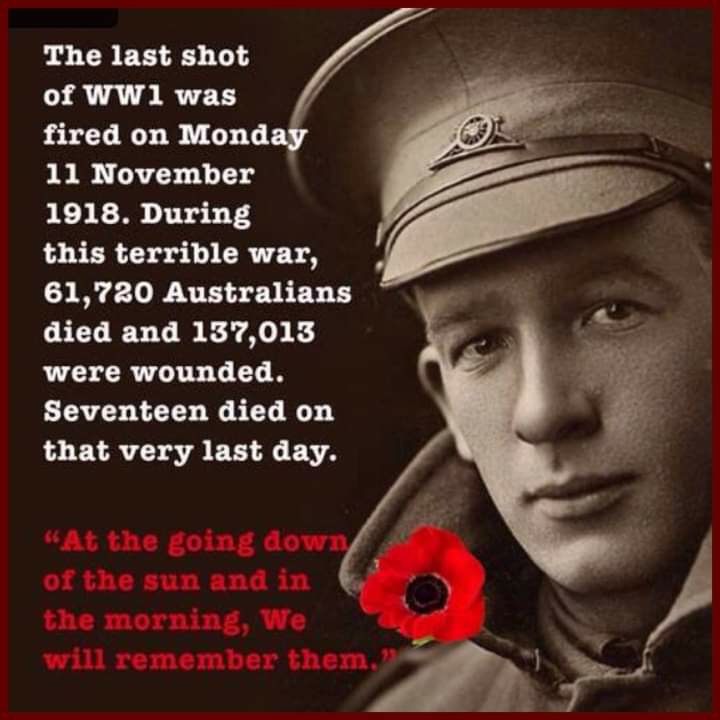
The Armistice (11:00AM / 11th day / 11th month / 1918 )
11 Nov 2021 Leave a comment
in defence economics, laws of war, war and peace Tags: Armistice Day, World War I
WWII Veteran Interview: Eddie Albert
11 Nov 2021 Leave a comment
in defence economics, war and peace Tags: World War II


Recent Comments