Kevin Murphy and Robert Topel – Some Economics of Professionalism (February 15, 2012)
01 Oct 2021 Leave a comment
in applied price theory, economic history, economics of information, entrepreneurship, health economics, human capital, labour economics, labour supply, occupational choice, occupational regulation, poverty and inequality
The FDA’s Oversight of Drug and Vaccine Development: Richard Epstein
01 Oct 2021 Leave a comment
in economics of regulation, health economics Tags: drug lags, economics of pandemics
Pumped hydro more expensive than batteries: why the winner is unclear
01 Oct 2021 Leave a comment

Previous post ended with the conclusion of Brakels’ article that the “winner is unclear”. That is quite a surprising conclusion of an article praising the strengths of the batteries while downplaying the weaknesses. These are the two reasons why Brakels thinks that the winner is unclear (my emphasis):
But because Snowy Hydro 2 may come in at less than the $10 billion or so I expect and because I can’t be certain the additional return from the battery setup will be enough to replace them when they fail, I can’t pick a winner.
The second argument is the most interesting. That statement looks rather cryptic and the meaning depends on the definition of the words “return” and “fail”.
“Return” could mean financial return and “fail” could mean end of economical life (additional financial return of the battery/solar scenario is not enough to replace the installation after its economical…
View original post 1,092 more words
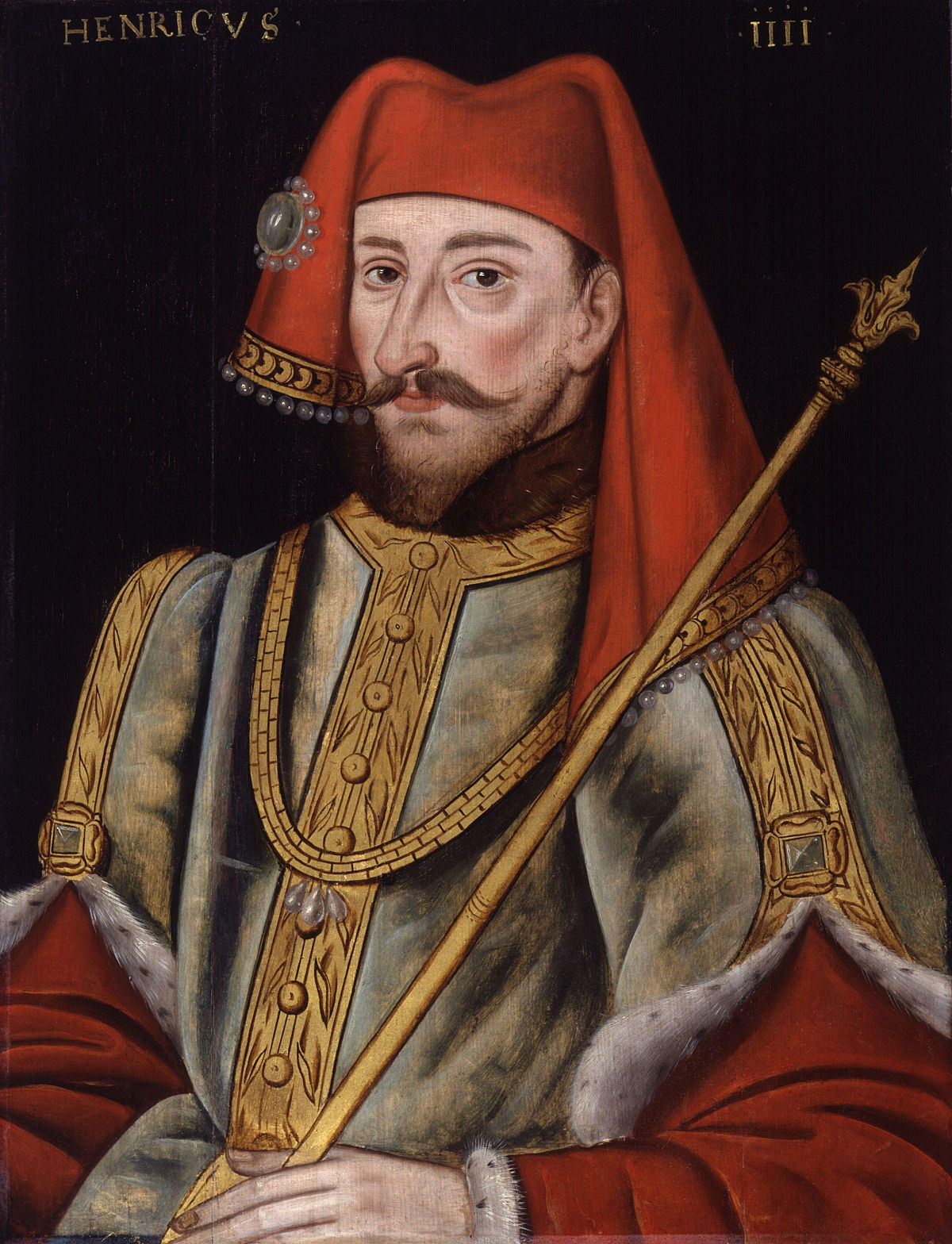
September 30, 1399: Henry Bolingbroke is declared King of England and Lord of Ireland as Henry IV.
01 Oct 2021 Leave a comment

Henry IV (April 1367 – 20 March 1413) was King of England from 1399 to 1413. He asserted the claim of his grandfather King Edward III, a maternal grandson of Philippe IV of France, to the Kingdom of France. Henry was the first English ruler since the Norman Conquest, over three hundred years prior, whose mother tongue was English rather than French. He was known as Henry Bolingbroke before ascending to the throne.
Family Connections
Henry was the son of John of Gaunt, Duke of Lancaster, and his first wife Blanche. Gaunt was the third son of King Edward III. Blanche was the daughter of the wealthy royal politician and nobleman Henry of Grosmont, Duke of Lancaster.
 Henry of Grosmont was the only son of Henry, 3rd Earl of Lancaster (c. 1281–1345); who in turn was the younger brother and heir of Thomas, 2nd Earl of Lancaster (c. 1278–1322). They…
View original post 886 more words
Platoon
30 Sep 2021 Leave a comment

Platoon (1986) Director: Oliver Stone
“I think now, looking back, we did not fight the enemy; we fought ourselves. And the enemy… was in us.”

★★★★☆
Often compared to Coppola’s Apocalypse Now and Kubrick’s Full Metal Jacket, Platoon is based on Director Oliver Stone’s personal experiences in Vietnam. He created the film, in part, to counter the optimistic pro-war propaganda of John Wayne’s The Green Berets (1968) which was critiqued by many veterans, as well. Platoon became part I of an eventual trilogy of films by Oliver Stone focused on the Vietnam War, followed by Born on the Fourth of July (1989) and Heaven & Earth (1993).
Platoon is a film that explores the nature of courage. How does a soldier act courageously in an unjust war? What is courage in the midst of horrendous savagery? We (the audience) experience the Vietnam War through the eyes of Chris…
View original post 524 more words
Vaccinations by age
30 Sep 2021 Leave a comment

Still on health matters, I’ve been intrigued for a while at what was happening to vaccination rates stratified by age. For all that politicians and the media burble on, emote even, about differences by ethnicity, the data on Covid itself seem crystal clear: by far the biggest demographic risk factor for getting seriously ill or dying of Covid (and thus of resulting in pressure on the health system) is age. The Hendy et al modelling used this data (from this 2020 paper).
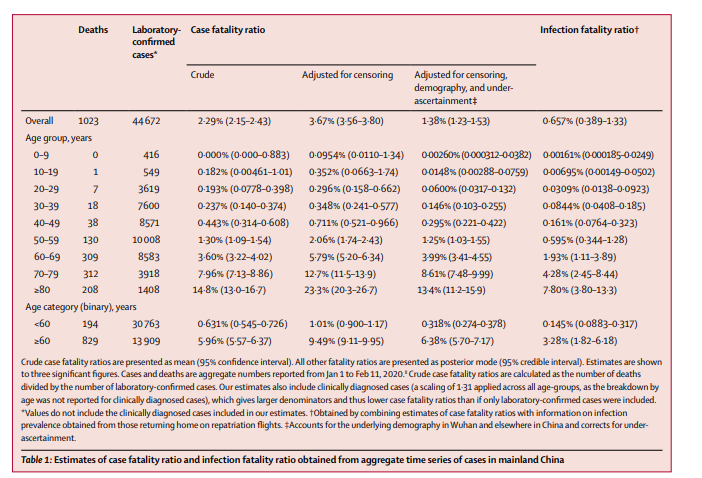
I’ve seen people suggest these absolute numbers may be out of date, and epidemiologists can argue about that, but my point simply is that no one seems to dispute the significance of age. It isn’t just a linearly increasing risk: the risks for (say) the over-80s are far far higher than those for even people in their 50s.
The government of course recognised this initially in allowing old…
View original post 1,149 more words
INTERESTING DATA FROM THE MoH
30 Sep 2021 Leave a comment


The Ministry of Health has released data on the August Delta outbreak updated to as of yesterday. You can access it here .
Some extracts ….
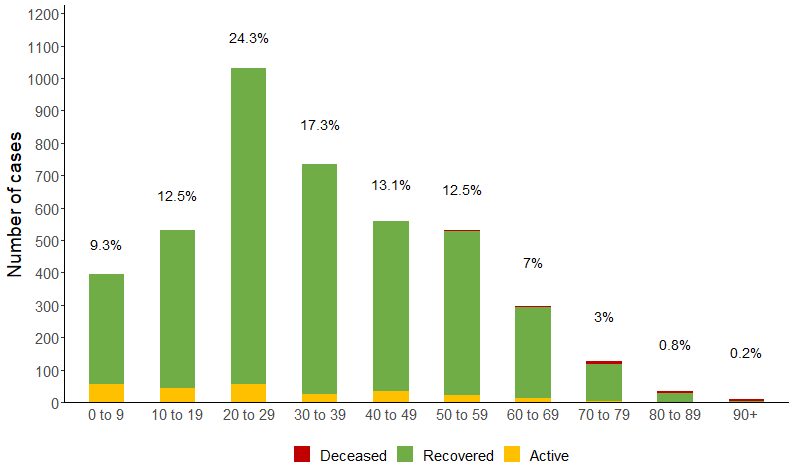
Of the 1,230 cases reported 84.8% were from the 0-59 age group.
65.9% of cases were from those who self identified as Pacifica with a further 16.9% as Maori. Asians came in third at 7.8% with Europeans fourth at 7.5%.
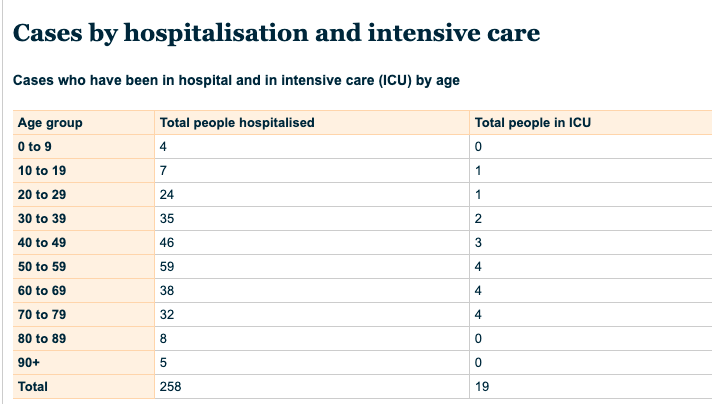
Of the 258 cases requiring hospitalisation 68% were from the 0-59 age group.
What does the data tell us?
You tell me.
Human Capital Investment, Inequality, and Growth with Kevin Murphy
30 Sep 2021 Leave a comment
in applied price theory, economic history, economics of regulation, entrepreneurship, financial economics, history of economic thought, human capital, income redistribution, industrial organisation, labour supply, occupational choice, poverty and inequality, Public Choice, rentseeking, survivor principle
David Friedman – Dating Markets, Legal Systems, Bitcoin, and Automation | The Lunar Society #16
30 Sep 2021 Leave a comment
in applied price theory, applied welfare economics, comparative institutional analysis, constitutional political economy, David Friedman, economics of crime, history of economic thought, law and economics, property rights
John Gibson – Economic policy, productivity and the global economy #COVID19
30 Sep 2021 Leave a comment
in applied price theory, applied welfare economics, business cycles, economic growth, economic history, health economics, macroeconomics Tags: economics of pandemics
Essential Coase: What Are Transaction Costs?
30 Sep 2021 Leave a comment
in applied price theory, applied welfare economics, comparative institutional analysis, economics of information, Ronald Coase
John McEnroe’s epic Wimbledon meltdown: ‘You cannot be serious!’
30 Sep 2021 Leave a comment
in sports economics Tags: Tennis
Essential Coase: The Problem of Social Cost
30 Sep 2021 Leave a comment
in applied price theory, comparative institutional analysis, environmental economics, history of economic thought, industrial organisation, law and economics, property rights, Public Choice, Ronald Coase
Scotland’s ‘Green’ Jobs Revolution Implodes: Wind Turbine Manufacturer Sacks Hundreds
29 Sep 2021 Leave a comment


A job that depends on subsidies, isn’t really a job, at all, it’s a make-work scheme cooked up by closet socialists. And, so it is, with the so-called “green jobs” that self-evidently exist, and only exist, while the renewable energy subsidies keep flowing.
There is no natural market for intermittent wind or solar power, because neither of them can be delivered as and when power consumers need power. In the absence of massive subsidies, there would be no wind or solar ‘industries’, so-called.
So, it should come as no surprise that the jobs “created” in association with those industries are an easy come, easy go, kind of affair.
The only thing ‘inevitable’ about the ‘transition’ to an all wind and sun powered future is bankruptcy for wind and solar outfits, the moment the subsidies get cut.
Of course, before these outfits wind up in insolvency, they generally attempt to shed…
View original post 963 more words


Recent Comments