Coleman Hughes on How Far is too Far with Helen Joyce
26 Sep 2021 Leave a comment
in discrimination, economics of education, gender, law and economics, politics - Australia, politics - New Zealand, politics - USA Tags: free speech, political correctness, regressive left
Why the US isn’t ready for clean energy
26 Sep 2021 Leave a comment
in energy economics, environmental economics, global warming Tags: celebrity technologies, solar energy, The fatal conceit, wind power
Robert Trivers The logic and role of deceit and self-deceit in human life
26 Sep 2021 Leave a comment
in economics of education, law and economics, property rights
David Friedman on Consequentialism, Law (and Order), Economics, Morality, and More
26 Sep 2021 Leave a comment
in applied price theory, applied welfare economics, comparative institutional analysis, constitutional political economy, David Friedman, economics of crime, history of economic thought, law and economics, property rights
Wind & Solar Suicide Squad’s Deliberate Destruction Of Europe’s Power Supply
26 Sep 2021 Leave a comment


If the wind and solar rent-seekers destroying our power supplies know what they’re doing, it’s criminal; if they don’t, it’s still criminal. However, the penalty is not borne by them, but by you and me.
Where the premise for part-time power is said to be a looming climate ‘catastrophe’, it’s the power supply catastrophe that wind and solar are delivering on a daily basis, that should concern us most.
A burst of calm weather across Western Europe has proved the point. John Hinderaker takes a look at the slow-motion train wreck that is so-called ‘green’ energy.
Green: A Slow-Motion Train Wreck
Power Line
John Hinderaker
10 September 2021
Around the world, “green” energy is failing with consequences that soon will be catastrophic. From the U.K.: “Ireland freezes power exports to UK as energy costs rocket tenfold.”
Shockingly, if you depend on wind energy you are in trouble when the…
View original post 282 more words
Chinatown
26 Sep 2021 Leave a comment
another all time great

Chinatown (1974) Director: Roman Polanski
“Forget it, Jake. It’s Chinatown.”

★★★★★
Chinatown is a Los Angeles noir murder mystery picture that comes down to us in the great American tradition of Dashiel Hammett and Raymond Chandler. Chinatown was part of the extraordinary, albeit brief, era of Robert Evans productions at Paramount, which also included movies like The Godfather. Written by Robert Towne, Chinatown has often been called the greatest screenplay ever written. He later said it was inspired by a chapter in Carey McWilliams’ Southern California Country: An Island on the Land (1946) and a West magazine article on Raymond Chandler’s Los Angeles. Perhaps the film is to some extent Roman Polanski’s personal reflections on the decay and decline of our civilization; this was the first Hollywood film he made after the dark and tragic events that rocked his life five years prior when his 8 months pregnant wife…
View original post 724 more words
Operation Airthief – the plan to hijack an Fw 190A
25 Sep 2021 Leave a comment

 Armin Faber’s Focke-Wulf Fw 190A-3 of III/JG 2 at RAF Pembrey, June 1942.
In June 1942, Oberstleutnant Armin Faber was Gruppen-Adjutant to the commander of the III fighter Gruppe of Jagdgeschwader 2 (JG 2) based in Morlaix in Brittany. On 23 June, he was given special permission to fly a combat mission with 7th Staffel. The unit operated Focke-Wulf 190 fighters.
The FW-190 had only recently arrived with front line units at this time and its superior performance had caused the Allies so many problems that they were considering mounting a commando raid on a French airfield to capture one for evaluation.
7th Staffel was scrambled to intercept a force of six Bostons on their way back from a bombing mission; the Bostons were escorted by three Czechoslovak-manned RAF squadrons, 310 Squadron, 312 Squadron and 313 Squadron commanded by Alois Vašátko. A fight developed over the English Channel with the…
View original post 626 more words
Measuring the Economic Damage of the Biden Fiscal Plan
25 Sep 2021 Leave a comment

More than 12 years ago, I shared this video containing lots of data and research on the negative relationship between government spending and economic performance.
Since then, I’ve share numerous additional studies showing that bigger government dampens growth, mostly from scholars in academia.
Now it’s time for me to directly contribute to this debate.
In a study just published by the Club for Growth Foundation, co-authored with Robert O’Quinn (former Chief Economist at the Department of Labor), we estimated the likely economic impact of President Biden’s so-called Build Back Better plan to expand the welfare state.
Here are our main findings.

What’s especially noteworthy about our study is that we based our analysis on research published earlier this year by the Congressional Budget Office. In other words, a very establishment source.
And here are some excerpts from what we wrote.
President Biden has proposed to increase the burden…
View original post 440 more words
One Flew Over The Cuckoo’s Nest
25 Sep 2021 Leave a comment
only ever watched this movie once because it was so good. Didn’t want spoil the memory with the second watching.
One Flew Over The Cuckoo’s Nest (1975) Director: Miloš Forman
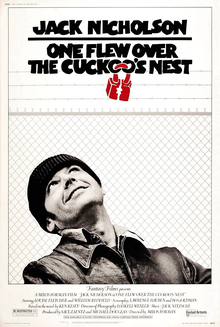
★★★★★
Based on the 1962 novel of the same name by counterculture Beat-adjacent writer Ken Kesey, One Flew Over The Cuckoo’s Nest is an amazing film adaptation of a challenging novel. One Flew Over The Cuckoo’s Nest is one of Jack Nicholson’s seminal movies from the 1970’s along with Five Easy Pieces(1970), Chinatown(1974), and The Shining (1980) among others. One Flew Over The Cuckoo’s Nest swept the 1975 Academy Awards winning Best Picture, Best Director (Miloš Forman), Best Actor (Jack Nicholson), Best Actress (Louise Fletcher). There are a number of other recognizable names in the film, including Christopher Lloyd, Brad Dourif, and Danny DeVito. Czechoslovakian Director Miloš Forman built a name for himself satirizing Eastern European communism hence why he was a perfect fit for this film. His later notable films include Hair (1979), Ragtime…
View original post 656 more words
Some almost resent progress
25 Sep 2021 Leave a comment
in economic history Tags: cell phones, regressive left, The Great Enrichment

Graham Adams: Going where the media won’t
25 Sep 2021 Leave a comment
LBJ’s first job after college was as a teacher in Cotulla, Texas, in a small Mexican-American school. Few of them could speak English. he would beat Mexican children who spoke Spanish in the playground because he knew how important it was for them to learn English.

Behind the coverage of David Seymour’s rise in the polls and Maori Language Week lurk inconvenient truths. Graham Adams argues journalists need to be more even-handed to maintain their credibility.
*****
IN THE HULLABALOO that followed Curia’s poll results last week, the media focused mainly on the startling fact that National’s support had collapsed to 21.3 per cent — with all its dire implications for Judith Collins continuing as the party’s leader.
Predictably, the dismal figures spawned a flurry of articles predicting a palace coup — with the rider that the mutiny could not be immediate because Level 4 lockdown prevented the party’s Auckland MPs flying to Wellington en masse to disembowel their leader in person. A coup conducted over Zoom would have been unseemly and presumably unsatisfying to those consumed with blood lust.
The fact that Act reached its highest number in any poll — at 14.9 per cent…
View original post 1,268 more words
How the Nazis could have won the war, if it hadn’t been for hate.
25 Sep 2021 Leave a comment


Max Planck, was a German theoretical physicist whose discovery of energy quanta won him the Nobel Prize in Physics in 1918.He had foreseen that the Nazi regimes racial law would have consequences for science in Germany.
An immediate consequence upon passage of the law was that it produced both quantitative and qualitative losses to the physics community. Numerically, it has been estimated that a total of 1,145 university teachers, in all fields, were driven from their posts, which represented about 14% of the higher learning institutional staff members in 1932–1933.Out of 26 German nuclear physicists cited in the literature before 1933, 50% emigrated. Qualitatively, 11 physicists and four chemists who had won or would win the Nobel Prize emigrated from Germany shortly after Hitler came to power, most of them in 1933.These 15 scientists were: Hans Bethe, Felix Bloch, Max Born, Albert Einstein, James Franck, Heinrich Gerhard Kuhn, Peter Debye…
View original post 809 more words
Britain runs coal power stations amid energy crisis
25 Sep 2021 Leave a comment

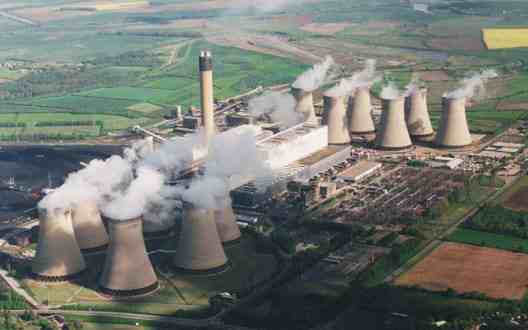 Drax power station, generating 7% of Britain’s needs, is partly converted to burning imported woodchips.
UK energy policy, based on hypothetical climate theories, is unravelling just as PM Boris Johnson is claiming at the UN that going green is easy. Alternatives to coal are proving to be a lot more problemmatical than expected. Running short of affordable power is an avoidable outcome of supposed climate strategy, and makes governments look incompetent.
– – –
Britain, which faces soaring natural gas prices, has been forced to run coal-fired power stations in order to secure energy supplies, electricity generation company Drax said on Thursday.
The country is particularly exposed to Europe’s ongoing energy crisis due to its reliance on natural gas to generate electricity, says TechXplore.
The price of European gas futures has more than doubled since May.
View original post 121 more words


Recent Comments