
24 Aug 2021 Leave a comment
in law and economics, liberalism, libertarianism, Marxist economics, politics - Australia, politics - New Zealand, politics - USA Tags: free speech, political correctness, regressive left
David Friedman – Application of Economic Analysis to the Law
24 Aug 2021 Leave a comment
in applied price theory, applied welfare economics, comparative institutional analysis, constitutional political economy, David Friedman, economics of crime, industrial organisation, law and economics, property rights
Fable of wildcat banking in US
23 Aug 2021 Leave a comment

Recently, the regulators have compared private stablecoins to US private banks which issued their own currency. Some of these banks got intro trouble by overissuing currency and were called as wildcats.
George Selgin in this article says firstly stablecoins are not comparable to private currencies. Second, US banks were hardly wildcat banks as they are made to be. Some were which is natural to happen but not all:
The comparison has by now been made so often that it may qualify as a platitude. I mean that between stablecoin issuers and “wildcat” banks, the fly-by-night scams that supposedly flooded the antebellum United States with notes nominally worth some stated amount of gold or silver, but actually worth little more than the rag paper they were made of.
Such disreputable stuff, we keep hearing, is what “private” currency always tends to be like. The paper sort survived until Federal authorities nationalized…
View original post 155 more words
Villa and Zapata by Frank McLynn (2000)
23 Aug 2021 Leave a comment

Almost immediately Villa lost his temper and began ranting at Obregón… Obregón replied in kind and both men seemed on the point of drawing their guns.
(Description of a typical political discussion between ‘revolutionary’ leaders, page 253)
In the autumn of 1913 the young American journalist John Reed spent four months embedded in the army of Mexican ‘revolutionary’ Pancho Villa. He was present at the general’s meetings with fellow leaders, met ordinary soldiers and peasants fighting for change, and rode into battle with the villistas. During one conversation Villa suddenly asked Reed: ‘And the war in America? How is that going?’ Puzzled, Reed replied that there was no war in America. ‘No war,’ exclaimed the amazed Villa. ‘Then how do you pass the time?’
Exactly. Fighting was a full-time activity for Villa and the various bandits, rebels, criminals, psychopaths, idealists, chancers and mercenaries he led in the so-called Army of…
View original post 5,122 more words
Hearts of Darkness: The European Exploration of Africa by Frank McLynn (1992)
23 Aug 2021 Leave a comment
Frank McLynn
McLynn, 80 this year, has made a very successful career as an author, biographer, historian and journalist, having written some 30 books. He clearly aims to produce enjoyable, accessible and non-scholarly histories and biographies for a wide audience. This is suggested, among other things by his use of casual and rather boys’ own adventure story diction:
- It was the Moors who had done for Major Houghton. (p.16)
- His plight was grim. His horse was on its last legs. (p.16)
- The Landers shook the dust of Badagry off their shoes with gusto and plunged into the wilderness… (p.27)
- The master of the Thomas proved to be a blackguard. (p.30)
- Speke would not have to fear the supercilious basilisk eye from a superior beetling brow, as with Burton, every time he wandered off to slaughter a few dozen of Africa’s wildlife.
- Once again the expedition came within an ace of…
View original post 5,175 more words

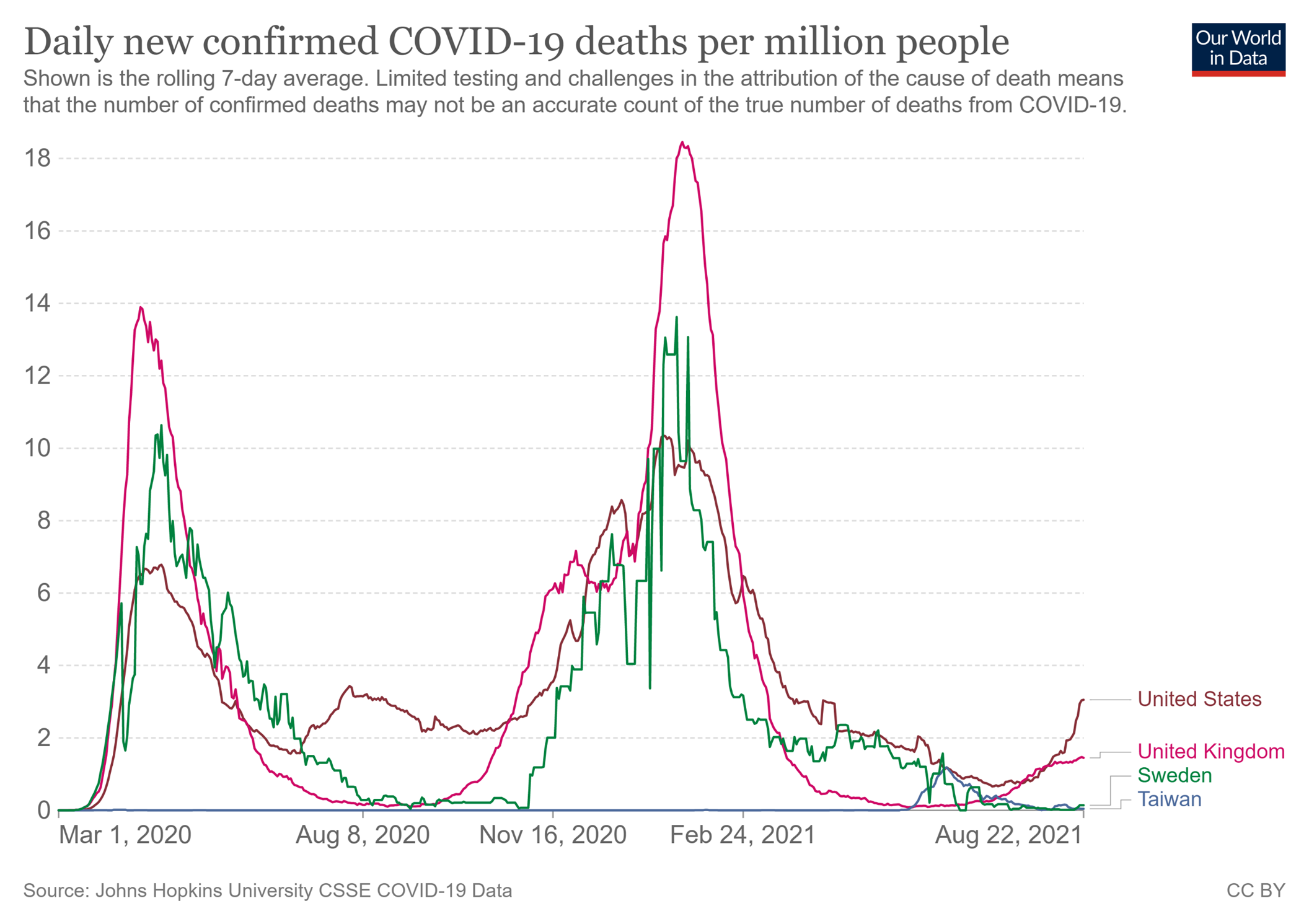
Milton Friedman – Monetary Revolutions – Fiat Currency, Inflation and the Federal Reserve
23 Aug 2021 Leave a comment
in budget deficits, business cycles, economic history, history of economic thought, macroeconomics, Milton Friedman, monetarism, monetary economics, unemployment Tags: monetary policy
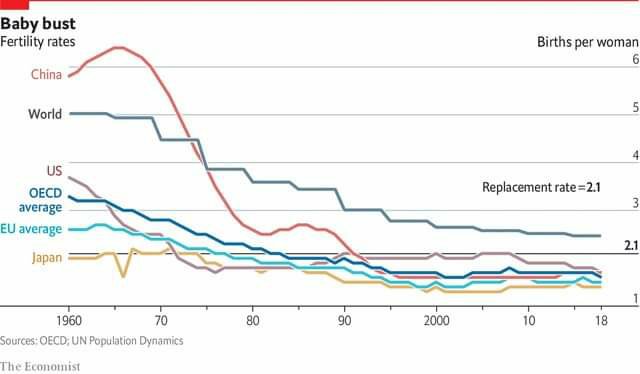
Industrial Policy Is a Recipe for Cronyism and Stagnation
23 Aug 2021 Leave a comment

Ronald Reagan must be turning over in his grave.
- A Republican president is pushing protectionist policies that hurt American consumes and taxpayers.
- A Republican president and Congress are spending like drunken sailors (apologies to drunken sailors).
- Now some Republican politicians are promoting a version of central planning called “industrial policy.”
This newfound flirtation with industrial policy, mostly from nationalist conservatives, is especially noxious since you open the door to cronyism and corruption when you give politicians and bureaucrats the power to play favorites in the economy.
I’m going to cite three leading proponents of industrial policy. To be fair, none of them are proposing 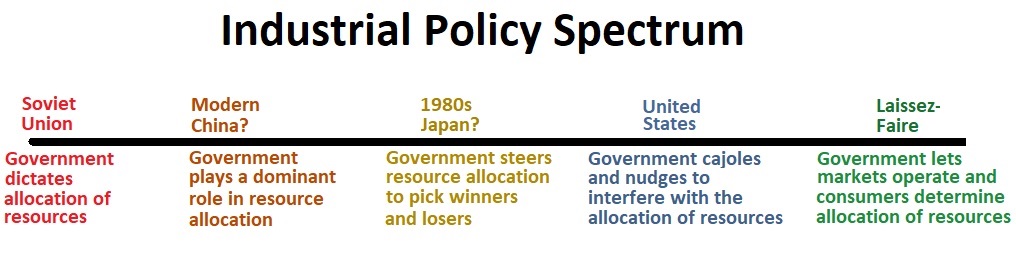 full-scale Soviet-style central planning.
But it is fair to say that they envision something akin to Japan’s policies in the 1980s.
Some of them even explicitly argue we should copy China’s current policies.
In a column for the New York Times, Julius Krein…
View original post 2,047 more words
Economic Backsliding by China, Part I
23 Aug 2021 Leave a comment
Long-time readers know that I periodically pour coldwater on the notion that China is an economic superstar.
Yes, China did engage in some economic liberalization late last century, and those reforms should be applauded because they were very successful in reducing severe poverty.
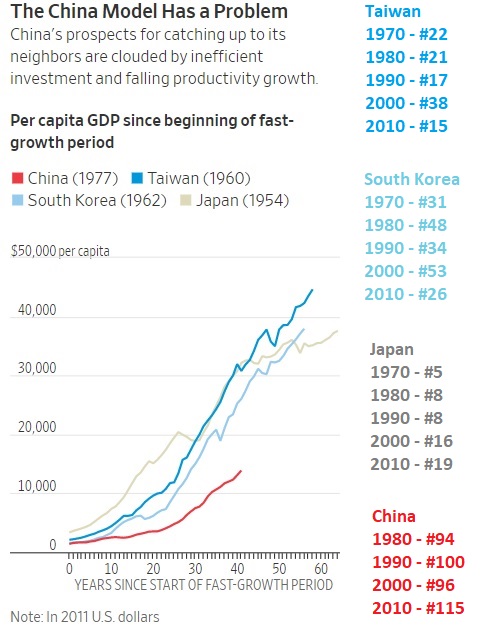 But from a big-picture perspective, all that really happened is that China went from terrible policy (Maoist communism) to bad policy (best described as mass cronyism).
Economic Freedom of the World has the best data. According to the latest edition, China’s score for economic liberty rose from a horrible 3.69 in 1990 to 6.21 in 2018.
That’s a big improvement, but that still leaves China in the bottom quartile (ranking #124 in the world). Better than Venezuela (#162), to be sure, but way behind even uncompetitive welfare states such as Greece (#92), France (#58), and Italy (#51).
And I fear China’s score will…
View original post 454 more words
The deadliest accident in motorsport history
23 Aug 2021 Leave a comment
in economic history, transport economics Tags: road safety
Butch Cassidy, The Sundance Kid, and Etta Place: Part 1
23 Aug 2021 Leave a comment
in economic history, economics of crime, law and economics
Morality Fail: Costly & Unreliable Wind & Solar Are Being Used To Keep Millions In Poverty
22 Aug 2021 Leave a comment


Electricity is a civilising force; once seen as a common good to be provided universally to those without it, but no longer. For the impoverished power is a path out of poverty and not just a means of lighting homes and cooking meals.
The political class that trumpet global warming as the singular threat to life on earth, clearly hate the poor.
Their obsession with subsidising expensive and utterly unreliable wind and solar has already put electrical power out of the reach of the poorest and first world countries, and would, if they could, render it an exclusive preserve of the upwardly mobile and unseemly rich: ie, themselves.
The path out of poverty is always and everywhere about reliable and affordable energy. And entrenched poverty is best explained by its absence.
Want to know how important electricity is to modern life? Try living a comfortable and civilised life without it.
View original post 3,848 more words
INFAMY: THE SHOCKING STORY of the JAPANESE INTERNMENT IN WORLD WAR II by Richard Reeves
22 Aug 2021 Leave a comment


(The message American Japanese were confronted with after Pearl Harbor)
At a time when Donald Trump harangues the American electorate with his views on prohibiting Muslims from entering the United States in reaction to the horrific attack in San Bernardino, CA we find the Republican candidate as well as political pundits pointing to Franklin D. Roosevelt’s Executive Order 9066 which created “internment camps” for American Japanese during World War II. If we are to accept what Trump says, then FDR’s actions set a precedent for going against the freedom of religion amendment to the United States Constitution. With the repeated reference to the plight of American Japanese during the war on cable and network news it is propitious that veteran journalist and biographer, Richard Reeves’ latest book, Infamy: The Shocking Story of the Japanese Internment in World War II has recently been published. The story that Reeves unveils was not…
View original post 1,757 more words


Recent Comments