Blackouts Loom in California as Electricity Prices Are ‘Absolutely Exploding’
29 Jun 2021 Leave a comment
Boost Worker Pay – and Make the United States More Competitive – by Gutting the Corporate Income Tax
29 Jun 2021 Leave a comment

The business pages are reporting that Chrysler will be fully owned by Fiat after that Italian company buys up remaining shares.
I don’t know what this means about the long-term viability of Chrysler, but we can say with great confidence that the company will be better off now that the parent company is headquartered outside the United States.
This is because Chrysler presumably no longer will be obliged to pay an extra layer of tax to the IRS on any foreign-source income.
Italy, unlike the United States, has a territorial tax system. This means companies are taxed only on income earned in Italy but there’s no effort to impose tax on income earned – and already subject to tax – in other nations.
Under America’s worldwide tax regime, by contrast, U.S.-domiciled companies must pay all applicable foreign taxes when earning money outside the United States – and then also…
View original post 761 more words
Why Technocrats Deliver Catastrophes
29 Jun 2021 Leave a comment


Mark E. Jeftovic writes insightfully on the ways technology backfires when applied by bureaucrats in his article Why the Technocratic Mindset Produces Only Misery and Failure. H/T Tyler Durden at zerohedge. Excerpts in italics with my bolds.
Technocrats have the most fundamental aspect of reality backwards
Saw this article come across, come across my news alert for “Transhumanism”. In it Dr. David Eagleman talks about how not only can we augment human senses with fantastic new abilities (like to “see” heat and electromagnetic patterns), but how we’ll even be able to build machines that think too.
There is a line in his thinking that one can glean from the article: on one side of the line are enhancements and augmentations to the human experience which are startling and amazing and which will transform our societies: even more radical life extension will be in the cards quite soon (for those…
View original post 1,610 more words
Gabriel Mathy and I Discuss the Gold Standard and the Great Depression
29 Jun 2021 Leave a comment

Sometimes you get into a Twitter argument when you least expect to. It was after 11pm two Saturday nights ago when I saw this tweet by Gabriel Mathy (@gabriel_mathy)
Friedman says if there had been no Fed, there would have been no Depression. That’s certainly wrong, even if your position is that the Fed did little to nothing to mitigate the Depression (which is reasonable IMO)
Chiming in, I thought to reinforce Mathy’s criticism of Friedman, I tweeted the following:
Friedman totally misunderstood the dynamics of the Great Depression, which was driven by increasing demand for gold after 1928, in particular by the Bank of France and by the Fed. He had no way of knowing what the US demand for gold would have been if there had not been a Fed
I got a response from Mathy that I really wasn’t expecting who tweeted with seeming annoyance
There already…
View original post 3,971 more words
Who Pays the Corporate Income Tax?
29 Jun 2021 Leave a comment
I’ve been arguing against Biden’s proposed increase in business taxation by pointing out that higher corporate taxes will be bad news for workers, consumers, and shareholders.
Everyone agrees that shareholders get hurt. After all, they’re the owners of the businesses. Higher corporate taxes directly reduce the amount of money available to be paid as dividends.
But we also should recognize that higher corporate taxes can be passed along to consumers, so they also lose. Even more important, we should recognize that higher tax burdens also reduce incentives for business investment, and this can have a negative impact on worker compensation.
A 2017 study from the Tax Foundation, authored by Steve Entin, thoroughly explored this question and included a table summarizing the academic research.
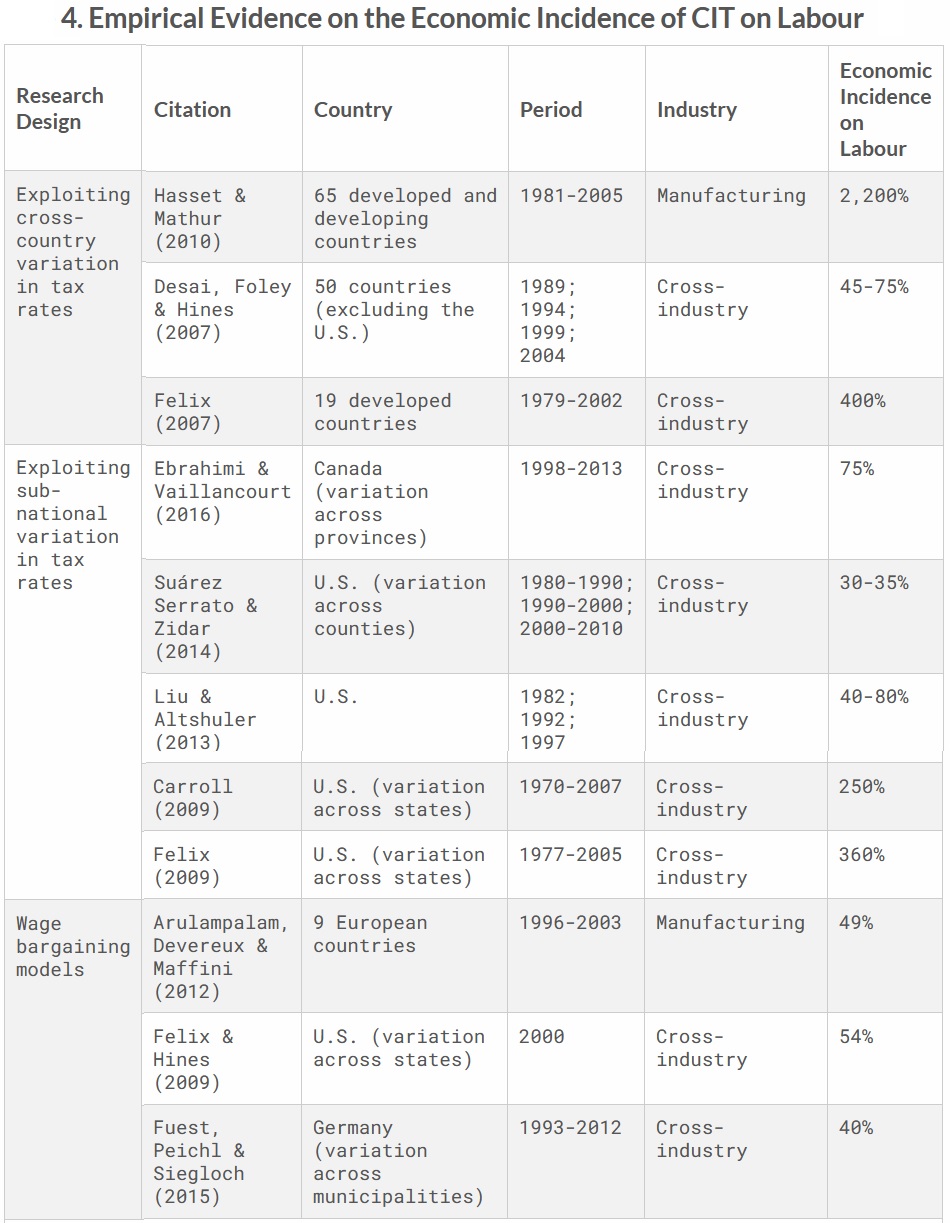
Alex Durante updated the Tax Foundation’s summary of the research in a just-released report.
Here are the results of two new studies.
In a…
View original post 302 more words
The Congress of Vienna: Crash Course European History #23
29 Jun 2021 Leave a comment
in defence economics, economic history, International law
Revolutions of 1848: Crash Course European History #26
29 Jun 2021 Leave a comment
in comparative institutional analysis, economic history, Marxist economics
Biden’s Big ‘Green’ Dirty Secret: America’s Solar Industry Depends on Slave Labour
28 Jun 2021 Leave a comment


Joe Biden and his Squad are eager to carpet America wall-to-wall with solar panels built by thousands of Uighur slaves under the control of the CCP.
The reason that China is able to dominate the market for solar panels isn’t about superior manufacturing techniques or Confucian ideals. No, it’s about very cheap wages. So cheap in fact, apparently no money changes hands between the ‘employer’ and ‘employee’, at all.
The robots in America’s mainstream press are hooked on Biden and his ‘Green New Deal’, so don’t expect to hear or read much about the subject.
Helen Raleigh, on the other hand, is quite apparently eager let the world know about Biden’s Big ‘Green’ Dirty Secret.
The Dirty Secret of ‘Clean’ Energy
National Review
Helen Raleigh
1 June 2021
President Biden pledged to reduce greenhouse-gas emissions by at least 50 percent by 2030 from 2005 levels. An estimate shows that to…
View original post 1,209 more words
How a Mapmaker Stopped an Epidemic and Saved Millions of Lives
28 Jun 2021 Leave a comment
in economic history, health economics
Public opinion on Covid policy
28 Jun 2021 Leave a comment

I noticed over the weekend that the highly-regarded Pew Research Center had released the results of public opinion surveys undertaken in a range of advanced countries on various questions around Covid and Covid policy, and that New Zealand was included among the countries surveyed. Some of the results were totally unsurprising, some interesting even if unsurprising, and for a couple of questions I wasn’t quite sure what to make of the questions or answers.
This was the first set of results reported
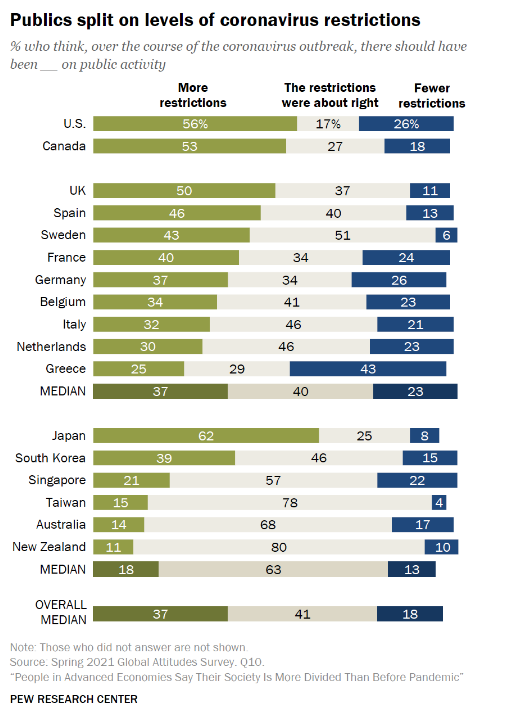
New Zealand (closely followed by Taiwan) was the country in which the largest share of respondents reckoned that over the full course of the coronavirus outbreak the level of restrictions on public activity were “about right”. Of the remainder of the New Zealand respondents, opinion was fairly evenly split between those who say they’d have favoured fewer restrictions and those who claimed they’d have favoured more. That split…
View original post 958 more words
Survival in changing times
28 Jun 2021 Leave a comment

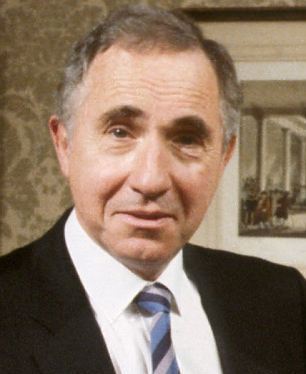
The predecessor of this blog was named after the famous comedy character from the Yes Minister and Yes Prime Minister TV series of the 1980’s, Sir Humphrey Appleby.
I was reminded of yet another aspect of him the other day when reading one of Chris Trotter’s latest missives, They Say We Want A Revolution – But Do We?.
The article is about both the proposals from the Climate Change Commission and the He Puapua report, but it was this part that caught my eye:
As a “free-marketeer” of no mean ability (the man has a PhD from the prestigious Wharton School of Business) Rod Carr could contemplate the installation of cash registers in public hospitals without flinching.
I’d forgotten about that long-lost tidbit from Rod Carr, back when he looked like this:

Yep. Every inch the 1980’s/90’s Rogernome businessman on the make, expensive business suit and cool tie with the…
View original post 186 more words
ZERO FAIL: THE RISE AND FALL OF THE SECRET SERVICE by Carol Leonning
28 Jun 2021 Leave a comment

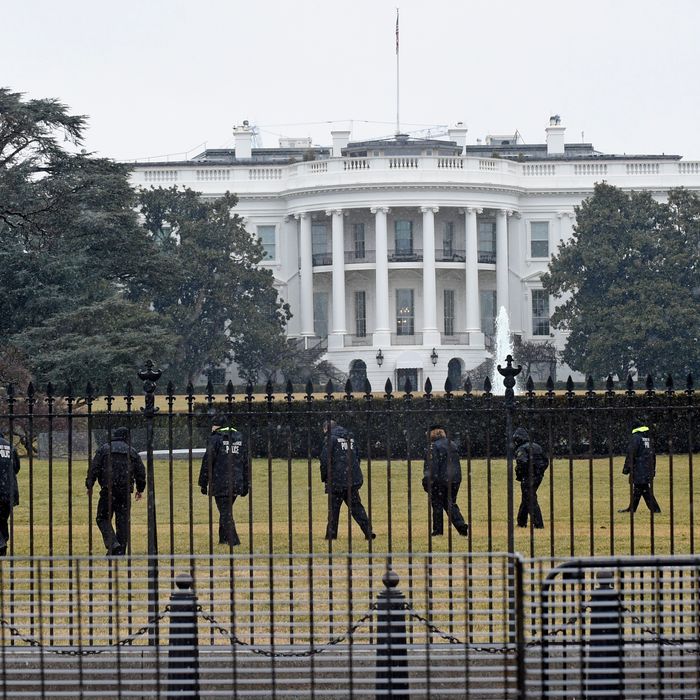
The significant role played by the United States Secret Service in American history cannot be denied. Be it the assassination of John F. Kennedy, the failed attempts on the lives of Gerald R. Ford and Ronald Reagan, few doubted the commitment of its agents to their craft and maintaining the safety of those in their charge. However, during the last decade or two questions have arisen over its job performance and as Pulitzer Prize winning Washington Post reporter, Carol Leonning points out in her new book, ZERO FAIL: THE RISE AND FALL OF THE SECRET SERVICE the actions or inaction of the agency question their effectiveness and how lucky they have been with the numerous mistakes and coverups that have come to light that no major disaster can be laid at its doorstep.
Leonning’s monograph examines the decline in the agency’s readiness and for some supervisors and agents a cavalier…
View original post 1,543 more words
Glenn C. Loury – Preserving the American Project: The Bias Narrative vs. the Development Narrative
28 Jun 2021 Leave a comment
in discrimination, economics of education, human capital, labour economics, labour supply, occupational choice, poverty and inequality Tags: racial discrimination
Steven Pinker: ‘Who, Me Controversial?’
28 Jun 2021 Leave a comment
in economics of education Tags: political correctness, regressive left
The 1970s Soviet Mission to Mars
28 Jun 2021 Leave a comment
in economics of media and culture Tags: Mars


Recent Comments