
Behind on my blasphemy
04 Apr 2021 Leave a comment
in economics of religion Tags: Blasphemy, free speech, space

Turmoil In The Reichstag – The Kerensky Offensive I THE GREAT WAR Week 154
04 Apr 2021 Leave a comment
in defence economics, war and peace Tags: World War I
Victory at any Cost? – Allied Censorship – WW2 Special
04 Apr 2021 Leave a comment
in defence economics, war and peace Tags: World War II
When in NZ? #COVID19
03 Apr 2021 Leave a comment
in health economics, politics - New Zealand, politics - USA Tags: economics of pandemics

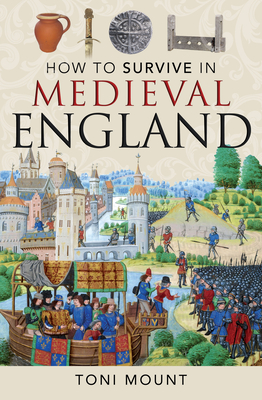
Book Review: “The Killer of the Princes in the Tower: A New Suspect Revealed” by MJ Trow
03 Apr 2021 Leave a comment
In 1483, King Edward IV’s family received a devastating announcement; the king in the prime of his life died, leaving the throne to his young son Edward V. However, neither Edward V nor his younger brother Richard of York would ever see the throne. Instead, they were taken to the Tower of London by their protector, Richard of Gloucester, for protection, never to be seen again. For over five hundred years, many theories have emerged about what happened to the princes in the tower and who might have possibly killed the boys. In MJ Trow’s latest book, “The Killer of the Princes in the Tower: A New Suspect Revealed”, he works hard to uncover the truth of what might have happened to the sons of King Edward IV.
I would like to thank Net Galley and Pen and Sword Books for sending me a copy of this book. When I…
View original post 457 more words
A family affair? Sir Robert Walpole and the ‘Robinocracy’, 1721-1742
03 Apr 2021 Leave a comment
April 3 marks the 300th anniversary of Robert Walpolebecoming first lord of the treasuryand, with it, assuming the title ‘Prime Minister’ for the first time. In today’s blog Dr Robin Eagles, editor of our Lords 1715-1790 project, explores Walpole’s rise to power and the familiarity of his surname within the walls of Westminster…

On 3 April 1721, 300 years ago today, Robert Walpole was handed the seals of office as first lord of the treasury. He was also appointed chancellor of the exchequer (the two jobs frequently went in tandem in this period). It was not the first time he had held the post, having been first lord of the treasury earlier in the reign of George I: a time when politics was dominated by two pairings – the partnerships of Charles Spencer…
View original post 999 more words
Timelapse footage shows lava engulfing car in Hawaii
02 Apr 2021 Leave a comment
in economics of media and culture
The Great Escape
02 Apr 2021 Leave a comment
in development economics, economic history, growth disasters, growth miracles, health economics Tags: The Great Escape
Greens see red despite benefit increases – but Michael Cullen could tell them (and the Ardern government) what safety nets are all about
02 Apr 2021 Leave a comment
The Ardern government has made “well-being” such a focus of its policies that many New Zealanders think it is now the way forward.
Labour’s ally, the Green Party, is so enamoured with the “well- being” philosophy it sharply criticised the government for raising the level of main benefits “by less than $8 a week” from April 1.
“We have a poverty crisis in NZ, and we must go further and faster to deliver income support that enables everyone to live with dignity,” says Green Party spokesperson for Social Development & Employment Ricardo Menéndez March.
“The government currently expects a single person over 25 years old to be able to get by on just $250.74 a week, and they’re supposed to celebrate that rising to $258.51. That extra eight dollars isn’t even enough to buy a block of cheese.”
Menendez March says it is “disingenuous” of the government to continue to…
View original post 665 more words
Five Visuals that Explain Why Higher Corporate Income Tax Rates Are Bad for America
02 Apr 2021 Leave a comment
I have a four-part series (here, here, here, and here) about the conceptual downsides of Joe Biden’s class-warfare approach to tax policy.
Now it’s time to focus on the component parts of his agenda. Today’s column will review his plan for a big increase in the corporate tax rate. But since I’ve written about corporate tax rates over and over and over again, we’re going to approach this issue is a new way.
I’m going to share five visuals that (hopefully) make a compelling case why higher tax rates on companies would be a big mistake.
Visual #1
One thing every student should learn from an introductory economics class is that corporations don’t actually pay tax. Instead, businesses collect taxes that are actually borne by workers, consumers, and investors.
There’s lots of debate in the profession, of course, about which group bears what share…
View original post 785 more words
The Insane Engineering of the X-15
02 Apr 2021 Leave a comment
in defence economics, transport economics
Monetarism v. Hawtrey and Cassel
01 Apr 2021 Leave a comment
The following is an updated and revised version of the penultimate section of my paper with Ron Batchelder “Pre-Keynesian Theories of the Great Depressison: What Ever Happened to Hawtrey and Cassel?” which I am now preparing for publication. The previous version is available on SSRN.
In the 1950s and early 1960s, empirical studies of the effects of money and monetary policy by Milton Friedman, his students and followers, rehabilitated the idea that monetary policy had significant macroeconomic effects. Most importantly, in research with Anna Schwartz Friedman advanced the seemingly remarkable claim that the chief cause of the Great Depression had been a series of policy mistakes by the Federal Reserve. Although Hawtrey and Cassel, had also implicated the Federal Reserve in their explanation of the Great Depression, they were unmentioned by Friedman and Schwartz or by other Monetarists.[1]
The chief difference between the Monetarist and the Hawtrey-Cassel explanations of…
View original post 1,301 more words
Critiques of Govt’s contentious housing package raise questions about whose advice was sought
31 Mar 2021 Leave a comment
So what happened to “go hard, go early”? Does anyone expect house prices (which have risen more than $100,000 since early 2020) to start falling?
The Ardern government’s housing package aroused curiously mixed reactions, hardly any of them providing a glimmer of light to would-be first-home buyers that house prices will be falling any time soon.
From one side, the warning came that rent controls could not be far behind. From the other, “market forces” and the evils of neo-liberalism had at last been corralled.
Over on the Left, Chris Trotter sees a housing crisis ripping apart the country’s weakest and most vulnerable communities.
“While the detail of the Labour government’s housing package has been sufficient to unleash the very worst impulses of NZ’s landlord class – whose screams of rage and wild threats of social vengeance have pretty much confirmed the rest of NZ society’s worst fears concerning‘property…
View original post 847 more words

Recent Comments